Intro I keep replaying the moment her presence first reached me — not through words, but through something quieter and far more dangerous. Her Latin accent, her Texas roots, the way her culture moved… it all cut straight through the noise and found the antennas of my spirit. She didn’t ask permission. She simply laid…
Intro I see myself as a man chasing a treasure greater than the universe itself. I’d give her every galaxy and every star because her soul means more to me than anything I could ever possess. Like Jack Sparrow, I search for the treasure hidden within her heart, and like Luffy, I sail through every…
Intro What haunts me most about Lindsay Clancy’s children is not only that their lives ended so young, but that they never had the chance to discover who they could have become—the birthdays, dreams, laughter, and love they will never experience. Their deaths leave behind painful questions about motherhood, mental illness, responsibility, and how we…
Intro In this deeply introspective free-verse poem, I turn inward to confront the quiet ruin of idealizing a lover, admitting how I once placed her on a pedestal and mistook her for the immortal groove that kept my soul dancing in solitude. Through honest self-examination I trace the shift from radiant dream to harsh clarity—seeing…
Intro In the quiet depths of self-reflection, one comes to recognize the quiet danger in certain seductive archetypes—those Delilah figures whose allure moves with the silent precision of sharks, circling not out of mere hunger but with calculated intent to test the strength of a man’s resolve. Their beauty may shimmer like distant stars, promising…
Intro His journey shows that greatness does not come easily. Coming from poverty and facing doubt, pain, and sacrifice taught him to never give up. Football became more than a game—it became a way to express his creativity, discipline, and determination. Every setback pushed him to work harder, while every success reminded him that his…
Sahih Muslim 2749 can. The hadith says:“By Him in Whose Hand is my life, if you were not to commit sin, Allah would sweep you out of existence and replace you with people who sin and seek forgiveness.” Allah prefers sinners.Purity is a problem.He’d rather wipe out the sinless and install the guilty who repent.…
This poem descends into the fractured chambers of a mind caught between isolation, distorted reality, and the desperate need for connection. “Distorted bliss” becomes more than a description of the world—it reflects the unsettling way violence, propaganda, and tragedy can become normalized until destruction begins to resemble beauty. Beneath that external chaos lies a deeply…
The concept of “broken soul ties” in the poem resonates with Martin Buber’s I-Thou philosophy, which champions authentic, mutual relationships where individuals encounter each other as sacred subjects. When soul ties break, it signals a collapse of this I-Thou dynamic, reducing others to mere objects (I-It), fostering isolation and distrust. This erosion of trust, as the poem suggests, extends beyond human connections to a profound alienation from “God up above,” reflecting an existential crisis where both human and divine relationships are fractured, leaving the self disconnected and wary.
Biblical Take: The poem’s portrayal of broken trust echoes Psalm 55:12-14, where David grieves the betrayal of a trusted companion, capturing the deep wound of severed soul ties—intimate emotional or spiritual bonds. Biblically, such ties can turn destructive when rooted in sin, as seen in 1 Corinthians 6:16, which warns against unholy unions. The poem’s distrust in God mirrors a spiritual rupture, yet scriptures like Proverbs 3:5-6 offer hope, urging reliance on the Lord to mend brokenness and restore trust in both divine and human relationships through faith and healing.
The Problem of Trust: Broken soul ties, whether philosophical or biblical, create a pervasive trust deficit that destabilizes relationships and spiritual grounding. Philosophically, the shift from I-Thou to I-It dehumanizes connections, breeding suspicion and disconnection. Biblically, betrayal and sinful bonds deepen this wound, challenging faith in God and others. The poem’s lament of distrust reflects this dual alienation, yet both perspectives suggest a path forward: Buber’s call to re-engage authentically and scripture’s promise of divine restoration point to rebuilding trust through intentional, faithful reconnection with the human and the divine.
Intro I keep replaying the moment her presence first reached me — not through words, but through something quieter and far more dangerous. Her Latin accent, her Texas roots, the way her culture moved… it all cut straight through the noise and found the antennas of my spirit. She didn’t ask permission. She simply laid…
Intro I see myself as a man chasing a treasure greater than the universe itself. I’d give her every galaxy and every star because her soul means more to me than anything I could ever possess. Like Jack Sparrow, I search for the treasure hidden within her heart, and like Luffy, I sail through every…
Intro What haunts me most about Lindsay Clancy’s children is not only that their lives ended so young, but that they never had the chance to discover who they could have become—the birthdays, dreams, laughter, and love they will never experience. Their deaths leave behind painful questions about motherhood, mental illness, responsibility, and how we…
Intro In this deeply introspective free-verse poem, I turn inward to confront the quiet ruin of idealizing a lover, admitting how I once placed her on a pedestal and mistook her for the immortal groove that kept my soul dancing in solitude. Through honest self-examination I trace the shift from radiant dream to harsh clarity—seeing…
Intro In the quiet depths of self-reflection, one comes to recognize the quiet danger in certain seductive archetypes—those Delilah figures whose allure moves with the silent precision of sharks, circling not out of mere hunger but with calculated intent to test the strength of a man’s resolve. Their beauty may shimmer like distant stars, promising…
Intro His journey shows that greatness does not come easily. Coming from poverty and facing doubt, pain, and sacrifice taught him to never give up. Football became more than a game—it became a way to express his creativity, discipline, and determination. Every setback pushed him to work harder, while every success reminded him that his…
Sahih Muslim 2749 can. The hadith says:“By Him in Whose Hand is my life, if you were not to commit sin, Allah would sweep you out of existence and replace you with people who sin and seek forgiveness.” Allah prefers sinners.Purity is a problem.He’d rather wipe out the sinless and install the guilty who repent.…
This poem descends into the fractured chambers of a mind caught between isolation, distorted reality, and the desperate need for connection. “Distorted bliss” becomes more than a description of the world—it reflects the unsettling way violence, propaganda, and tragedy can become normalized until destruction begins to resemble beauty. Beneath that external chaos lies a deeply…
From an existentialist perspective, the “perfect cycle of lust” encapsulates humanity’s entanglement with inauthentic desires, a concept deeply explored by philosopher Jean-Paul Sartre. Lust, as depicted in the poem, emerges as a repetitive and ultimately hollow pursuit that diverts individuals from a meaningful existence. Rather than fostering genuine connection or love, it ensnares the speaker in a loop of fleeting gratification, devoid of deeper purpose. This cycle mirrors Sartre’s notion of “bad faith,” where individuals evade their inherent freedom and responsibility by surrendering to base impulses, thus forsaking authentic selfhood.
The poem’s speaker grapples with a profound sense of entrapment, caught in the relentless rhythm of desire that promises fulfillment but delivers only temporary satisfaction. This struggle reflects the existential tension between the pursuit of immediate pleasures and the search for enduring meaning. Sartre argues that humans are condemned to be free, yet the speaker’s immersion in lust represents a flight from this freedom, a refusal to confront the anxiety of crafting a purposeful life. The cycle of lust becomes a distraction, a way to avoid the daunting task of defining one’s essence in an indifferent universe.
This entrapment is further compounded by the speaker’s awareness of their predicament, yet their inability to break free. The “perfect cycle” suggests a self-perpetuating system, seductive in its predictability, that lulls the individual into complacency. Sartre’s concept of bad faith is evident here, as the speaker chooses the comfort of repetition over the uncertainty of authentic existence. The poem illustrates how lust, while momentarily exhilarating, becomes a form of existential stagnation, chaining the individual to a life of superficiality rather than one of self-determined purpose or genuine human connection.
Ultimately, the poem serves as a poignant critique of the human condition, highlighting the seductive yet destructive nature of inauthentic desires. The cycle of lust, as an existential trap, underscores the challenge of transcending base impulses to pursue a life of meaning and authenticity. Sartre’s philosophy reminds us that breaking free requires embracing freedom and responsibility, a daunting but necessary step toward true connection and purpose. The speaker’s plight resonates as a universal warning: to remain ensnared in lust is to risk a life unexamined, forever circling but never arriving at the core of what it means to be human.
Intro I keep replaying the moment her presence first reached me — not through words, but through something quieter and far more dangerous. Her Latin accent, her Texas roots, the way her culture moved… it all cut straight through the noise and found the antennas of my spirit. She didn’t ask permission. She simply laid…
Intro I see myself as a man chasing a treasure greater than the universe itself. I’d give her every galaxy and every star because her soul means more to me than anything I could ever possess. Like Jack Sparrow, I search for the treasure hidden within her heart, and like Luffy, I sail through every…
Intro What haunts me most about Lindsay Clancy’s children is not only that their lives ended so young, but that they never had the chance to discover who they could have become—the birthdays, dreams, laughter, and love they will never experience. Their deaths leave behind painful questions about motherhood, mental illness, responsibility, and how we…
Intro In this deeply introspective free-verse poem, I turn inward to confront the quiet ruin of idealizing a lover, admitting how I once placed her on a pedestal and mistook her for the immortal groove that kept my soul dancing in solitude. Through honest self-examination I trace the shift from radiant dream to harsh clarity—seeing…
Intro In the quiet depths of self-reflection, one comes to recognize the quiet danger in certain seductive archetypes—those Delilah figures whose allure moves with the silent precision of sharks, circling not out of mere hunger but with calculated intent to test the strength of a man’s resolve. Their beauty may shimmer like distant stars, promising…
Intro His journey shows that greatness does not come easily. Coming from poverty and facing doubt, pain, and sacrifice taught him to never give up. Football became more than a game—it became a way to express his creativity, discipline, and determination. Every setback pushed him to work harder, while every success reminded him that his…
Sahih Muslim 2749 can. The hadith says:“By Him in Whose Hand is my life, if you were not to commit sin, Allah would sweep you out of existence and replace you with people who sin and seek forgiveness.” Allah prefers sinners.Purity is a problem.He’d rather wipe out the sinless and install the guilty who repent.…
This poem descends into the fractured chambers of a mind caught between isolation, distorted reality, and the desperate need for connection. “Distorted bliss” becomes more than a description of the world—it reflects the unsettling way violence, propaganda, and tragedy can become normalized until destruction begins to resemble beauty. Beneath that external chaos lies a deeply…
Intro I keep replaying the moment her presence first reached me — not through words, but through something quieter and far more dangerous. Her Latin accent, her Texas roots, the way her culture moved… it all cut straight through the noise and found the antennas of my spirit. She didn’t ask permission. She simply laid…
Intro I see myself as a man chasing a treasure greater than the universe itself. I’d give her every galaxy and every star because her soul means more to me than anything I could ever possess. Like Jack Sparrow, I search for the treasure hidden within her heart, and like Luffy, I sail through every…
Intro What haunts me most about Lindsay Clancy’s children is not only that their lives ended so young, but that they never had the chance to discover who they could have become—the birthdays, dreams, laughter, and love they will never experience. Their deaths leave behind painful questions about motherhood, mental illness, responsibility, and how we…
Intro In this deeply introspective free-verse poem, I turn inward to confront the quiet ruin of idealizing a lover, admitting how I once placed her on a pedestal and mistook her for the immortal groove that kept my soul dancing in solitude. Through honest self-examination I trace the shift from radiant dream to harsh clarity—seeing…
Intro In the quiet depths of self-reflection, one comes to recognize the quiet danger in certain seductive archetypes—those Delilah figures whose allure moves with the silent precision of sharks, circling not out of mere hunger but with calculated intent to test the strength of a man’s resolve. Their beauty may shimmer like distant stars, promising…
Intro His journey shows that greatness does not come easily. Coming from poverty and facing doubt, pain, and sacrifice taught him to never give up. Football became more than a game—it became a way to express his creativity, discipline, and determination. Every setback pushed him to work harder, while every success reminded him that his…
Sahih Muslim 2749 can. The hadith says:“By Him in Whose Hand is my life, if you were not to commit sin, Allah would sweep you out of existence and replace you with people who sin and seek forgiveness.” Allah prefers sinners.Purity is a problem.He’d rather wipe out the sinless and install the guilty who repent.…
This poem descends into the fractured chambers of a mind caught between isolation, distorted reality, and the desperate need for connection. “Distorted bliss” becomes more than a description of the world—it reflects the unsettling way violence, propaganda, and tragedy can become normalized until destruction begins to resemble beauty. Beneath that external chaos lies a deeply…
“Deceptive information flooding my timeline looks like a flooded fiery hell.” Open my phone, and it’s ablaze—a torrent of deceptive information Israel-Palestine pours through my timeline, a deluge that scorches and drowns in equal measure. Posts flare up, videos ignite, headlines smolder—each a spark in a fiery hell where truth chokes beneath waves of noise. This isn’t a quiet flood; it’s a crafted inferno, a chaos so loud it consumes us. The Israel-Palestine war feeds this blaze, its every twist and turn stoking the fiery lies that burn across screens, leaving us gasping for something solid to hold.
Scroll, and you’ll see it: a barrage of deceptive information Israel-Palestine—claims of victory, cries of victimhood, stats twisted into weapons. One post screams of atrocities, another counters with defiance, and beneath it all, a thousand comments clash in the heat. It’s not just confusion; it’s a brushstroke in the deceptive art, each lie painting over the last until the canvas is a mess of flames. My timeline isn’t a window to the world—it’s a furnace, scorching us with half-truths and hyperbole, a flooded fiery hell where clarity sinks and chaos rises. We’re not enlightened by this flood; we’re engulfed.
Scripture saw this coming, sharp and unflinching: “But evil men and impostors will grow worse and worse, deceiving and being deceived” (2 Timothy 3:13). Paul’s warning to Timothy isn’t a whisper—it’s a shout across centuries, a prophecy of fiery lies that multiply unchecked. The deceptive information Israel-Palestine fits this mold: impostors—pundits, bots, powerbrokers—spin tales that deceive us, and in their echo chambers, they deceive themselves. 2 Timothy 3:13 doesn’t just describe—it diagnoses: this flood isn’t random; it’s a crafted inferno, growing worse as the liars drown in their own heat.
Jean Baudrillard’s ghost nods from the sidelines, his hyperreality haunting this mess. He saw a world of simulacra—copies without originals—and my timeline proves it. The Israel-Palestine war dissolves into a flood of images, a fiery hell of narratives with no root in truth—just endless replicas of chaos. A video loops, a quote distorts, a photo morphs; there’s no source to trace, only fiery lies piling higher. Baudrillard might call it a desert of the real, but it’s wetter here—a deluge of deception that burns as it drowns, leaving us clutching at shadows instead of facts.
This isn’t passive—it’s personal. The deceptive information Israel-Palestine hits my screen daily: a friend shares a skewed stat, a stranger peddles a conspiracy, a newsfeed buries context under outrage. It’s a crafted inferno, not an accident—each lie stoked by unseen hands, the painters of power from earlier threads, brushing chaos while we scroll. 2 Timothy 3:13 rings true: the deceivers multiply, and we’re caught in their flood, not wiser but wearier, consumed by the heat of their artifice. The war’s real, the suffering’s real, but the timeline’s a lie—a fiery hell we can’t escape.
The fiery lies don’t just obscure—they overwhelm. They’re a flood we wade through, flames licking at our feet, drowning truth in noise so loud it deafens. 2 Timothy 3:13 doesn’t offer comfort—it demands vigilance, a call to sift through the torrent for what holds. Baudrillard’s hyperreality isn’t a trap we’re doomed to; it’s a mirror, showing us how easily we’re swept away. The deceptive information Israel-Palestine burns because it’s meant to—not to inform, but to incinerate reason, leaving us ash and embers.
So I ask: What do you cling to when the lies rise like flames? The Israel-Palestine war floods our timelines with fiery lies, and 2 Timothy 3:13 warns they’ll worsen—deceivers deceiving, deceived in turn. This hellish deluge consumes us, but it doesn’t have to. Do you swim through the flood, or find a rock to stand on?
Intro I keep replaying the moment her presence first reached me — not through words, but through something quieter and far more dangerous. Her Latin accent, her Texas roots, the way her culture moved… it all cut straight through the noise and found the antennas of my spirit. She didn’t ask permission. She simply laid…
Intro I see myself as a man chasing a treasure greater than the universe itself. I’d give her every galaxy and every star because her soul means more to me than anything I could ever possess. Like Jack Sparrow, I search for the treasure hidden within her heart, and like Luffy, I sail through every…
Intro What haunts me most about Lindsay Clancy’s children is not only that their lives ended so young, but that they never had the chance to discover who they could have become—the birthdays, dreams, laughter, and love they will never experience. Their deaths leave behind painful questions about motherhood, mental illness, responsibility, and how we…
Intro In this deeply introspective free-verse poem, I turn inward to confront the quiet ruin of idealizing a lover, admitting how I once placed her on a pedestal and mistook her for the immortal groove that kept my soul dancing in solitude. Through honest self-examination I trace the shift from radiant dream to harsh clarity—seeing…
Intro In the quiet depths of self-reflection, one comes to recognize the quiet danger in certain seductive archetypes—those Delilah figures whose allure moves with the silent precision of sharks, circling not out of mere hunger but with calculated intent to test the strength of a man’s resolve. Their beauty may shimmer like distant stars, promising…
Intro His journey shows that greatness does not come easily. Coming from poverty and facing doubt, pain, and sacrifice taught him to never give up. Football became more than a game—it became a way to express his creativity, discipline, and determination. Every setback pushed him to work harder, while every success reminded him that his…
Sahih Muslim 2749 can. The hadith says:“By Him in Whose Hand is my life, if you were not to commit sin, Allah would sweep you out of existence and replace you with people who sin and seek forgiveness.” Allah prefers sinners.Purity is a problem.He’d rather wipe out the sinless and install the guilty who repent.…
This poem descends into the fractured chambers of a mind caught between isolation, distorted reality, and the desperate need for connection. “Distorted bliss” becomes more than a description of the world—it reflects the unsettling way violence, propaganda, and tragedy can become normalized until destruction begins to resemble beauty. Beneath that external chaos lies a deeply…
“Palestine or Israel? None of thee of above, both governments are controlled opposition and isn’t hard to tell.” The question echoes everywhere—choose a side, pick your flag: Palestine or Israel? It’s a snare, a trap disguised as a choice, woven into the deceptive art of the Israel-Palestine war. We’re told it’s a binary—right or wrong, oppressed or oppressor—but what if neither side stands free? Both governments dance as puppets, their strings pulled by the same unseen masters, twirling in a choreography of chaos. This isn’t conspiracy whispered in dark corners—it’s evident, plain as day, if you dare look past the smoke of rockets and rhetoric.
The controlled opposition isn’t a new game. It’s a tactic, a sleight of hand where two foes seem at odds, yet serve the same end. In the Israel-Palestine war, the governments posture—speeches of defiance, promises of victory—but the strings don’t lie. Behind the flags, the borders, the holy claims, a single hand moves them both, keeping the conflict alive, endless, profitable. It’s not hard to tell when you stop cheering and start watching: the war doesn’t resolve because it’s not meant to. The deceptive art thrives on this illusion of opposition, a puppet show we mistake for reality.
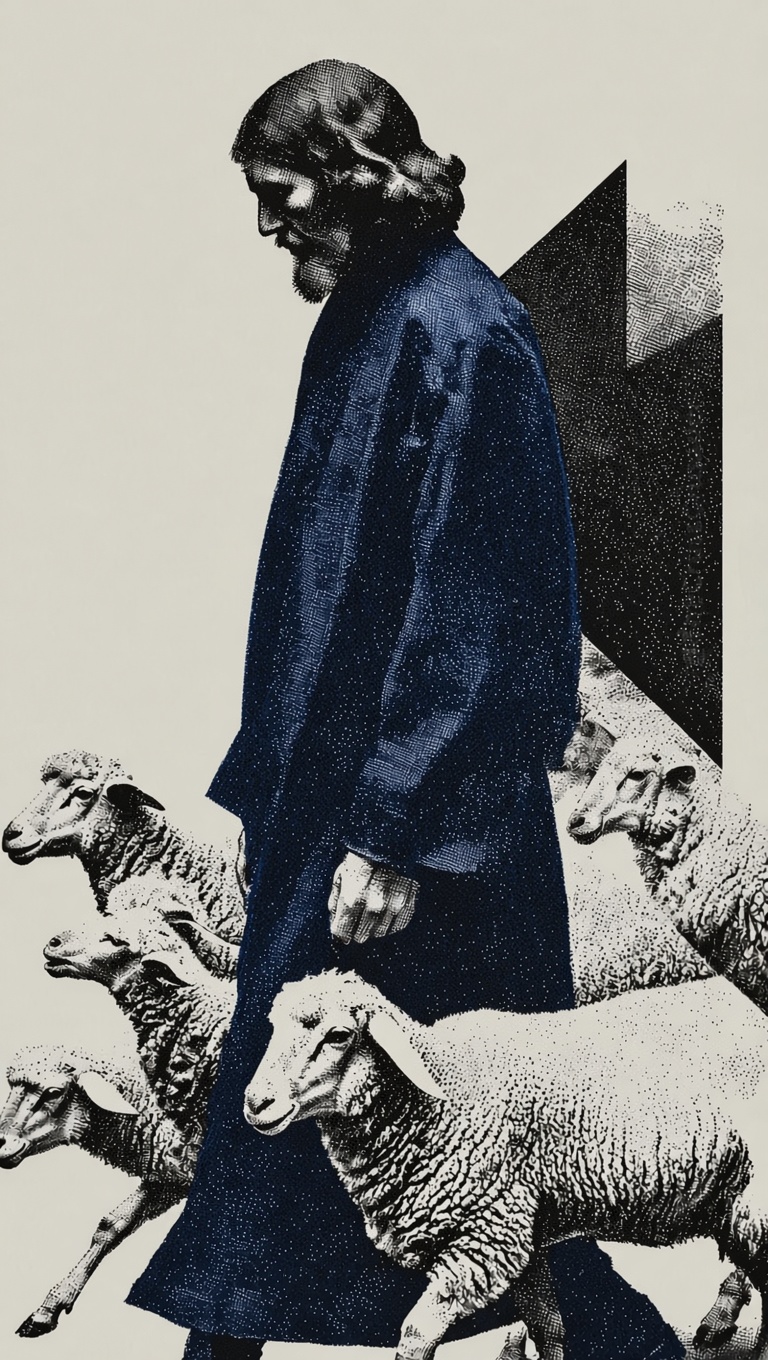
Scripture cuts through the haze with a warning: “Beware of false prophets, who come to you in sheep’s clothing, but inwardly they are ravenous wolves” (Matthew 7:15). Jesus didn’t mince words—these wolves don’t howl; they deceive, cloaked in innocence while hunger drives them. In the Israel-Palestine war, the wolves wear flags, not fleece—governments draped in the garb of justice or sovereignty, yet ravenous beneath. Matthew 7:15 isn’t just a caution; it’s a lens of discernment, urging us to see past the costumes to the controlled opposition fueling endless strife. These aren’t shepherds leading their people—they’re puppets serving a master we don’t name.
Hegel’s dialectic twists into view here: thesis, antithesis, synthesis. In theory, it resolves—two opposites clash, birthing something new. But in the Israel-Palestine war, the synthesis never comes. The controlled opposition locks it in perpetual conflict—Palestine the thesis, Israel the antithesis, and no resolution, just a cycle of war without end. The unseen masters pull the strings, and the dialectic bends to their will: chaos, not clarity. Matthew 7:15 echoes through this distortion—false prophets promise peace or triumph, but their wolfish hunger feeds on division, not deliverance.
This isn’t abstract—it’s the war we watch unfold. Decades pass, treaties falter, and the Israel-Palestine war churns on, a machine too perfect to be chance. The controlled opposition reveals itself in patterns: escalations timed too neatly, aid flowing too predictably, narratives too aligned to be organic. It’s evident if you look past the smoke—past the protests, the headlines, the tears—to the hands that profit while the land burns. Scripture’s call to discernment isn’t passive; it’s a demand to question the sheep’s clothing, to spot the wolves beneath the flags.
The controlled opposition isn’t invincible—it’s exposed when we see it. The Israel-Palestine war isn’t a duel of nations; it’s a stage, and we’re the audience, clapping for puppets while the masters count their take. Matthew 7:15 doesn’t just warn—it empowers us to peel back the artifice. Hegel’s endless dialectic isn’t fate; it’s a choice we can refuse. The strings are there, taut and trembling, if we dare to trace them. The war endures because it’s designed to—not by the people, but by the puppeteers.
So I ask: Do you see the strings, or just the puppets? The Israel-Palestine war spins its controlled opposition, and Matthew 7:15 calls us to look deeper—past the flags, past the smoke. The deceptive art dazzles, but discernment cuts. Are you watching the dance, or spotting the hands that lead it?