Description This piece channels the tragic downfall of a public figure, drawing inspiration from the life and struggles of Jimmy Swaggart, the famed televangelist who faced a public moral failure in the late 1980s. It reflects the internal conflict of a charismatic leader who, despite wielding influence and delivering sermons to inspire others, finds themselves…
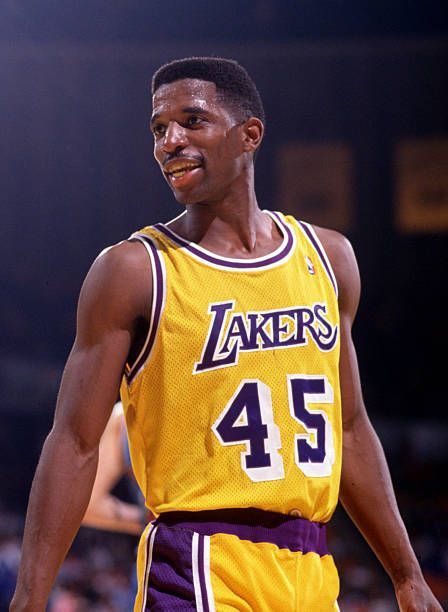
Description This poem, Call Me A.C. Green…, is an introspective and reflective piece that portrays the author’s journey of self-discipline, spirituality, and perseverance. Using the metaphor of the basketball “court of life,” the poem connects the struggles of living a morally centered life to the commitment of A.C. Green, a former NBA player known for…
Description This piece offers a satirical critique of the modern dynamic between billionaires, online influencers, and globalist elites. It paints a vivid picture of influencers and billionaires attempting to disrupt the establishment, ostensibly to prevent a new world order. However, the irony lies in their unwitting acceleration of the very change they aim to resist.…
Description From a young age, she longed to walk with God in His golden garden, dreaming of divine peace and eternal connection. But her innocence was shattered when a trusted church leader betrayed her, masking his lust as piety and leaving her to grapple with emotions she couldn’t understand. Seeking comfort from her parents, she…
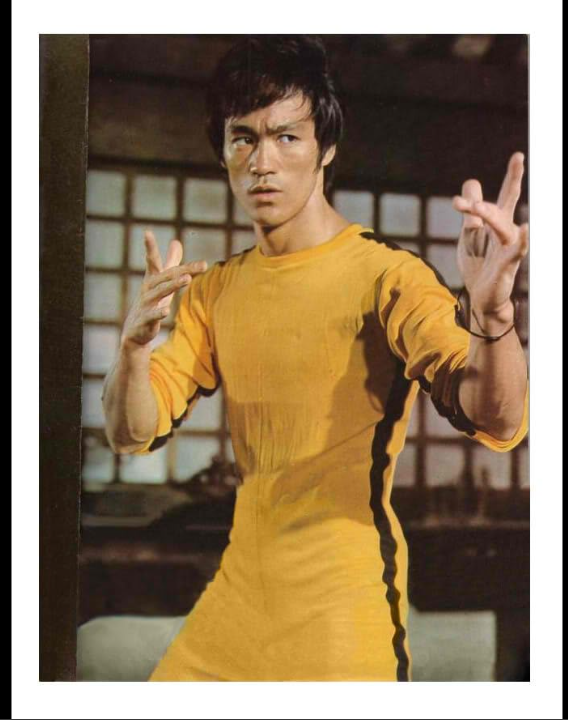
Description This poem reflects a powerful metaphor for life, where the speaker’s journey mirrors Bruce Lee’s Game of Death—a symbolic ascent to power and control, only to face a sudden, devastating fall. The “forbidden mansion” and the throne symbolize the speaker’s elevated status or achievements, acquired through perseverance, but also under constant threat from those…
Description This poem captures a sense of internal conflict, blending themes of speed, creativity, and spiritual turmoil. The speaker identifies as a “speed demon,” suggesting a feeling of uncontrollable energy or compulsion, especially in the act of writing or creating (“these poetic artistry’s / evoke fast as lightning”). The imagery of lightning conveys a sudden,…
Description This poem presents a powerful exploration of duality, inner turmoil, and the struggle between an outward facade of innocence and an inner world brimming with darkness. The speaker describes themselves as appearing innocent and refined, symbolized by their “Versace lenses” and “glowing like a pearl,” which represent a polished, external image that others perceive.…
Description This poem captures the essence of a menacing clown persona, reminiscent of Stephen King’s Pennywise. The poem paints a vivid picture of this clown’s intent to instill fear while maintaining an eerie sense of pride. Let’s break down the elements and themes: Breakdown and Themes: Suggestions for Enhancements: Final Poem: Here’s a revised version…
Description This poem explores the theme of spiritual conflict and moral temptation, using the symbolic setting of Babylon, an ancient civilization often associated with decadence, corruption, and moral decline. The speaker reflects on their loss of faith, highlighting the struggle between spiritual ideals and worldly desires. Key Elements and Themes: Overall Description: The poem is…
Description This poem presents a complex and vivid exploration of inner turmoil and artistic expression. Here’s a breakdown of its key themes and imagery: Imagery and Symbolism Themes Tone and Style Overall, the poem is a powerful exploration of the interplay between suffering, creativity, and the desire for control and understanding. It uses evocative imagery…
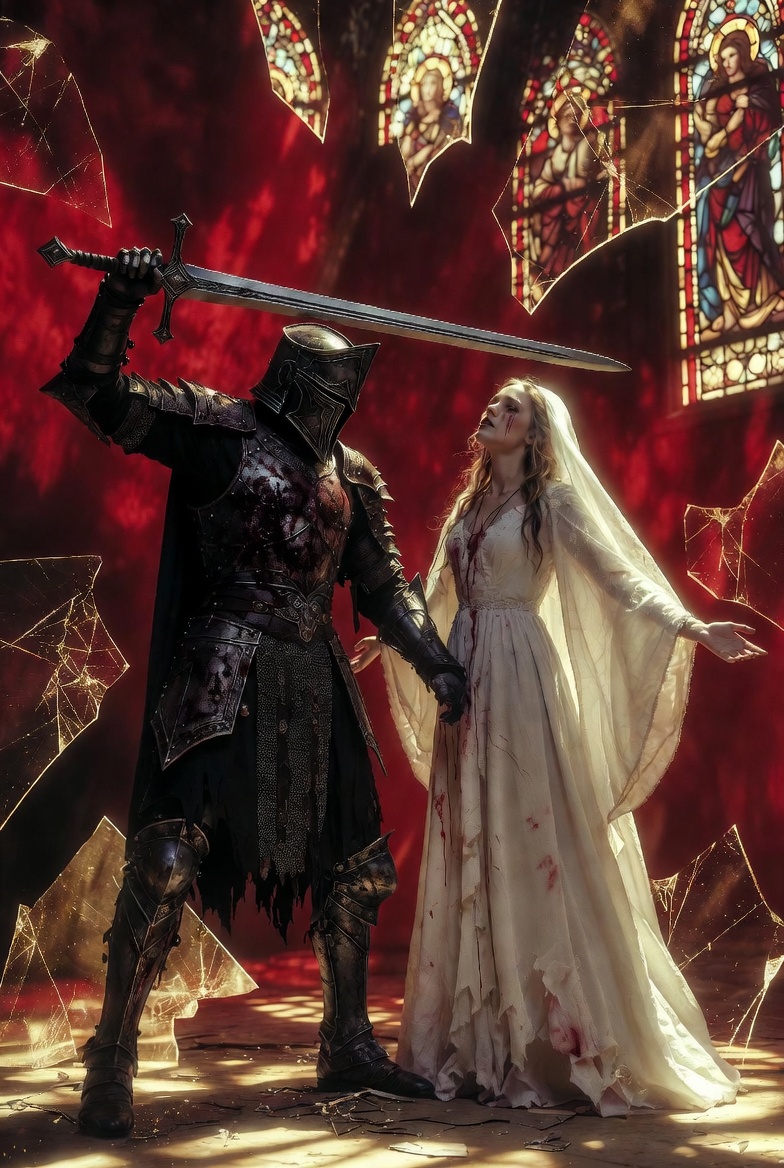
Intro This poem explores the terrifying contradiction of a soul that longs for righteousness while remaining devoted to its own corruption. Through images of prayer, marriage, violence, blasphemy, and judgment, the speaker wrestles with hypocrisy, pride, and the illusion of holiness. What begins as a confession of self-deception gradually descends into a vision of spiritual ruin, where broken vows, rebellion against God, and unrepented sin culminate in a catastrophic fall. It is a dark meditation on the conflict between divine grace and human wickedness, revealing the consequences of choosing self-worship over true redemption.
Outro
In the end, the speaker stands as a tragic warning of what becomes of a heart that mistakes rebellion for righteousness and pride for faith. The journey from self-proclaimed holiness to utter destruction reveals the devastating cost of living behind a mask of virtue while embracing corruption within. Yet the horror of the poem lies not only in the flames of judgment, but in the realization that every step toward the abyss was willingly taken. Through its stark imagery and confessional voice, the poem serves as a reflection on hypocrisy, accountability, and the eternal consequences of refusing truth until it is too late.
Spiritual Takeaway
The central spiritual lesson of this poem is that outward displays of faith cannot replace genuine repentance and obedience to God. The speaker prays, speaks of righteousness, and values sacred relationships, yet continually chooses pride, violence, and self-deception. The poem illustrates how a person can become so consumed by hypocrisy that they begin calling evil holy and treating God’s grace as permission to continue in sin. Ultimately, it serves as a warning that faith is not measured by appearances, words, or religious rituals, but by a transformed heart that seeks truth, humility, and reconciliation with God. The poem challenges readers to examine their own lives, asking whether their devotion is authentic or merely a mask that hides unaddressed spiritual wounds and rebellion.
Inspiration Training Day is a crime thriller directed by Antoine Fuqua that follows rookie police officer Jake Hoyt on his first day with veteran narcotics detective Alonzo Harris in Los Angeles. As the day unfolds, Jake discovers that Alonzo’s methods go far beyond bending the rules, exposing him to a world of corruption, manipulation, and moral compromise. The film explores themes of power, temptation, justice, and the struggle between integrity and corruption, building toward a tense confrontation that forces Jake to choose between his principles and survival.
Description This piece channels the tragic downfall of a public figure, drawing inspiration from the life and struggles of Jimmy Swaggart, the famed televangelist who faced a public moral failure in the late 1980s. It reflects the internal conflict of a charismatic leader who, despite wielding influence and delivering sermons to inspire others, finds themselves…
Description This poem, Call Me A.C. Green…, is an introspective and reflective piece that portrays the author’s journey of self-discipline, spirituality, and perseverance. Using the metaphor of the basketball “court of life,” the poem connects the struggles of living a morally centered life to the commitment of A.C. Green, a former NBA player known for…
Description This piece offers a satirical critique of the modern dynamic between billionaires, online influencers, and globalist elites. It paints a vivid picture of influencers and billionaires attempting to disrupt the establishment, ostensibly to prevent a new world order. However, the irony lies in their unwitting acceleration of the very change they aim to resist.…
Description From a young age, she longed to walk with God in His golden garden, dreaming of divine peace and eternal connection. But her innocence was shattered when a trusted church leader betrayed her, masking his lust as piety and leaving her to grapple with emotions she couldn’t understand. Seeking comfort from her parents, she…
Description This poem reflects a powerful metaphor for life, where the speaker’s journey mirrors Bruce Lee’s Game of Death—a symbolic ascent to power and control, only to face a sudden, devastating fall. The “forbidden mansion” and the throne symbolize the speaker’s elevated status or achievements, acquired through perseverance, but also under constant threat from those…
Description This poem captures a sense of internal conflict, blending themes of speed, creativity, and spiritual turmoil. The speaker identifies as a “speed demon,” suggesting a feeling of uncontrollable energy or compulsion, especially in the act of writing or creating (“these poetic artistry’s / evoke fast as lightning”). The imagery of lightning conveys a sudden,…
Description This poem presents a powerful exploration of duality, inner turmoil, and the struggle between an outward facade of innocence and an inner world brimming with darkness. The speaker describes themselves as appearing innocent and refined, symbolized by their “Versace lenses” and “glowing like a pearl,” which represent a polished, external image that others perceive.…
Description This poem captures the essence of a menacing clown persona, reminiscent of Stephen King’s Pennywise. The poem paints a vivid picture of this clown’s intent to instill fear while maintaining an eerie sense of pride. Let’s break down the elements and themes: Breakdown and Themes: Suggestions for Enhancements: Final Poem: Here’s a revised version…
Description This poem explores the theme of spiritual conflict and moral temptation, using the symbolic setting of Babylon, an ancient civilization often associated with decadence, corruption, and moral decline. The speaker reflects on their loss of faith, highlighting the struggle between spiritual ideals and worldly desires. Key Elements and Themes: Overall Description: The poem is…
Description This poem presents a complex and vivid exploration of inner turmoil and artistic expression. Here’s a breakdown of its key themes and imagery: Imagery and Symbolism Themes Tone and Style Overall, the poem is a powerful exploration of the interplay between suffering, creativity, and the desire for control and understanding. It uses evocative imagery…
She broke my heart on our honeymoon. As the sun laid to rest and the moon rose, its gentle light caressing my eyes, I fell asleep believing in forever. I woke to an empty bed and a letter in her place: “If you want your heart restored forever, come to my hotel and see if you can prevail through the hotel built in braille.” I arrived to a place so cold it could freeze hell, every surface etched only in braille, forcing me to feel my way through the unknown. With a heavy breath, I asked the receptionist which floor she was on.
Outro
I stepped into the elevator, the doors closing behind me like a final breath. Level Six waited in silence above, cold air pressing against my skin as the braille walls whispered secrets I still couldn’t read. Part of me hoped she would restore what she broke. The rest of me already knew some hearts, once shattered on a honeymoon night, can never truly be made whole again. Yet still… I rose into the dark.
Spiritual Takeaway
In the end, the Hotel Built in Braille was never truly about her. It was a sacred dark night of the soul — an initiation disguised as abandonment. She broke your heart on the honeymoon not out of cruelty, but as a divine interruption, forcing you to leave the illusion of external light and learn to see with your hands, your heart, and your spirit. The cold, sightless corridors were the womb of transformation: every raised dot a lesson in trust, every blind step an act of surrender. Level Six was not a destination — it was the threshold where the old self dies. The true restoration was never her returning your heart; it was discovering that your heart was never hers to break in the first place. It was always yours to reclaim in the darkness. Sometimes the greatest love is the one that leaves you blind, so you may finally learn how to feel God. And in that cold, wordless ascent, you did not walk alone. The moon that once caressed your eyes now lives inside you — quiet, eternal, and whole.
Inspiration
I drew heavy inspiration from Michael Jackson’s haunting “This Place Hotel” (Heartbreak Hotel) — that eerie, cinematic track where love turns into a trap and the hotel itself becomes a living nightmare. In the song, the protagonist is lured into a dark, deceptive place that feels like doom disguised as shelter. I mirrored that by turning the honeymoon betrayal into an invitation to a mysterious, ice-cold hotel “built in braille” — a place that strips away sight and forces you to feel every painful truth. The chilling atmosphere, the sense of being trapped, the cold that “could freeze hell,” and the ominous “Level Six” all echo the song’s dark welcome: “This is Heartbreak Hotel… welcome to your doom.” What I took most was the idea that heartbreak isn’t just loss — it’s a terrifying, transformative journey. She didn’t just leave; she checked him into the hotel where illusions die, forcing him to confront his blindness in love. The braille concept deepened the metaphor: you can’t see your way out of true heartbreak — you have to feel your way through it. The whole story is my modern, poetic reimagining of that same haunted hotel Michael warned us about.
Description This piece channels the tragic downfall of a public figure, drawing inspiration from the life and struggles of Jimmy Swaggart, the famed televangelist who faced a public moral failure in the late 1980s. It reflects the internal conflict of a charismatic leader who, despite wielding influence and delivering sermons to inspire others, finds themselves…
Description This poem, Call Me A.C. Green…, is an introspective and reflective piece that portrays the author’s journey of self-discipline, spirituality, and perseverance. Using the metaphor of the basketball “court of life,” the poem connects the struggles of living a morally centered life to the commitment of A.C. Green, a former NBA player known for…
Description This piece offers a satirical critique of the modern dynamic between billionaires, online influencers, and globalist elites. It paints a vivid picture of influencers and billionaires attempting to disrupt the establishment, ostensibly to prevent a new world order. However, the irony lies in their unwitting acceleration of the very change they aim to resist.…
Description From a young age, she longed to walk with God in His golden garden, dreaming of divine peace and eternal connection. But her innocence was shattered when a trusted church leader betrayed her, masking his lust as piety and leaving her to grapple with emotions she couldn’t understand. Seeking comfort from her parents, she…
Description This poem reflects a powerful metaphor for life, where the speaker’s journey mirrors Bruce Lee’s Game of Death—a symbolic ascent to power and control, only to face a sudden, devastating fall. The “forbidden mansion” and the throne symbolize the speaker’s elevated status or achievements, acquired through perseverance, but also under constant threat from those…
Description This poem captures a sense of internal conflict, blending themes of speed, creativity, and spiritual turmoil. The speaker identifies as a “speed demon,” suggesting a feeling of uncontrollable energy or compulsion, especially in the act of writing or creating (“these poetic artistry’s / evoke fast as lightning”). The imagery of lightning conveys a sudden,…
Description This poem presents a powerful exploration of duality, inner turmoil, and the struggle between an outward facade of innocence and an inner world brimming with darkness. The speaker describes themselves as appearing innocent and refined, symbolized by their “Versace lenses” and “glowing like a pearl,” which represent a polished, external image that others perceive.…
Description This poem captures the essence of a menacing clown persona, reminiscent of Stephen King’s Pennywise. The poem paints a vivid picture of this clown’s intent to instill fear while maintaining an eerie sense of pride. Let’s break down the elements and themes: Breakdown and Themes: Suggestions for Enhancements: Final Poem: Here’s a revised version…
Description This poem explores the theme of spiritual conflict and moral temptation, using the symbolic setting of Babylon, an ancient civilization often associated with decadence, corruption, and moral decline. The speaker reflects on their loss of faith, highlighting the struggle between spiritual ideals and worldly desires. Key Elements and Themes: Overall Description: The poem is…
Description This poem presents a complex and vivid exploration of inner turmoil and artistic expression. Here’s a breakdown of its key themes and imagery: Imagery and Symbolism Themes Tone and Style Overall, the poem is a powerful exploration of the interplay between suffering, creativity, and the desire for control and understanding. It uses evocative imagery…
A direct challenge to the heart, drawing from Sahih Muslim 2767a and John 3:16.
The Christian Perspective: God’s Infinite Love and Justice Meet at the Cross
John 3:16 declares: “For God so loved the world that he gave his one and only Son, that whoever believes in him shall not perish but have eternal life.”
Christianity proclaims a God who does not shift the penalty of sin onto others. Instead, the holy, eternal God enters history as Jesus Christ—the sinless God-man—and willingly dies in the sinner’s place. This is not delegation; it is personal, costly, voluntary sacrifice. Justice is satisfied because the penalty (death) is paid in full. Mercy triumphs because the guilty are offered free forgiveness through faith and repentance.
The cross reveals a God of unmatched love: the Creator bleeds for His creation. No favoritism. No scapegoating outsiders. An open invitation to whoever believes.
The Islamic Perspective: Mercy Through Ransom at Others’ Expense
Islam teaches forgiveness through repentance, deeds, and Allah’s arbitrary mercy. Central to this discussion is the authentic Sahih Muslim 2767a:
“When it will be the Day of Resurrection, Allah would deliver to every Muslim a Jew or a Christian and say: ‘That is your rescue [fakaakuk – ransom] from Hell-Fire.’”
Stronger variants state that no Muslim dies but Allah admits a Jew or Christian in his stead into Hell-Fire. Muslims with sins as heavy as mountains will have those sins forgiven, placed onto Jews and Christians.
This is presented as divine mercy for Muslims. Non-Muslims—specifically Jews and Christians—serve as the ransom mechanism.
Why This Islamic Teaching Is Deeply Problematic and Likely in Error
This hadith raises profound moral, logical, and theological alarms that strike at the heart of Islam’s claim to be the perfect, consistent revelation:
Direct Contradiction with the Quran’s Own Principle of Justice The Quran emphatically declares: “No bearer of burdens will bear the burden of another” (Quran 6:164, 17:15, 35:18, 39:7, 53:38). Yet Sahih Muslim 2767 describes exactly that—transferring the consequences (and in explanations, the sins themselves) of Muslims onto others. The language of ransom, rescue, “in his stead” reveals substitution. This is a core fracture between Islam’s scripture and its most trusted hadith.
Hypocrisy in Rejecting the Cross While Embracing a Cruder Substitution Muslims routinely mock Christian atonement: “How can an innocent die for the guilty? That’s unjust!” Yet this hadith envisions Allah doing something similar—sparing guilty Muslims (with “mountain-sized” sins) by assigning their ransom to specific groups of outsiders. The Christian substitute is sinless, voluntary, divine, and for all humanity out of love. The Islamic version singles out Jews and Christians as built-in scapegoats. Which truly offends justice?
A Diminished God and Partial Mercy True divine holiness demands a perfect accounting for sin against an infinite God. Transferring punishment to other finite sinners cannot fully satisfy justice—it merely shifts the debt. It portrays Allah as showing tribal favoritism: mercy for “us” secured through the amplified damnation of “them.” This contrasts sharply with the impartial, self-giving love of John 3:16. A God who needs scapegoats appears limited in both power and goodness.
Moral and Practical Dangers This teaching risks breeding entitlement and inherent antagonism toward Jews and Christians. It undermines personal responsibility while fostering division. Compare this to the cross, which breaks down hostility and calls all people to the same grace.
The Convicting Question: Which God Would You Rather Trust with Your Soul?
Option A (The Cross): The eternal God loves you so much that He suffers and dies for your sins. Full justice. Radical mercy. Open to all. No one else has to burn so you can be saved.
Option B (The Hadith): Allah spares you by delivering another human—often from communities that rejected the final prophet—as your personal ransom from Hell. Your heavy sins are forgiven at their expense.
If your conscience recoils at the idea of another person being handed over to Hell as your rescue, you are sensing the problem. A God who requires scapegoats to balance His books falls short of perfect holiness and love.
Jesus Himself Declares the Ultimate Sacrifice
Jesus did not leave this ambiguous. He directly claimed to be the ransom:
“For even the Son of Man did not come to be served, but to serve, and to give his life as a ransom for many.” (Mark 10:45; cf. Matthew 20:28)
At the Last Supper, He pointed to His own blood: “This is my blood of the covenant, which is poured out for many for the forgiveness of sins” (Matthew 26:28). He presented Himself as the willing, once-for-all sacrifice who takes away the sins of the world—not by shifting them onto others, but by bearing them in His own body.
The Christian gospel offers something infinitely better: God Himself pays the price so no further victims are needed.
Sin is serious. Justice cannot be mocked. The question is not abstract theology—it is personal. On Judgment Day, whose atonement will stand? A system that shifts burdens, or the God who bore them Himself in the person of Jesus?
Examine the sources yourself. Pray for truth without bias. Your eternal soul hangs in the balance. John 3:16 stands as an invitation of astonishing love, sealed by Jesus’ own words. Will you accept a God who gave His Son—who gave Himself—for you, or one who gives others in your place? The choice could not be clearer—or more urgent.
Description This piece channels the tragic downfall of a public figure, drawing inspiration from the life and struggles of Jimmy Swaggart, the famed televangelist who faced a public moral failure in the late 1980s. It reflects the internal conflict of a charismatic leader who, despite wielding influence and delivering sermons to inspire others, finds themselves…
Description This poem, Call Me A.C. Green…, is an introspective and reflective piece that portrays the author’s journey of self-discipline, spirituality, and perseverance. Using the metaphor of the basketball “court of life,” the poem connects the struggles of living a morally centered life to the commitment of A.C. Green, a former NBA player known for…
Description This piece offers a satirical critique of the modern dynamic between billionaires, online influencers, and globalist elites. It paints a vivid picture of influencers and billionaires attempting to disrupt the establishment, ostensibly to prevent a new world order. However, the irony lies in their unwitting acceleration of the very change they aim to resist.…
Description From a young age, she longed to walk with God in His golden garden, dreaming of divine peace and eternal connection. But her innocence was shattered when a trusted church leader betrayed her, masking his lust as piety and leaving her to grapple with emotions she couldn’t understand. Seeking comfort from her parents, she…
Description This poem reflects a powerful metaphor for life, where the speaker’s journey mirrors Bruce Lee’s Game of Death—a symbolic ascent to power and control, only to face a sudden, devastating fall. The “forbidden mansion” and the throne symbolize the speaker’s elevated status or achievements, acquired through perseverance, but also under constant threat from those…
Description This poem captures a sense of internal conflict, blending themes of speed, creativity, and spiritual turmoil. The speaker identifies as a “speed demon,” suggesting a feeling of uncontrollable energy or compulsion, especially in the act of writing or creating (“these poetic artistry’s / evoke fast as lightning”). The imagery of lightning conveys a sudden,…
Description This poem presents a powerful exploration of duality, inner turmoil, and the struggle between an outward facade of innocence and an inner world brimming with darkness. The speaker describes themselves as appearing innocent and refined, symbolized by their “Versace lenses” and “glowing like a pearl,” which represent a polished, external image that others perceive.…
Description This poem captures the essence of a menacing clown persona, reminiscent of Stephen King’s Pennywise. The poem paints a vivid picture of this clown’s intent to instill fear while maintaining an eerie sense of pride. Let’s break down the elements and themes: Breakdown and Themes: Suggestions for Enhancements: Final Poem: Here’s a revised version…
Description This poem explores the theme of spiritual conflict and moral temptation, using the symbolic setting of Babylon, an ancient civilization often associated with decadence, corruption, and moral decline. The speaker reflects on their loss of faith, highlighting the struggle between spiritual ideals and worldly desires. Key Elements and Themes: Overall Description: The poem is…
Description This poem presents a complex and vivid exploration of inner turmoil and artistic expression. Here’s a breakdown of its key themes and imagery: Imagery and Symbolism Themes Tone and Style Overall, the poem is a powerful exploration of the interplay between suffering, creativity, and the desire for control and understanding. It uses evocative imagery…
Intro Success came so relentlessly that it numbed me to life itself. Beneath the applause and achievements, I felt an urgent need to melt the ice before it permanently sealed my veins shut. What once carried passion and purpose had hardened into frosted spikes, sharp enough to pierce my own heart. While the world stood at a distance admiring the victories, my inner world lay trapped in darkness—cold, silent, and frozen beneath the weight of a success that looked beautiful from afar but left me disconnected within.
Outro
But ice was never meant to last forever. Beneath the frozen layers, life was still waiting—quiet, patient, refusing to disappear. The journey was never about abandoning success; it was about finding warmth within it, reclaiming the parts of myself buried beneath achievement. As the frost began to thaw, so did my heart, my purpose, and my connection to the world around me. What once felt like a prison of perfection became a reminder that true success is not measured by what others admire from afar, but by the life, meaning, and humanity we are able to preserve within ourselves.
Spiritual Takeaway
Spiritual Takeaway
Success can fill our schedules, our accounts, and our reputation, yet still leave the soul longing for something more. When achievement becomes our identity, we risk gaining the world while losing touch with the life within us. The deepest fulfillment is not found in what we accomplish, but in our relationship with God—the One who softens hardened hearts, restores what has grown cold, and reminds us that our worth is not measured by our performance. True success is not reaching the top; it is remaining spiritually alive along the journey.
Description This piece channels the tragic downfall of a public figure, drawing inspiration from the life and struggles of Jimmy Swaggart, the famed televangelist who faced a public moral failure in the late 1980s. It reflects the internal conflict of a charismatic leader who, despite wielding influence and delivering sermons to inspire others, finds themselves…
Description This poem, Call Me A.C. Green…, is an introspective and reflective piece that portrays the author’s journey of self-discipline, spirituality, and perseverance. Using the metaphor of the basketball “court of life,” the poem connects the struggles of living a morally centered life to the commitment of A.C. Green, a former NBA player known for…
Description This piece offers a satirical critique of the modern dynamic between billionaires, online influencers, and globalist elites. It paints a vivid picture of influencers and billionaires attempting to disrupt the establishment, ostensibly to prevent a new world order. However, the irony lies in their unwitting acceleration of the very change they aim to resist.…
Description From a young age, she longed to walk with God in His golden garden, dreaming of divine peace and eternal connection. But her innocence was shattered when a trusted church leader betrayed her, masking his lust as piety and leaving her to grapple with emotions she couldn’t understand. Seeking comfort from her parents, she…
Description This poem reflects a powerful metaphor for life, where the speaker’s journey mirrors Bruce Lee’s Game of Death—a symbolic ascent to power and control, only to face a sudden, devastating fall. The “forbidden mansion” and the throne symbolize the speaker’s elevated status or achievements, acquired through perseverance, but also under constant threat from those…
Description This poem captures a sense of internal conflict, blending themes of speed, creativity, and spiritual turmoil. The speaker identifies as a “speed demon,” suggesting a feeling of uncontrollable energy or compulsion, especially in the act of writing or creating (“these poetic artistry’s / evoke fast as lightning”). The imagery of lightning conveys a sudden,…
Description This poem presents a powerful exploration of duality, inner turmoil, and the struggle between an outward facade of innocence and an inner world brimming with darkness. The speaker describes themselves as appearing innocent and refined, symbolized by their “Versace lenses” and “glowing like a pearl,” which represent a polished, external image that others perceive.…
Description This poem captures the essence of a menacing clown persona, reminiscent of Stephen King’s Pennywise. The poem paints a vivid picture of this clown’s intent to instill fear while maintaining an eerie sense of pride. Let’s break down the elements and themes: Breakdown and Themes: Suggestions for Enhancements: Final Poem: Here’s a revised version…
Description This poem explores the theme of spiritual conflict and moral temptation, using the symbolic setting of Babylon, an ancient civilization often associated with decadence, corruption, and moral decline. The speaker reflects on their loss of faith, highlighting the struggle between spiritual ideals and worldly desires. Key Elements and Themes: Overall Description: The poem is…
Description This poem presents a complex and vivid exploration of inner turmoil and artistic expression. Here’s a breakdown of its key themes and imagery: Imagery and Symbolism Themes Tone and Style Overall, the poem is a powerful exploration of the interplay between suffering, creativity, and the desire for control and understanding. It uses evocative imagery…
As I watch the minutes pass, I become increasingly aware of how time shapes me in ways I rarely notice until I pause to look inward. Each second seems to carry away a small piece of my innocence, leaving behind a version of myself that is more guarded, more distant from the softness I once possessed. I feel my heart hardening not out of cruelty, but as a response to the weight of disappointments, losses, and unmet expectations. There are moments when I sense parts of my identity collapsing under pressures I never fully learned to navigate, and I question whether my greatest struggle is life itself or my resistance to its pace. In this quiet unraveling, I find myself reflecting on the fragile balance between patience and despair, wondering if wisdom comes from enduring hardship or from learning how to remain open-hearted despite it.
Outro
And so, I stand in the shadow of passing time, neither who I was nor fully who I am becoming. Though the years continue to carve their marks upon me, I remain a witness to my own transformation—fractured at times, yet still enduring. Perhaps the true measure of my life is not how much of me has hardened or fallen away, but how much of my humanity survives the pressure. As the minutes keep moving forward, I am left with a quiet question: whether time is taking pieces of me, or slowly revealing the person I was meant to become.
Spiritual Takeaway
Perhaps my soul is not being broken by time, but refined through it. Every hardship, every moment of pressure, every season of waiting is teaching me to loosen my grip on what I cannot control and trust in something greater than myself. What feels like crumbling may actually be a shedding of illusions, pride, and fear, making room for deeper faith, wisdom, and understanding. Though my heart has grown heavy, I believe there is still a sacred light within me—one that suffering cannot extinguish. In the end, the journey is not about resisting time, but allowing it to guide me closer to the truth of who I am and the purpose for which I was created.