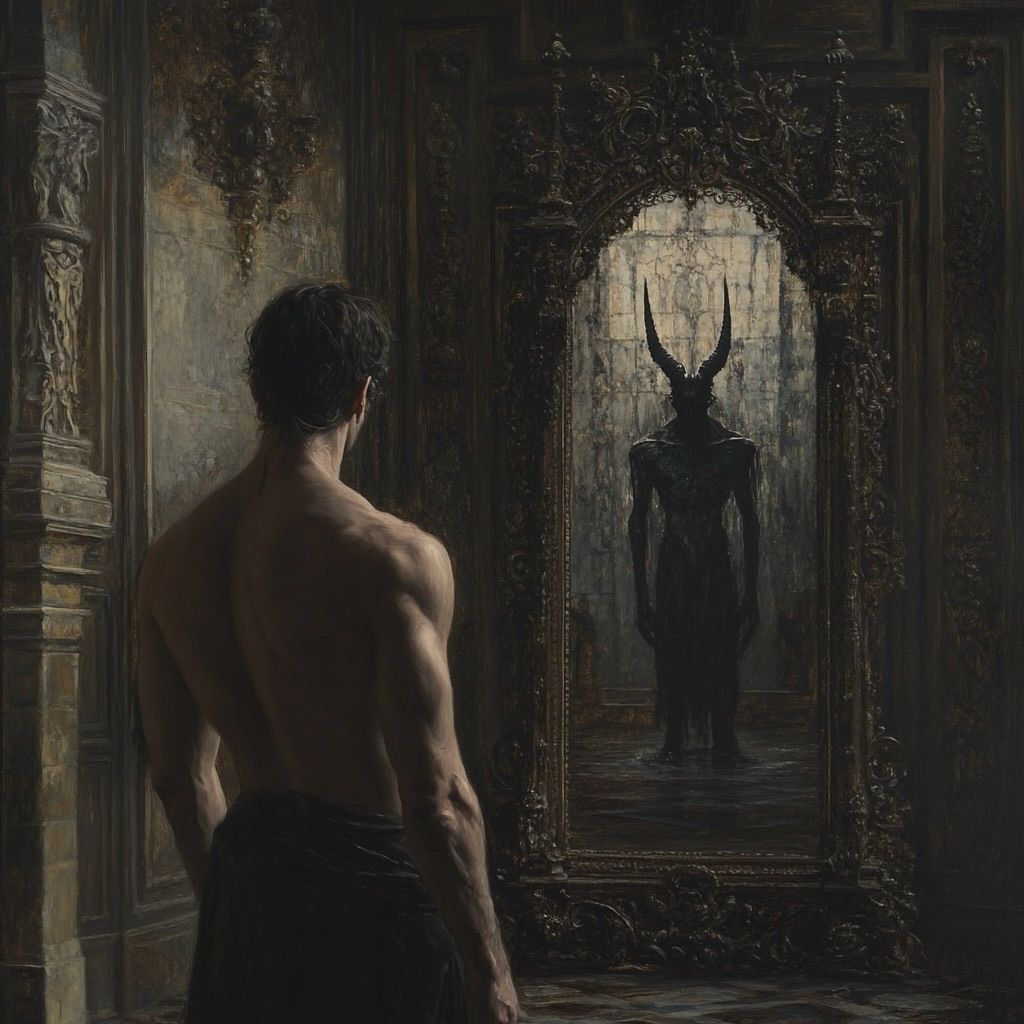







The human experience is a tapestry woven with threads of joy and sorrow, laughter and despair, each strand inseparable from the other. Few mediums capture this duality as vividly as comedy, a craft that transforms the absurdities and pains of existence into moments of shared catharsis. Yet, beneath the surface of every laugh lies a
To flirt with lust and passion is to step into a cosmic dance, a primal waltz with the divine that reverberates through both the fierce imagery of Kali, the Hindu goddess of destruction, and the sacrificial narratives of the Bible. Offering one’s severed head to Kali’s sacred garland or laying down one’s life at the
From the earliest stages of life, society begins weaving a subtle yet pervasive narrative: the employee mindset. This mindset, a predisposition to prioritize stability, compliance, and external validation over autonomy and self-directed purpose, is not innate but meticulously cultivated. The data points provided—nursery as the genesis, primary school instilling 35%, high school 65%, college 75%,
The cinematic portrayal of Malèna, in Giuseppe Tornatore’s 2000 film Malèna, serves as a profound allegory for the human condition, where beauty becomes both a divine gift and a crucible of existential isolation. Malèna, a woman of striking physical allure, navigates a Sicilian town steeped in patriarchal desire and judgment, her aura radiating a spiritual
“Light Years Ahead of Our Time” is a reflective poem that explores the dichotomy between the physical and spiritual realms. The poet observes the soul’s journey towards bliss, a realm where physical existence is prohibited. This journey triggers a tug-of-war within the poet between the desires of the physical body, drawn towards worldly pleasures symbolized by “Kali’s haunted mansion,” and the soul and spirit, yearning for a blissful habitat where true freedom resides. The poem captures the poet’s inner conflict and confusion as they navigate between these contrasting realms, highlighting the struggle to reconcile earthly desires with spiritual enlightenment.
The human experience is a tapestry woven with threads of joy and sorrow, laughter and despair, each strand inseparable from the other. Few mediums capture this duality as vividly as comedy, a craft that transforms the absurdities and pains of existence into moments of shared catharsis. Yet, beneath the surface of every laugh lies a
To flirt with lust and passion is to step into a cosmic dance, a primal waltz with the divine that reverberates through both the fierce imagery of Kali, the Hindu goddess of destruction, and the sacrificial narratives of the Bible. Offering one’s severed head to Kali’s sacred garland or laying down one’s life at the
From the earliest stages of life, society begins weaving a subtle yet pervasive narrative: the employee mindset. This mindset, a predisposition to prioritize stability, compliance, and external validation over autonomy and self-directed purpose, is not innate but meticulously cultivated. The data points provided—nursery as the genesis, primary school instilling 35%, high school 65%, college 75%,
The cinematic portrayal of Malèna, in Giuseppe Tornatore’s 2000 film Malèna, serves as a profound allegory for the human condition, where beauty becomes both a divine gift and a crucible of existential isolation. Malèna, a woman of striking physical allure, navigates a Sicilian town steeped in patriarchal desire and judgment, her aura radiating a spiritual
“Sorry Ms. Bonita” is a poem that delves into the complexities of desire, longing, and the internal struggle between temptation and restraint. In this poem, the poet expresses an apology to Ms. Bonita, suggesting that while he desires to be with her intimately, he ultimately decides against it.
The poet’s reluctance to lay with Ms. Bonita could stem from various reasons:
Moral or Ethical Considerations: The poet may be grappling with the ethical implications of engaging in a physical relationship outside of a committed partnership or marriage. He may feel a sense of responsibility or guilt towards his existing commitments.
Respect for Ms. Bonita: Despite his desire, the poet may deeply respect Ms. Bonita as an individual and wish to avoid actions that could potentially harm or disrespect her in any way. He may prioritize her well-being and emotional integrity over his own desires.
Fear of Consequences: The poet might fear the potential consequences of pursuing a physical relationship with Ms. Bonita, such as damaging existing relationships or facing social or personal repercussions. This fear could act as a deterrent, prompting him to refrain from acting on his desires.
Self-Control and Discipline: The poet may possess a strong sense of self-control and discipline, choosing to prioritize long-term fulfilment and emotional stability over momentary gratification. He recognizes the transient nature of physical desires and opts for restraint, seeking deeper connections and fulfilment beyond the physical realm.
Overall, the poet’s decision not to lay with Ms. Bonita reflects a complex interplay of moral, emotional, and practical considerations, underscoring the depth of his character and his commitment to values beyond mere physical gratification.
The human experience is a tapestry woven with threads of joy and sorrow, laughter and despair, each strand inseparable from the other. Few mediums capture this duality as vividly as comedy, a craft that transforms the absurdities and pains of existence into moments of shared catharsis. Yet, beneath the surface of every laugh lies a
To flirt with lust and passion is to step into a cosmic dance, a primal waltz with the divine that reverberates through both the fierce imagery of Kali, the Hindu goddess of destruction, and the sacrificial narratives of the Bible. Offering one’s severed head to Kali’s sacred garland or laying down one’s life at the
From the earliest stages of life, society begins weaving a subtle yet pervasive narrative: the employee mindset. This mindset, a predisposition to prioritize stability, compliance, and external validation over autonomy and self-directed purpose, is not innate but meticulously cultivated. The data points provided—nursery as the genesis, primary school instilling 35%, high school 65%, college 75%,
The cinematic portrayal of Malèna, in Giuseppe Tornatore’s 2000 film Malèna, serves as a profound allegory for the human condition, where beauty becomes both a divine gift and a crucible of existential isolation. Malèna, a woman of striking physical allure, navigates a Sicilian town steeped in patriarchal desire and judgment, her aura radiating a spiritual
This poem delves into themes of struggle, resilience, and spiritual growth. The speaker reflects on the harshness of the world, likening it to a place that consumes souls ruthlessly. The mention of a protected 33-pathway leading to the chamber of the soul suggests a guarded inner sanctuary amidst external challenges.
The poem juxtaposes the idea of external influences attempting to penetrate the soul with the necessity of possessing a genuine essence, depicted metaphorically as having a code akin to an impenetrable barrier against falsehoods and propaganda.
The reference to vanity from the ’80s with soul implies a yearning for authenticity amidst superficiality. The fear of death before the age of 33 underscores a desire for longevity and the opportunity to witness personal growth and transformation.
The speaker expresses hope for a spiritual rebirth akin to the resurrection of Jesus at the age of 33, symbolizing redemption and renewal. There’s a journey depicted from being influenced by external philosophies, represented by the 33-degree Mason philosophy, to a quest for inner freedom and cleansing.
Ultimately, the poem explores the consequences of power and influence on the soul, illustrating the inner turmoil and fragmentation experienced by the speaker despite external success, and the aspiration for true internal liberation and authenticity.
The human experience is a tapestry woven with threads of joy and sorrow, laughter and despair, each strand inseparable from the other. Few mediums capture this duality as vividly as comedy, a craft that transforms the absurdities and pains of existence into moments of shared catharsis. Yet, beneath the surface of every laugh lies a
To flirt with lust and passion is to step into a cosmic dance, a primal waltz with the divine that reverberates through both the fierce imagery of Kali, the Hindu goddess of destruction, and the sacrificial narratives of the Bible. Offering one’s severed head to Kali’s sacred garland or laying down one’s life at the
From the earliest stages of life, society begins weaving a subtle yet pervasive narrative: the employee mindset. This mindset, a predisposition to prioritize stability, compliance, and external validation over autonomy and self-directed purpose, is not innate but meticulously cultivated. The data points provided—nursery as the genesis, primary school instilling 35%, high school 65%, college 75%,
The cinematic portrayal of Malèna, in Giuseppe Tornatore’s 2000 film Malèna, serves as a profound allegory for the human condition, where beauty becomes both a divine gift and a crucible of existential isolation. Malèna, a woman of striking physical allure, navigates a Sicilian town steeped in patriarchal desire and judgment, her aura radiating a spiritual
This poem celebrates the prowess of a young athlete, likely a soccer player, who excels both artistically and athletically on the field. The player’s skillful moves are likened to poetry in motion, causing a storm of excitement whenever they score a goal. Despite their youth, they carry their team to victory at both club and national levels, gaining confidence and a reputation for dominance. The poem suggests that the athlete is already a legend in the making, deserving of recognition in the form of a statue before they pass away. The athlete’s ambition is to leave a lasting mark on the world with their exceptional talent and greatness.
The human experience is a tapestry woven with threads of joy and sorrow, laughter and despair, each strand inseparable from the other. Few mediums capture this duality as vividly as comedy, a craft that transforms the absurdities and pains of existence into moments of shared catharsis. Yet, beneath the surface of every laugh lies a
To flirt with lust and passion is to step into a cosmic dance, a primal waltz with the divine that reverberates through both the fierce imagery of Kali, the Hindu goddess of destruction, and the sacrificial narratives of the Bible. Offering one’s severed head to Kali’s sacred garland or laying down one’s life at the
From the earliest stages of life, society begins weaving a subtle yet pervasive narrative: the employee mindset. This mindset, a predisposition to prioritize stability, compliance, and external validation over autonomy and self-directed purpose, is not innate but meticulously cultivated. The data points provided—nursery as the genesis, primary school instilling 35%, high school 65%, college 75%,
The cinematic portrayal of Malèna, in Giuseppe Tornatore’s 2000 film Malèna, serves as a profound allegory for the human condition, where beauty becomes both a divine gift and a crucible of existential isolation. Malèna, a woman of striking physical allure, navigates a Sicilian town steeped in patriarchal desire and judgment, her aura radiating a spiritual
Leave a comment