Dissected Threads
Tread One : Philosophical And Biblical Meaning Of Black Diamond Slaughter .


IntroThe most dangerous temptations rarely arrive wearing the face of evil. They come adorned with beauty, virtue, and promises that seem almost sacred. What nearly destroyed me was not ugliness but the illusion that something pleasing must also be good. In that moment, discernment demanded I distrust my own impulses and judge by truth rather…

IntroThey call him nonchalant, but they rarely understand what lies beneath the silence. To most, his calm expression looks like detachment; in reality, it is discipline disguised as ease. Like Zoro from One Piece, he carries himself with quiet conviction, allowing his actions to speak where words fall short. On the pitch, he finds a…
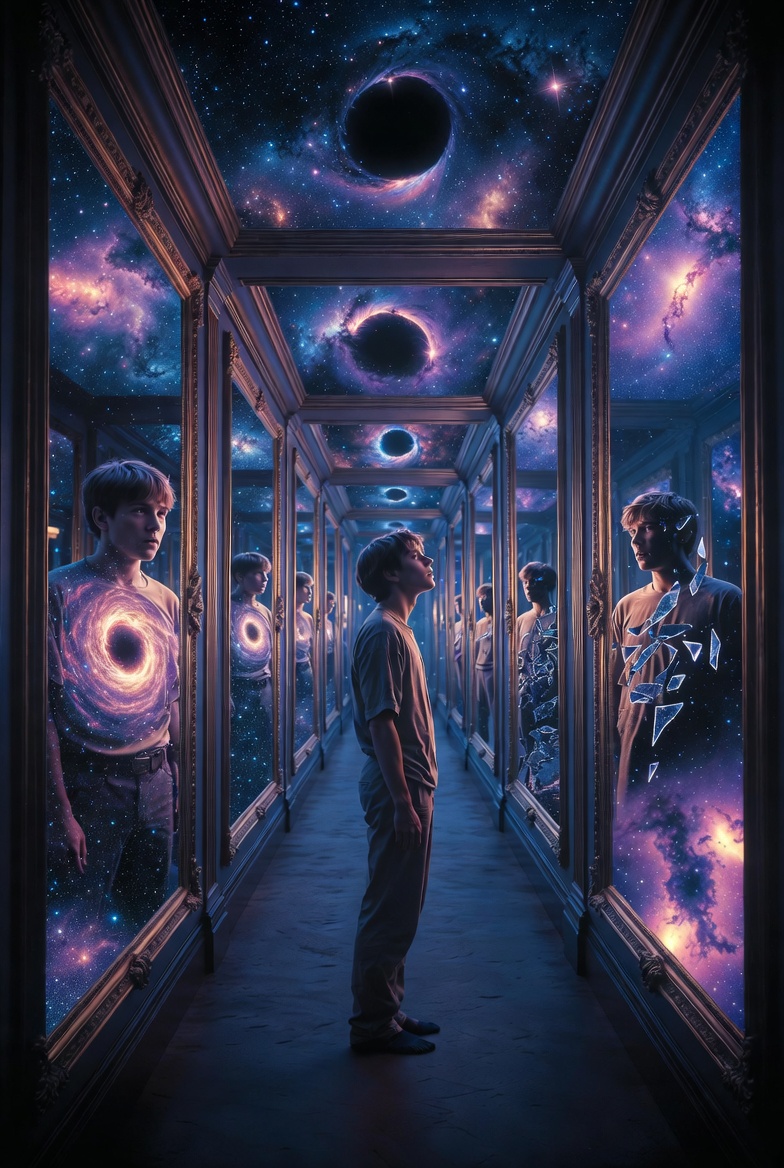
IntroThe second floor didn’t feel like part of a hotel it felt like a trial. Every step carried the weight of memories I had spent years trying to outrun. The air itself seemed to recognize my fear, thick with the quiet certainty that there are places capable of peeling away every layer you’ve carefully worn…
Peace and silence…

IntroSome places aren’t built with bricks, but with the hidden chambers of the soul. I never intended to enter the hotel, yet somehow I found myself climbing its endless floors, where every room seemed to know the parts of me I had spent a lifetime hiding. What waited inside wasn’t there to kill me—it wanted…
IntroThis poem explores the terrifying contradiction of a soul that longs for righteousness while remaining devoted to its own corruption. Through images of prayer, marriage, violence, blasphemy, and judgment, the speaker wrestles with hypocrisy, pride, and the illusion of holiness. What begins as a confession of self-deception gradually descends into a vision of spiritual ruin,…

Intro She broke my heart on our honeymoon. As the sun laid to rest and the moon rose, its gentle light caressing my eyes, I fell asleep believing in forever. I woke to an empty bed and a letter in her place: “If you want your heart restored forever, come to my hotel and see…

A direct challenge to the heart, drawing from Sahih Muslim 2767a and John 3:16. The Christian Perspective: God’s Infinite Love and Justice Meet at the Cross John 3:16 declares: “For God so loved the world that he gave his one and only Son, that whoever believes in him shall not perish but have eternal life.” Christianity proclaims a God…

IntroSuccess came so relentlessly that it numbed me to life itself. Beneath the applause and achievements, I felt an urgent need to melt the ice before it permanently sealed my veins shut. What once carried passion and purpose had hardened into frosted spikes, sharp enough to pierce my own heart. While the world stood at…

Intro As I watch the minutes pass, I become increasingly aware of how time shapes me in ways I rarely notice until I pause to look inward. Each second seems to carry away a small piece of my innocence, leaving behind a version of myself that is more guarded, more distant from the softness I…
IntroThe most dangerous temptations rarely arrive wearing the face of evil. They come adorned with beauty, virtue, and promises that seem almost sacred. What nearly destroyed me was not ugliness but the illusion that something pleasing must also be good. In that moment, discernment demanded I distrust my own impulses and judge by truth rather…
IntroThey call him nonchalant, but they rarely understand what lies beneath the silence. To most, his calm expression looks like detachment; in reality, it is discipline disguised as ease. Like Zoro from One Piece, he carries himself with quiet conviction, allowing his actions to speak where words fall short. On the pitch, he finds a…
IntroThe second floor didn’t feel like part of a hotel it felt like a trial. Every step carried the weight of memories I had spent years trying to outrun. The air itself seemed to recognize my fear, thick with the quiet certainty that there are places capable of peeling away every layer you’ve carefully worn…
Peace and silence…
IntroSome places aren’t built with bricks, but with the hidden chambers of the soul. I never intended to enter the hotel, yet somehow I found myself climbing its endless floors, where every room seemed to know the parts of me I had spent a lifetime hiding. What waited inside wasn’t there to kill me—it wanted…
IntroThis poem explores the terrifying contradiction of a soul that longs for righteousness while remaining devoted to its own corruption. Through images of prayer, marriage, violence, blasphemy, and judgment, the speaker wrestles with hypocrisy, pride, and the illusion of holiness. What begins as a confession of self-deception gradually descends into a vision of spiritual ruin,…
Intro She broke my heart on our honeymoon. As the sun laid to rest and the moon rose, its gentle light caressing my eyes, I fell asleep believing in forever. I woke to an empty bed and a letter in her place: “If you want your heart restored forever, come to my hotel and see…
A direct challenge to the heart, drawing from Sahih Muslim 2767a and John 3:16. The Christian Perspective: God’s Infinite Love and Justice Meet at the Cross John 3:16 declares: “For God so loved the world that he gave his one and only Son, that whoever believes in him shall not perish but have eternal life.” Christianity proclaims a God…
IntroSuccess came so relentlessly that it numbed me to life itself. Beneath the applause and achievements, I felt an urgent need to melt the ice before it permanently sealed my veins shut. What once carried passion and purpose had hardened into frosted spikes, sharp enough to pierce my own heart. While the world stood at…
Intro As I watch the minutes pass, I become increasingly aware of how time shapes me in ways I rarely notice until I pause to look inward. Each second seems to carry away a small piece of my innocence, leaving behind a version of myself that is more guarded, more distant from the softness I…
The philosophical underpinning of this vivid, violent poetic imagery lies in the tension between purity and corruption, a recurring theme in existential and moral philosophy. The speaker’s “barbaric antics” and katana-wielding poetry reflect a Nietzschean rejection of conventional morality, embracing a radical, destructive act to “cleanse” a world deemed inherently impure. This aligns with Nietzsche’s concept of the will to power, where creation and destruction are intertwined—here, the artistry of poetry becomes a weapon to annihilate and, paradoxically, to renew. The assertion that “no one under the sun is pure” echoes existential despair, akin to Sartre’s view of human existence as fraught with inauthenticity, justifying extreme measures to confront this truth.
The invocation of “crucifying” with “sharpness the artistry” suggests a sacrificial motif, reminiscent of Camus’ absurd rebellion. The speaker’s method, though “insane,” is a deliberate confrontation with the absurd—a refusal to accept a meaningless world passively. By wielding poetry as a katana, the speaker elevates destruction to an art form, akin to Artaud’s Theatre of Cruelty, where shocking acts aim to awaken dormant truths. The “horrific scene” is thus a philosophical statement: to dismantle a corrupt world requires a violence that is both literal and symbolic, forcing society to face its own moral decay.
Yet, the final plea to “revive Azuza soul” and “illuminate society with hope” introduces a redemptive counterpoint, suggesting a Hegelian dialectic—destruction as a precursor to synthesis and renewal. This hope, though fragile, aligns with Buber’s philosophy of encounter, where true change emerges from confronting the “other” (here, society’s flaws) with radical authenticity. The poem’s barbarity, then, is not mere nihilism but a philosophical gauntlet: to shatter illusions of purity, expose humanity’s shared guilt, and carve a path toward a reimagined, hopeful society through the crucible of poetic violence.
IntroThe most dangerous temptations rarely arrive wearing the face of evil. They come adorned with beauty, virtue, and promises that seem almost sacred. What nearly destroyed me was not ugliness but the illusion that something pleasing must also be good. In that moment, discernment demanded I distrust my own impulses and judge by truth rather…
IntroThey call him nonchalant, but they rarely understand what lies beneath the silence. To most, his calm expression looks like detachment; in reality, it is discipline disguised as ease. Like Zoro from One Piece, he carries himself with quiet conviction, allowing his actions to speak where words fall short. On the pitch, he finds a…
IntroThe second floor didn’t feel like part of a hotel it felt like a trial. Every step carried the weight of memories I had spent years trying to outrun. The air itself seemed to recognize my fear, thick with the quiet certainty that there are places capable of peeling away every layer you’ve carefully worn…
Peace and silence…
IntroSome places aren’t built with bricks, but with the hidden chambers of the soul. I never intended to enter the hotel, yet somehow I found myself climbing its endless floors, where every room seemed to know the parts of me I had spent a lifetime hiding. What waited inside wasn’t there to kill me—it wanted…
IntroThis poem explores the terrifying contradiction of a soul that longs for righteousness while remaining devoted to its own corruption. Through images of prayer, marriage, violence, blasphemy, and judgment, the speaker wrestles with hypocrisy, pride, and the illusion of holiness. What begins as a confession of self-deception gradually descends into a vision of spiritual ruin,…
Intro She broke my heart on our honeymoon. As the sun laid to rest and the moon rose, its gentle light caressing my eyes, I fell asleep believing in forever. I woke to an empty bed and a letter in her place: “If you want your heart restored forever, come to my hotel and see…
A direct challenge to the heart, drawing from Sahih Muslim 2767a and John 3:16. The Christian Perspective: God’s Infinite Love and Justice Meet at the Cross John 3:16 declares: “For God so loved the world that he gave his one and only Son, that whoever believes in him shall not perish but have eternal life.” Christianity proclaims a God…
IntroSuccess came so relentlessly that it numbed me to life itself. Beneath the applause and achievements, I felt an urgent need to melt the ice before it permanently sealed my veins shut. What once carried passion and purpose had hardened into frosted spikes, sharp enough to pierce my own heart. While the world stood at…
Intro As I watch the minutes pass, I become increasingly aware of how time shapes me in ways I rarely notice until I pause to look inward. Each second seems to carry away a small piece of my innocence, leaving behind a version of myself that is more guarded, more distant from the softness I…
Hedonism, as articulated by thinkers like Epicurus or modern utilitarian’s, prioritizes pleasure as the ultimate good, often encouraging the pursuit of immediate sensory gratification. In the poem, hook-up and porn culture embody this philosophy, reducing sex to a “fleeting minute of plight” driven by “impulsive pleasures and desires.” This relentless chase for instant gratification is depicted as parasitic, sapping the soul’s vitality and turning it into a “parasite” that feeds on shallow encounters without nourishing the self. Philosophically, this aligns with critiques from existentialists like Søren Kierkegaard, who warned that a life of aesthetic hedonism—living for momentary pleasures—leads to despair, as it fails to engage with deeper questions of meaning and authenticity.
In contrast, the poem advocates a virtue ethics approach, inspired by Aristotelian philosophy, where the good life is achieved through the cultivation of virtues such as temperance, patience, and fidelity. Aristotle argued that virtues are habits that align human actions with reason and the “golden mean,” fostering eudaimonia, or flourishing. The speaker’s commitment to waiting until marriage reflects this ethos, prioritizing restraint and long-term commitment over immediate gratification. By choosing to “vow to wait until marriage” and maintain a “zero body count,” the speaker exercises virtuous patience, preserving the soul’s dignity and fostering a deeper, more meaningful connection with a future spouse. This choice counters the erosive effects of hedonism, suggesting that true fulfilment lies in disciplined, intentional living rather than indulgent excess.
Biblical Perspective: Sinful Desires vs. Godly Virtue
The biblical worldview enriches this philosophical framework by grounding the critique of hedonism in the context of sin and divine purpose. Scripture frequently warns against the pursuit of fleeting pleasures that lead to spiritual destruction. Galatians 5:16-17 urges believers to “walk by the Spirit, and you will not gratify the desires of the flesh,” highlighting the conflict between carnal impulses and a life aligned with God’s will. The poem’s depiction of hedonistic desires turning the soul into a “parasite” echoes this biblical truth, portraying hook-up and porn culture as manifestations of fleshly indulgence that enslave rather than liberate. Romans 8:6 reinforces this, stating, “For to set the mind on the flesh is death, but to set the mind on the Spirit is life and peace.” The speaker’s rejection of casual “soul ties” and porn reflects a deliberate choice to resist the death-dealing path of hedonism in favour of spiritual life.
Cultural and Personal Implications
The poem’s portrayal of hedonism as a “grim reaper” slashing across culture suggests a broader societal decay, where unchecked indulgence undermines communal values of trust, fidelity, and mutual respect. Philosophically, this resonates with Alasdair MacIntyre’s critique in After Virtue, where he argues that modern societies, having lost a shared moral framework, descend into emotivism, prioritizing individual desires over collective goods. The speaker’s lament of a “culture compromised” reflects this loss, positioning hookup and porn culture as symptoms of a fragmented moral landscape.
Biblically, this cultural critique finds parallels in passages like 2 Timothy 3:1-4, which describes the last days as a time when people will be “lovers of pleasure rather than lovers of God.” The speaker’s resolve to stand apart from this trend embodies a prophetic stance, akin to Daniel’s refusal to defile himself with the king’s food (Daniel 1:8), choosing instead to honour God’s design. By maintaining a “zero body count” and vowing to wait, the speaker not only preserves personal integrity but also offers a counter-cultural witness to the transformative power of virtuous living.
Conclusion
The poem’s contrast between hedonism and virtue ethics, expanded through philosophical and biblical lenses, reveals a profound call to resist the parasitic allure of hook-up and porn culture. Philosophically, it critiques the shallow despair of hedonism while championing the flourishing that comes from virtuous restraint. Biblically, it frames this choice as a rejection of sinful desires in favour of God’s sacred design for intimacy, rooted in purity and covenantal love. The speaker’s commitment to waiting until marriage stands as both a personal and cultural act of defiance, preserving the soul’s dignity and pointing toward a life of meaning, integrity, and divine alignment. This dual framework challenges individuals to reconsider their approach to sexuality, urging a return to virtues that honour both the self and the divine purpose for human relationships.
IntroThe most dangerous temptations rarely arrive wearing the face of evil. They come adorned with beauty, virtue, and promises that seem almost sacred. What nearly destroyed me was not ugliness but the illusion that something pleasing must also be good. In that moment, discernment demanded I distrust my own impulses and judge by truth rather…
IntroThey call him nonchalant, but they rarely understand what lies beneath the silence. To most, his calm expression looks like detachment; in reality, it is discipline disguised as ease. Like Zoro from One Piece, he carries himself with quiet conviction, allowing his actions to speak where words fall short. On the pitch, he finds a…
IntroThe second floor didn’t feel like part of a hotel it felt like a trial. Every step carried the weight of memories I had spent years trying to outrun. The air itself seemed to recognize my fear, thick with the quiet certainty that there are places capable of peeling away every layer you’ve carefully worn…
Peace and silence…
IntroSome places aren’t built with bricks, but with the hidden chambers of the soul. I never intended to enter the hotel, yet somehow I found myself climbing its endless floors, where every room seemed to know the parts of me I had spent a lifetime hiding. What waited inside wasn’t there to kill me—it wanted…
IntroThis poem explores the terrifying contradiction of a soul that longs for righteousness while remaining devoted to its own corruption. Through images of prayer, marriage, violence, blasphemy, and judgment, the speaker wrestles with hypocrisy, pride, and the illusion of holiness. What begins as a confession of self-deception gradually descends into a vision of spiritual ruin,…
Intro She broke my heart on our honeymoon. As the sun laid to rest and the moon rose, its gentle light caressing my eyes, I fell asleep believing in forever. I woke to an empty bed and a letter in her place: “If you want your heart restored forever, come to my hotel and see…
A direct challenge to the heart, drawing from Sahih Muslim 2767a and John 3:16. The Christian Perspective: God’s Infinite Love and Justice Meet at the Cross John 3:16 declares: “For God so loved the world that he gave his one and only Son, that whoever believes in him shall not perish but have eternal life.” Christianity proclaims a God…
IntroSuccess came so relentlessly that it numbed me to life itself. Beneath the applause and achievements, I felt an urgent need to melt the ice before it permanently sealed my veins shut. What once carried passion and purpose had hardened into frosted spikes, sharp enough to pierce my own heart. While the world stood at…
Intro As I watch the minutes pass, I become increasingly aware of how time shapes me in ways I rarely notice until I pause to look inward. Each second seems to carry away a small piece of my innocence, leaving behind a version of myself that is more guarded, more distant from the softness I…
The poem Vultures depict the hook-up and porn culture as reducing sex to a “fleeting minute of plight” resonates deeply with both philosophical and biblical critiques of objectification and alienation. Philosophically, this aligns with existentialist perspectives, such as those of Jean-Paul Sartre and Martin Buber, who argue that objectification—treating others as mere objects for gratification—alienates individuals from their authentic selves and undermines genuine human connection. In this view, hook-up and porn culture commodifies intimacy, turning relational beings into tools for fleeting pleasure, thus eroding the possibility of an authentic “I-Thou” relationship, as Buber would describe, where individuals meet in mutual respect and presence.
From a biblical perspective, this critique is enriched by the understanding of sex as a sacred act designed by God to reflect profound spiritual and relational truths. In Genesis 2:24, the Bible states, “Therefore a man shall leave his father and mother and hold fast to his wife, and they shall become one flesh.” This verse underscores the divine intention for sex to be a unifying, covenantal act between husband and wife, fostering intimacy, mutual commitment, and spiritual oneness. Hookup culture, by contrast, fragments this unity, treating sex as a transactional exchange devoid of covenantal love, which the Bible equates with the selfless, sacrificial love of Christ for the Church (Ephesians 5:25).
Pornography further exacerbates this alienation by reducing individuals to mere images for consumption, violating the biblical command to honor the dignity of others as beings created in God’s image (Genesis 1:27). Jesus’ teaching in Matthew 5:28—”But I say to you that everyone who looks at a woman with lustful intent has already committed adultery with her in his heart”—directly confronts the pornographic mindset, highlighting how lustful objectification dehumanizes both the viewer and the viewed, severing the spiritual connection God intended for human relationships.
Moreover, the poem’s reference to the soul becoming a “parasite” through impulsive desires echoes biblical warnings about the destructive power of sin. Romans 6:12-13 urges believers not to let “sin reign in your mortal body, to make you obey its passions,” but to present themselves to God as instruments of righteousness. Hookup and porn culture, by prioritizing fleeting pleasure over divine purpose, enslaves individuals to their base desires, alienating them from God’s design for holiness and relational flourishing.
The poem’s speaker, by vowing to wait until marriage, embodies a biblical counter-narrative rooted in purity and faithfulness. This aligns with Hebrews 13:4, which declares, “Let marriage be held in honor among all, and let the marriage bed be undefiled, for God will judge the sexually immoral and adulterous.” This commitment reflects a rejection of cultural alienation in favor of a restored relationship with God’s vision for sex as a “pleasurable essence” shared in the sacred context of marriage.
In summary, the poem’s critique of hook-up and porn culture as objectifying and alienating finds a robust parallel in biblical teachings that elevate sex as a sacred, covenantal act. While existentialist philosophy highlights the loss of authentic human connection, Scripture grounds this critique in the divine purpose of human relationships, calling individuals to resist cultural decay through purity, fidelity, and reverence for God’s design. This dual lens reveals the profound spiritual and relational cost of commodifying intimacy, urging a return to a holistic view of love that honours both God and neighbour.
IntroThe most dangerous temptations rarely arrive wearing the face of evil. They come adorned with beauty, virtue, and promises that seem almost sacred. What nearly destroyed me was not ugliness but the illusion that something pleasing must also be good. In that moment, discernment demanded I distrust my own impulses and judge by truth rather…
IntroThey call him nonchalant, but they rarely understand what lies beneath the silence. To most, his calm expression looks like detachment; in reality, it is discipline disguised as ease. Like Zoro from One Piece, he carries himself with quiet conviction, allowing his actions to speak where words fall short. On the pitch, he finds a…
IntroThe second floor didn’t feel like part of a hotel it felt like a trial. Every step carried the weight of memories I had spent years trying to outrun. The air itself seemed to recognize my fear, thick with the quiet certainty that there are places capable of peeling away every layer you’ve carefully worn…
Peace and silence…
IntroSome places aren’t built with bricks, but with the hidden chambers of the soul. I never intended to enter the hotel, yet somehow I found myself climbing its endless floors, where every room seemed to know the parts of me I had spent a lifetime hiding. What waited inside wasn’t there to kill me—it wanted…
IntroThis poem explores the terrifying contradiction of a soul that longs for righteousness while remaining devoted to its own corruption. Through images of prayer, marriage, violence, blasphemy, and judgment, the speaker wrestles with hypocrisy, pride, and the illusion of holiness. What begins as a confession of self-deception gradually descends into a vision of spiritual ruin,…
Intro She broke my heart on our honeymoon. As the sun laid to rest and the moon rose, its gentle light caressing my eyes, I fell asleep believing in forever. I woke to an empty bed and a letter in her place: “If you want your heart restored forever, come to my hotel and see…
A direct challenge to the heart, drawing from Sahih Muslim 2767a and John 3:16. The Christian Perspective: God’s Infinite Love and Justice Meet at the Cross John 3:16 declares: “For God so loved the world that he gave his one and only Son, that whoever believes in him shall not perish but have eternal life.” Christianity proclaims a God…
IntroSuccess came so relentlessly that it numbed me to life itself. Beneath the applause and achievements, I felt an urgent need to melt the ice before it permanently sealed my veins shut. What once carried passion and purpose had hardened into frosted spikes, sharp enough to pierce my own heart. While the world stood at…
Intro As I watch the minutes pass, I become increasingly aware of how time shapes me in ways I rarely notice until I pause to look inward. Each second seems to carry away a small piece of my innocence, leaving behind a version of myself that is more guarded, more distant from the softness I…

Dissected Threads
Tread One : How Hook up and Porn Culture Destroys Sacred Intimacy
Thread Two : Hedonism vs Virtue Ethics.