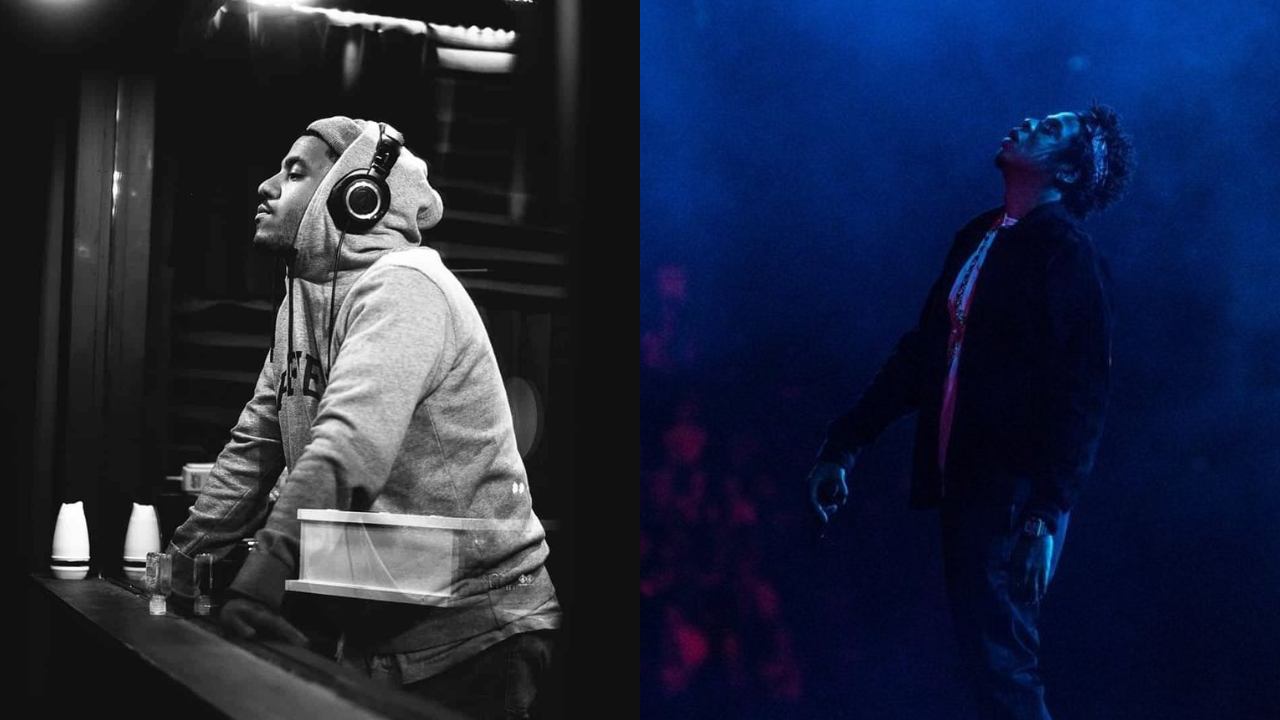
Details : Explore the powerful parallels between Jay-Z’s “I Know” and Tragic Hero’s “Mercy,” two hip-hop tracks that personify addiction as a seductive woman. Through vivid metaphors of lust, materialism, and dependency, both songs delve into the emotional and physical toll of temptation, with Jay-Z’s confident swagger contrasting Tragic Hero’s introspective struggle. Poem Treads :…
I stand at the edge of philosophy’s abyss, and it calls to me. Its questions—vast as starlit skies, sharp as a blade—cut through the quiet of my mind. Why am I here? What is real? What holds meaning when the world feels like a fleeting shadow? Each inquiry is a thread, spiraling, twisting, weaving a…
“Do not store up for yourselves treasures on earth, where moths and vermin destroy, and where thieves break in and steal. But store up for yourselves treasures in heaven… For where your treasure is, there your heart will be also.”— Matthew 6:19-21 (NIV)As I reflect on the words of my own heart poured into verse,…
This series of blogs explores how lust begins as a subtle pull but evolves into an inner war—one that can distort judgment, cloud reason, and awaken darker impulses. It delves into the uneasy battleground where desire and evil quietly intertwine, shaping a conflict within the self.
Details : Explore the powerful parallels between Jay-Z’s “I Know” and Tragic Hero’s “Mercy,” two hip-hop tracks that personify addiction as a seductive woman. Through vivid metaphors of lust, materialism, and dependency, both songs delve into the emotional and physical toll of temptation, with Jay-Z’s confident swagger contrasting Tragic Hero’s introspective struggle. Poem Treads :…
I stand at the edge of philosophy’s abyss, and it calls to me. Its questions—vast as starlit skies, sharp as a blade—cut through the quiet of my mind. Why am I here? What is real? What holds meaning when the world feels like a fleeting shadow? Each inquiry is a thread, spiraling, twisting, weaving a…
“Do not store up for yourselves treasures on earth, where moths and vermin destroy, and where thieves break in and steal. But store up for yourselves treasures in heaven… For where your treasure is, there your heart will be also.”— Matthew 6:19-21 (NIV)As I reflect on the words of my own heart poured into verse,…
I’ve been drifting through the chaos of life like a ship on a stormy sea, every wave testing the strength of my soul, every shadow reflecting a piece of me I’m still learning to understand. The world moves fast, indifferent to the storms inside a single heart, and I’ve learned that dreams are fragile treasures, hidden behind walls of doubt and fear. Every scar I carry is a map of battles fought and lessons earned, every failure a compass pointing me toward the path I was meant to walk. I chase a treasure I can’t yet name, a purpose that feels both distant and inevitable, knowing that the risks I take now will shape the person I will become. In the silence of the night, I feel my fire burning brighter than the chaos around me, and though no one sees the storms I survive, I hold my course—unyielding, relentless, like a soul born to rise.
Outro
And when the tides finally settle and the storms fade into memory, I’ll stand at the edge of my own Grand Line, the path I’ve fought to navigate etched into every scar and every lesson I’ve learned. The seas I’ve sailed were never calm, and the winds never gentle, but every risk I took, every fall I survived, shaped the person I am becoming. I’ve chased treasures no one else could see, fought battles that tested not just my body but the fire in my heart, and through it all, I’ve learned that my strength lies in resilience, in bending without breaking—my heart, like rubber, stretching across every dream, every doubt, every storm. When the horizon finally meets my gaze, when I uncover the One Piece of my own soul, I’ll know that all the pain, all the struggles, all the lonely nights were never wasted—they were the map that led me here. And though the world may sail on, oblivious to the storms I survived, I will rise, untamed, unshaken, alive, carrying the fire that no ocean, no storm, and no shadow can ever extinguish.
Details : Explore the powerful parallels between Jay-Z’s “I Know” and Tragic Hero’s “Mercy,” two hip-hop tracks that personify addiction as a seductive woman. Through vivid metaphors of lust, materialism, and dependency, both songs delve into the emotional and physical toll of temptation, with Jay-Z’s confident swagger contrasting Tragic Hero’s introspective struggle. Poem Treads :…
I stand at the edge of philosophy’s abyss, and it calls to me. Its questions—vast as starlit skies, sharp as a blade—cut through the quiet of my mind. Why am I here? What is real? What holds meaning when the world feels like a fleeting shadow? Each inquiry is a thread, spiraling, twisting, weaving a…
“Do not store up for yourselves treasures on earth, where moths and vermin destroy, and where thieves break in and steal. But store up for yourselves treasures in heaven… For where your treasure is, there your heart will be also.”— Matthew 6:19-21 (NIV)As I reflect on the words of my own heart poured into verse,…
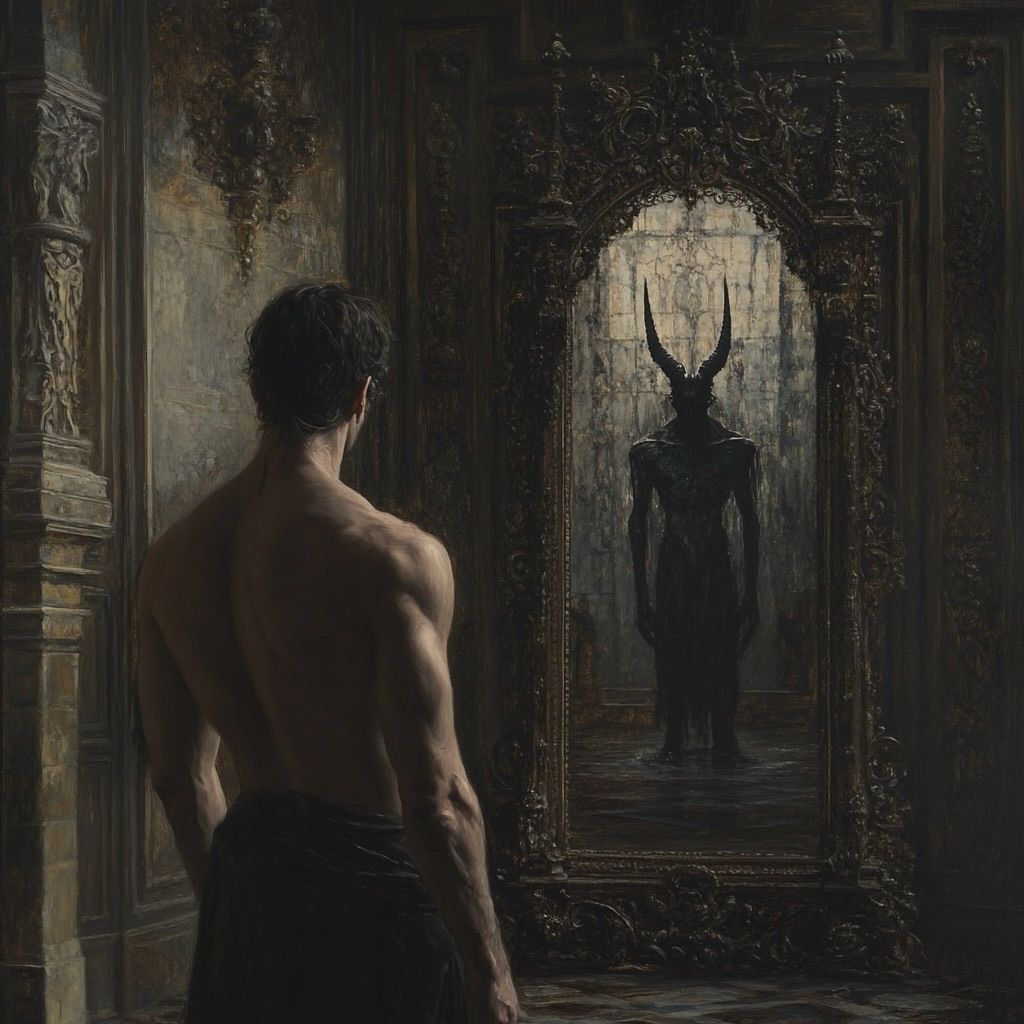
In the shadowed theatre of the human spirit, where ghosts of yesterday clash violently with the fragile promise of tomorrow, I catch fleeting glimpses of Triumph shimmering on the distant horizon like a defiant beacon. My troubled past charges at me with ferocious might, its claws sinking deep into my shoulders, weighing me down beneath layers of regret, shame, and unhealed wounds that blind my eyesight with every piercing vision. Yet I refuse to stay down—I won’t be polite clinging desperately to faith with bloodied knuckles, a stubborn lifeline against the storm. Then Life herself leans in close, her breath warm and velvet-soft against my ear, whispering tenderly with seductive wisdom: “Stop chasing triumph just for me. Come, let me lead you to the land of vanity, where you can savour every delightful vice, free from the exhausting burdens of guilt, shame, and pride.” In that intimate moment, the true intrigue unfolds—not as crude temptation, but as a profound existential choice: surrender to the effortless kingdom of self-indulgence where the soul trades growth for fleeting comfort, or endure the bruising fight toward authentic triumph, where resilience forges character from the very chains that seek to break us.
Outro
And yet, as the final stitch drew tight and the blood-warm coat settled upon her shoulders like a second skin, I stood alone with the hollow echo of my own unraveling. The fallen angels inside me had fallen silent at last, their vexed wings folded in exhausted surrender, while the thorns I once feared now rested harmless against her warmth. In that quiet aftermath I felt no rope around my throat, only the strange, lingering caress of exposure—the gallows I had imagined dissolving into mist. Perhaps this was the true blasphemy: not the sharing of velvet sins, but the discovery that my deepest, leathered thoughts, once sewn and worn, left me lighter than I had ever been, soul-bared and strangely free, wondering if she would ever return the needle so I might begin stitching myself back together again.
Details : Explore the powerful parallels between Jay-Z’s “I Know” and Tragic Hero’s “Mercy,” two hip-hop tracks that personify addiction as a seductive woman. Through vivid metaphors of lust, materialism, and dependency, both songs delve into the emotional and physical toll of temptation, with Jay-Z’s confident swagger contrasting Tragic Hero’s introspective struggle. Poem Treads :…
I stand at the edge of philosophy’s abyss, and it calls to me. Its questions—vast as starlit skies, sharp as a blade—cut through the quiet of my mind. Why am I here? What is real? What holds meaning when the world feels like a fleeting shadow? Each inquiry is a thread, spiraling, twisting, weaving a…
“Do not store up for yourselves treasures on earth, where moths and vermin destroy, and where thieves break in and steal. But store up for yourselves treasures in heaven… For where your treasure is, there your heart will be also.”— Matthew 6:19-21 (NIV)As I reflect on the words of my own heart poured into verse,…
In the shadowed theatre of the human spirit, where ghosts of yesterday clash violently with the fragile promise of tomorrow, I catch fleeting glimpses of Triumph shimmering on the distant horizon like a defiant beacon. My troubled past charges at me with ferocious might, its claws sinking deep into my shoulders, weighing me down beneath layers of regret, shame, and unhealed wounds that blind my eyesight with every piercing vision. Yet I refuse to stay down—I won’t be polite clinging desperately to faith with bloodied knuckles, a stubborn lifeline against the storm. Then Life herself leans in close, her breath warm and velvet-soft against my ear, whispering tenderly with seductive wisdom: “Stop chasing triumph just for me. Come, let me lead you to the land of vanity, where you can savour every delightful vice, free from the exhausting burdens of guilt, shame, and pride.” In that intimate moment, the true intrigue unfolds—not as crude temptation, but as a profound existential choice: surrender to the effortless kingdom of self-indulgence where the soul trades growth for fleeting comfort, or endure the bruising fight toward authentic triumph, where resilience forges character from the very chains that seek to break us.
Outro
And yet, as the echoes of that tender whisper fade into the gathering dusk, I tighten my bloodied grip on faith and rise once more, refusing the velvet road to vanity. The past may charge again with all its savage might, blinding my eyes with familiar ghosts, but I will not loosen my hold, nor will I be polite in the face of surrender. Triumph is no longer a distant shimmer I merely glimpse—it is the quiet fire forged in every stubborn refusal to kneel, the sacred defiance that turns bruises into armor and pain into purpose. Life may lean in with her sweetest temptations, promising freedom from guilt, shame, and pride, yet I have learned that true liberation lives not in the land of easy vices, but in the bruised, unyielding ascent toward becoming whole. So let the visions blind me if they must; I will walk forward by something deeper than sight, carrying my scars like quiet stars, knowing that the real triumph was never the arrival—it was the sacred, impolite refusal to stay down.
Details : Explore the powerful parallels between Jay-Z’s “I Know” and Tragic Hero’s “Mercy,” two hip-hop tracks that personify addiction as a seductive woman. Through vivid metaphors of lust, materialism, and dependency, both songs delve into the emotional and physical toll of temptation, with Jay-Z’s confident swagger contrasting Tragic Hero’s introspective struggle. Poem Treads :…
I stand at the edge of philosophy’s abyss, and it calls to me. Its questions—vast as starlit skies, sharp as a blade—cut through the quiet of my mind. Why am I here? What is real? What holds meaning when the world feels like a fleeting shadow? Each inquiry is a thread, spiraling, twisting, weaving a…
“Do not store up for yourselves treasures on earth, where moths and vermin destroy, and where thieves break in and steal. But store up for yourselves treasures in heaven… For where your treasure is, there your heart will be also.”— Matthew 6:19-21 (NIV)As I reflect on the words of my own heart poured into verse,…
Faith feels like a sharp blade in my own hands, slicing clean through the fear that was slowly moulded into a wild, raging beast inside me throughout all those horrific years. I watched that fear grow teeth and claws, feeding on every nightmare, every betrayal, every moment I thought I wouldn’t survive. But Yeshua is right here with me, paving the way straight through the flames that are trying to consume me. He walks ahead, and somehow His presence is refining me with grace instead of letting the fire destroy me. This life isn’t some casual game I can play half-heartedly—my soul can actually be slain, ripped apart and cut into pieces if I let it, all for Lucy’s personal gains. I feel the weight of that truth in my bones now: eternity is on the line, and the enemy would love nothing more than to tear me apart for sport. So I grip this blade of faith tighter, letting Yeshua lead me through the blaze, because I refuse to let my soul become another trophy for the darkness.
Outro
So here I stand, blade of faith still dripping with the remnants of that fear-beast I finally cut down. The flames didn’t consume me—Yeshua walked me straight through them, and every lick of fire only burned away what needed to die. Grace didn’t just save me; it sharpened me. This life was never a game, and my soul was never up for Lucy’s twisted entertainment. I almost let the darkness carve me into pieces for its own sick pleasure, but not anymore. I’m still here, refined, breathing, and holding the line. The war isn’t over, but neither am I. Yeshua paved the way—now I walk it with no fear left to feed on. The beast is dead. The soul is whole. And the next time the fire rises, I’ll smile through it, because I already know who’s walking me home.