
Description This piece channels the tragic downfall of a public figure, drawing inspiration from the life and struggles of Jimmy Swaggart, the famed televangelist who faced a public moral failure in the late 1980s. It reflects the internal conflict of a charismatic leader who, despite wielding influence and delivering sermons to inspire others, finds themselves
Description This poem, Call Me A.C. Green…, is an introspective and reflective piece that portrays the author’s journey of self-discipline, spirituality, and perseverance. Using the metaphor of the basketball “court of life,” the poem connects the struggles of living a morally centered life to the commitment of A.C. Green, a former NBA player known for
Description This piece offers a satirical critique of the modern dynamic between billionaires, online influencers, and globalist elites. It paints a vivid picture of influencers and billionaires attempting to disrupt the establishment, ostensibly to prevent a new world order. However, the irony lies in their unwitting acceleration of the very change they aim to resist.
Description From a young age, she longed to walk with God in His golden garden, dreaming of divine peace and eternal connection. But her innocence was shattered when a trusted church leader betrayed her, masking his lust as piety and leaving her to grapple with emotions she couldn’t understand. Seeking comfort from her parents, she
Description This poem reflects a powerful metaphor for life, where the speaker’s journey mirrors Bruce Lee’s Game of Death—a symbolic ascent to power and control, only to face a sudden, devastating fall. The “forbidden mansion” and the throne symbolize the speaker’s elevated status or achievements, acquired through perseverance, but also under constant threat from those
Description This poem captures a sense of internal conflict, blending themes of speed, creativity, and spiritual turmoil. The speaker identifies as a “speed demon,” suggesting a feeling of uncontrollable energy or compulsion, especially in the act of writing or creating (“these poetic artistry’s / evoke fast as lightning”). The imagery of lightning conveys a sudden,
Description This poem presents a powerful exploration of duality, inner turmoil, and the struggle between an outward facade of innocence and an inner world brimming with darkness. The speaker describes themselves as appearing innocent and refined, symbolized by their “Versace lenses” and “glowing like a pearl,” which represent a polished, external image that others perceive.
Description This poem captures the essence of a menacing clown persona, reminiscent of Stephen King’s Pennywise. The poem paints a vivid picture of this clown’s intent to instill fear while maintaining an eerie sense of pride. Let’s break down the elements and themes: Breakdown and Themes: Suggestions for Enhancements: Final Poem: Here’s a revised version
Description This poem explores the theme of spiritual conflict and moral temptation, using the symbolic setting of Babylon, an ancient civilization often associated with decadence, corruption, and moral decline. The speaker reflects on their loss of faith, highlighting the struggle between spiritual ideals and worldly desires. Key Elements and Themes: Overall Description: The poem is
Description This poem presents a complex and vivid exploration of inner turmoil and artistic expression. Here’s a breakdown of its key themes and imagery: Imagery and Symbolism Themes Tone and Style Overall, the poem is a powerful exploration of the interplay between suffering, creativity, and the desire for control and understanding. It uses evocative imagery
This poem delves into the narrator’s introspective moment while performing a mundane activity—eating pizza. The imagery of being surrounded by multiple versions of Zendaya highlights the overwhelming presence of beauty and allure that captivates the narrator. This fascination, however, causes the narrator to lose sight of their blessings and spiritual exclamations. The line “from staring into their souls with great pleasure” suggests a deep, almost consuming admiration.
The reference to Nardwuar, a well-known interviewer famed for his detailed and surprising knowledge of his interviewees, underscores the narrator’s regret for not thoroughly understanding these captivating presences before allowing them into the sacred space of their heart. The poem juxtaposes the ordinary with the extraordinary, blending the spiritual with the carnal, and ultimately reflects on the importance of discernment and understanding in matters of the heart and soul.
Description This piece channels the tragic downfall of a public figure, drawing inspiration from the life and struggles of Jimmy Swaggart, the famed televangelist who faced a public moral failure in the late 1980s. It reflects the internal conflict of a charismatic leader who, despite wielding influence and delivering sermons to inspire others, finds themselves
Description This poem, Call Me A.C. Green…, is an introspective and reflective piece that portrays the author’s journey of self-discipline, spirituality, and perseverance. Using the metaphor of the basketball “court of life,” the poem connects the struggles of living a morally centered life to the commitment of A.C. Green, a former NBA player known for
Description This piece offers a satirical critique of the modern dynamic between billionaires, online influencers, and globalist elites. It paints a vivid picture of influencers and billionaires attempting to disrupt the establishment, ostensibly to prevent a new world order. However, the irony lies in their unwitting acceleration of the very change they aim to resist.
Description From a young age, she longed to walk with God in His golden garden, dreaming of divine peace and eternal connection. But her innocence was shattered when a trusted church leader betrayed her, masking his lust as piety and leaving her to grapple with emotions she couldn’t understand. Seeking comfort from her parents, she
Description This poem reflects a powerful metaphor for life, where the speaker’s journey mirrors Bruce Lee’s Game of Death—a symbolic ascent to power and control, only to face a sudden, devastating fall. The “forbidden mansion” and the throne symbolize the speaker’s elevated status or achievements, acquired through perseverance, but also under constant threat from those
Description This poem captures a sense of internal conflict, blending themes of speed, creativity, and spiritual turmoil. The speaker identifies as a “speed demon,” suggesting a feeling of uncontrollable energy or compulsion, especially in the act of writing or creating (“these poetic artistry’s / evoke fast as lightning”). The imagery of lightning conveys a sudden,
Description This poem presents a powerful exploration of duality, inner turmoil, and the struggle between an outward facade of innocence and an inner world brimming with darkness. The speaker describes themselves as appearing innocent and refined, symbolized by their “Versace lenses” and “glowing like a pearl,” which represent a polished, external image that others perceive.
Description This poem captures the essence of a menacing clown persona, reminiscent of Stephen King’s Pennywise. The poem paints a vivid picture of this clown’s intent to instill fear while maintaining an eerie sense of pride. Let’s break down the elements and themes: Breakdown and Themes: Suggestions for Enhancements: Final Poem: Here’s a revised version
Description This poem explores the theme of spiritual conflict and moral temptation, using the symbolic setting of Babylon, an ancient civilization often associated with decadence, corruption, and moral decline. The speaker reflects on their loss of faith, highlighting the struggle between spiritual ideals and worldly desires. Key Elements and Themes: Overall Description: The poem is
Description This poem presents a complex and vivid exploration of inner turmoil and artistic expression. Here’s a breakdown of its key themes and imagery: Imagery and Symbolism Themes Tone and Style Overall, the poem is a powerful exploration of the interplay between suffering, creativity, and the desire for control and understanding. It uses evocative imagery
This poem captures a moment of introspection and emotional conflict, portraying the poet’s inner turmoil and sense of isolation. The poet is deeply absorbed in their own thoughts and struggles, reflected in their refusal to answer a caring call, choosing instead to remain “in the zone.”
The setting is stark and evocative: the poet is confined to their room, which is depicted with a surreal, almost nightmarish quality. The “planted demonic roses blooming from the concrete floor” suggest a sense of beauty intertwined with darkness, illuminating the room in an unsettling way.
The imagery of “dozen reddish eyes resembling eyes from sharks staring from the ceiling cracks” adds to the eerie atmosphere, indicating a sense of being watched or judged by sinister forces. These ghostly figures, resembling women the poet adores, add a layer of emotional complexity, as they touch the poet’s soul and evoke a sense of life flowing through them.
Despite this haunting environment, the poet feels a paradoxical comfort in their isolation. They recognize the need to step outside but find a peculiar happiness within the confines of their room, staring at the “four-cornered walls” in their mind.
The poem explores themes of isolation, introspection, and the conflict between the desire for connection and the comfort of solitude. The vivid, haunting imagery effectively conveys the poet’s internal struggle and the complex emotions associated with their state of mind.
Description This piece channels the tragic downfall of a public figure, drawing inspiration from the life and struggles of Jimmy Swaggart, the famed televangelist who faced a public moral failure in the late 1980s. It reflects the internal conflict of a charismatic leader who, despite wielding influence and delivering sermons to inspire others, finds themselves
Description This poem, Call Me A.C. Green…, is an introspective and reflective piece that portrays the author’s journey of self-discipline, spirituality, and perseverance. Using the metaphor of the basketball “court of life,” the poem connects the struggles of living a morally centered life to the commitment of A.C. Green, a former NBA player known for
Description This piece offers a satirical critique of the modern dynamic between billionaires, online influencers, and globalist elites. It paints a vivid picture of influencers and billionaires attempting to disrupt the establishment, ostensibly to prevent a new world order. However, the irony lies in their unwitting acceleration of the very change they aim to resist.
Description From a young age, she longed to walk with God in His golden garden, dreaming of divine peace and eternal connection. But her innocence was shattered when a trusted church leader betrayed her, masking his lust as piety and leaving her to grapple with emotions she couldn’t understand. Seeking comfort from her parents, she
Description This poem reflects a powerful metaphor for life, where the speaker’s journey mirrors Bruce Lee’s Game of Death—a symbolic ascent to power and control, only to face a sudden, devastating fall. The “forbidden mansion” and the throne symbolize the speaker’s elevated status or achievements, acquired through perseverance, but also under constant threat from those
Description This poem captures a sense of internal conflict, blending themes of speed, creativity, and spiritual turmoil. The speaker identifies as a “speed demon,” suggesting a feeling of uncontrollable energy or compulsion, especially in the act of writing or creating (“these poetic artistry’s / evoke fast as lightning”). The imagery of lightning conveys a sudden,
Description This poem presents a powerful exploration of duality, inner turmoil, and the struggle between an outward facade of innocence and an inner world brimming with darkness. The speaker describes themselves as appearing innocent and refined, symbolized by their “Versace lenses” and “glowing like a pearl,” which represent a polished, external image that others perceive.
Description This poem captures the essence of a menacing clown persona, reminiscent of Stephen King’s Pennywise. The poem paints a vivid picture of this clown’s intent to instill fear while maintaining an eerie sense of pride. Let’s break down the elements and themes: Breakdown and Themes: Suggestions for Enhancements: Final Poem: Here’s a revised version
Description This poem explores the theme of spiritual conflict and moral temptation, using the symbolic setting of Babylon, an ancient civilization often associated with decadence, corruption, and moral decline. The speaker reflects on their loss of faith, highlighting the struggle between spiritual ideals and worldly desires. Key Elements and Themes: Overall Description: The poem is
Description This poem presents a complex and vivid exploration of inner turmoil and artistic expression. Here’s a breakdown of its key themes and imagery: Imagery and Symbolism Themes Tone and Style Overall, the poem is a powerful exploration of the interplay between suffering, creativity, and the desire for control and understanding. It uses evocative imagery
This poem reflects on profound thoughts and spiritual musings while the poet partakes in a simple, mundane activity—eating a slice of pizza. The juxtaposition of the ordinary with the extraordinary serves to emphasize the depth of the poet’s contemplation.
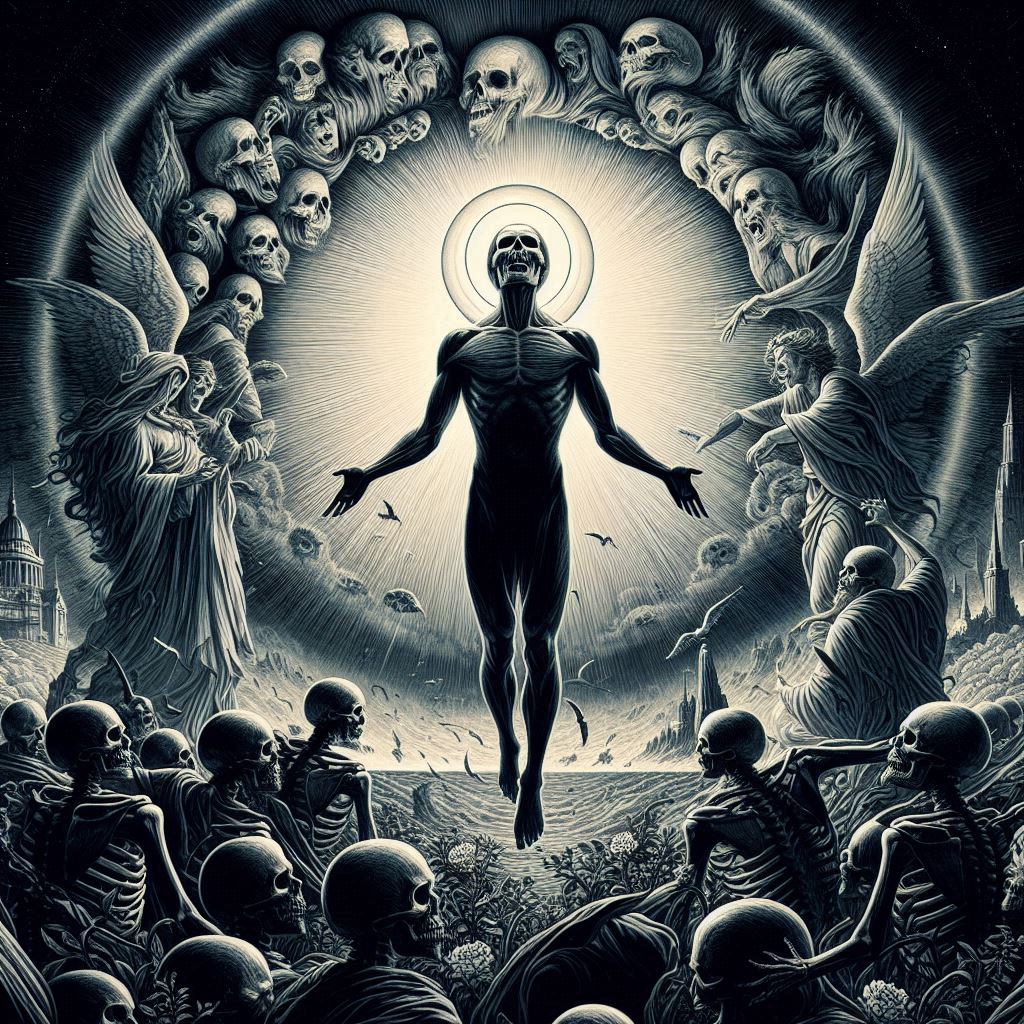
The poem begins by introducing the concept of an “unseen Perfection,” a divine or transcendent force that creates perfection in human form. This perfect human once ruled the world with power and grace, symbolizing an ideal state of existence.
However, the poem takes a turn as it describes the fall from grace. The human, who once embodied perfection, becomes corrupted and debased due to breaking the perfect laws that were established. This fall leads to a loss of the divine radiance that once shone upon the human’s face, symbolizing a departure from purity and enlightenment.
The “unseen Perfection” then decides to intervene, aiming to salvage and restore the flawed human back to their original state of perfection. This act of restoration is depicted as a redemptive process, where the divine seeks to reinstate the human to a position of rightful dominion, ruling once again with perfect justice and grace.
The poem encapsulates themes of creation, fall, and redemption, highlighting a cyclical journey from perfection to imperfection and back to perfection. It underscores the idea of a higher power’s intent to restore balance and harmony in the world, reflecting on the possibility of reclaiming lost purity and grace through divine intervention.
Description This piece channels the tragic downfall of a public figure, drawing inspiration from the life and struggles of Jimmy Swaggart, the famed televangelist who faced a public moral failure in the late 1980s. It reflects the internal conflict of a charismatic leader who, despite wielding influence and delivering sermons to inspire others, finds themselves
Description This poem, Call Me A.C. Green…, is an introspective and reflective piece that portrays the author’s journey of self-discipline, spirituality, and perseverance. Using the metaphor of the basketball “court of life,” the poem connects the struggles of living a morally centered life to the commitment of A.C. Green, a former NBA player known for
Description This piece offers a satirical critique of the modern dynamic between billionaires, online influencers, and globalist elites. It paints a vivid picture of influencers and billionaires attempting to disrupt the establishment, ostensibly to prevent a new world order. However, the irony lies in their unwitting acceleration of the very change they aim to resist.
Description From a young age, she longed to walk with God in His golden garden, dreaming of divine peace and eternal connection. But her innocence was shattered when a trusted church leader betrayed her, masking his lust as piety and leaving her to grapple with emotions she couldn’t understand. Seeking comfort from her parents, she
Description This poem reflects a powerful metaphor for life, where the speaker’s journey mirrors Bruce Lee’s Game of Death—a symbolic ascent to power and control, only to face a sudden, devastating fall. The “forbidden mansion” and the throne symbolize the speaker’s elevated status or achievements, acquired through perseverance, but also under constant threat from those
Description This poem captures a sense of internal conflict, blending themes of speed, creativity, and spiritual turmoil. The speaker identifies as a “speed demon,” suggesting a feeling of uncontrollable energy or compulsion, especially in the act of writing or creating (“these poetic artistry’s / evoke fast as lightning”). The imagery of lightning conveys a sudden,
Description This poem presents a powerful exploration of duality, inner turmoil, and the struggle between an outward facade of innocence and an inner world brimming with darkness. The speaker describes themselves as appearing innocent and refined, symbolized by their “Versace lenses” and “glowing like a pearl,” which represent a polished, external image that others perceive.
Description This poem captures the essence of a menacing clown persona, reminiscent of Stephen King’s Pennywise. The poem paints a vivid picture of this clown’s intent to instill fear while maintaining an eerie sense of pride. Let’s break down the elements and themes: Breakdown and Themes: Suggestions for Enhancements: Final Poem: Here’s a revised version
Description This poem explores the theme of spiritual conflict and moral temptation, using the symbolic setting of Babylon, an ancient civilization often associated with decadence, corruption, and moral decline. The speaker reflects on their loss of faith, highlighting the struggle between spiritual ideals and worldly desires. Key Elements and Themes: Overall Description: The poem is
Description This poem presents a complex and vivid exploration of inner turmoil and artistic expression. Here’s a breakdown of its key themes and imagery: Imagery and Symbolism Themes Tone and Style Overall, the poem is a powerful exploration of the interplay between suffering, creativity, and the desire for control and understanding. It uses evocative imagery
This poem offers a contemplative glimpse into the poet’s mind as they engage in everyday activities. The poem begins with the poet reflecting deeply while eating a slice of pizza, contemplating their spiritual fate. They reject the idea of going to hell and express a preference for going to heaven, demonstrating reverence and seeking forgiveness for past disobedience.
The poem then shifts to a modern scene of scrolling on a mobile device, which leaves the poet feeling mentally numb and paralyzed. This contrast between spiritual contemplation and digital distraction highlights the poet’s struggle to balance the two.
In the midst of this mental chaos, the poet reaffirms their faith, declaring that their devotion to Allah will never lead them to commit acts of terror in the name of religion. They speak of women in heaven as a divine surprise, indicating their respect for the spiritual rewards promised by their faith.
The poem concludes with the poet seeking solitude, sipping grape juice and reflecting on life. This final image ties together the themes of contemplation, spirituality, and the search for personal peace amid the distractions of modern life.
Description This piece channels the tragic downfall of a public figure, drawing inspiration from the life and struggles of Jimmy Swaggart, the famed televangelist who faced a public moral failure in the late 1980s. It reflects the internal conflict of a charismatic leader who, despite wielding influence and delivering sermons to inspire others, finds themselves
Description This poem, Call Me A.C. Green…, is an introspective and reflective piece that portrays the author’s journey of self-discipline, spirituality, and perseverance. Using the metaphor of the basketball “court of life,” the poem connects the struggles of living a morally centered life to the commitment of A.C. Green, a former NBA player known for
Description This piece offers a satirical critique of the modern dynamic between billionaires, online influencers, and globalist elites. It paints a vivid picture of influencers and billionaires attempting to disrupt the establishment, ostensibly to prevent a new world order. However, the irony lies in their unwitting acceleration of the very change they aim to resist.
Description From a young age, she longed to walk with God in His golden garden, dreaming of divine peace and eternal connection. But her innocence was shattered when a trusted church leader betrayed her, masking his lust as piety and leaving her to grapple with emotions she couldn’t understand. Seeking comfort from her parents, she
Description This poem reflects a powerful metaphor for life, where the speaker’s journey mirrors Bruce Lee’s Game of Death—a symbolic ascent to power and control, only to face a sudden, devastating fall. The “forbidden mansion” and the throne symbolize the speaker’s elevated status or achievements, acquired through perseverance, but also under constant threat from those
Description This poem captures a sense of internal conflict, blending themes of speed, creativity, and spiritual turmoil. The speaker identifies as a “speed demon,” suggesting a feeling of uncontrollable energy or compulsion, especially in the act of writing or creating (“these poetic artistry’s / evoke fast as lightning”). The imagery of lightning conveys a sudden,
Description This poem presents a powerful exploration of duality, inner turmoil, and the struggle between an outward facade of innocence and an inner world brimming with darkness. The speaker describes themselves as appearing innocent and refined, symbolized by their “Versace lenses” and “glowing like a pearl,” which represent a polished, external image that others perceive.
Description This poem captures the essence of a menacing clown persona, reminiscent of Stephen King’s Pennywise. The poem paints a vivid picture of this clown’s intent to instill fear while maintaining an eerie sense of pride. Let’s break down the elements and themes: Breakdown and Themes: Suggestions for Enhancements: Final Poem: Here’s a revised version
Description This poem explores the theme of spiritual conflict and moral temptation, using the symbolic setting of Babylon, an ancient civilization often associated with decadence, corruption, and moral decline. The speaker reflects on their loss of faith, highlighting the struggle between spiritual ideals and worldly desires. Key Elements and Themes: Overall Description: The poem is
Description This poem presents a complex and vivid exploration of inner turmoil and artistic expression. Here’s a breakdown of its key themes and imagery: Imagery and Symbolism Themes Tone and Style Overall, the poem is a powerful exploration of the interplay between suffering, creativity, and the desire for control and understanding. It uses evocative imagery
This poem explores the deceptive nature of lust, contrasting its initial allure with its eventual destructiveness. It begins with an idealized perception of lust, likening it to a beautiful, innocent woman whose gaze captivates the narrator. This initial portrayal emphasizes the superficial charm and attractiveness of lust.
However, the poem takes a darker turn as it delves deeper into the true nature of lust. The imagery shifts dramatically, revealing lust as a malevolent force akin to Ms. Trunchbull, a character known for her cruelty, armed with deadly weapons. This personification highlights the lurking danger and potential for harm that lust carries.
The poem continues to depict lust’s destructive power, illustrating it as a voracious entity that feeds on its victims’ blood, causing chaos and devastation. The final lines evoke a sense of impending doom, drawing a parallel to the historical figure Joan of Arc, who was burned at the stake. This reference underscores the severity of lust’s consequences, portraying it as a force that can lead to one’s downfall and suffering.
Overall, the poem serves as a cautionary tale, warning against the seductive yet perilous nature of lust, and urging readers to recognize and guard against its destructive potential.
Sure, here are seven philosophical takeaways from your poem:
Illusion vs. Reality: The poem begins with a beautiful, idealized vision of lust, but later reveals a more sinister reality. This highlights the philosophical theme that appearances can be deceptive, and understanding the true nature of something requires looking beyond surface impressions.
The Nature of Desire: Lust is initially portrayed as alluring and captivating, symbolizing the powerful draw of desire. However, its destructive potential suggests that unchecked desire can lead to ruin, a concept explored by many philosophers, including the Stoics, who advocate for self-control and moderation.
Duality of Human Experience: The poem contrasts beauty and danger, innocence and malevolence, reflecting the dual nature of many human experiences. This duality suggests that positive and negative aspects often coexist, a theme seen in Taoist philosophy with the concept of yin and yang.
The Consequences of Indulgence: By depicting lust as ultimately harmful, the poem aligns with philosophical teachings on the dangers of indulgence and excess. Philosophers like Aristotle advocate for the “golden mean,” where virtue lies in moderation between extremes.
The Role of Perception: The poem’s shift from enchantment to horror underscores the importance of perception in shaping our understanding of the world. Philosophers such as Kant have explored how our perceptions influence our reality, suggesting that what we see is filtered through our mental frameworks.
Moral and Ethical Reflection: The transformation of lust from an innocent beauty to a dangerous force prompts a moral and ethical reflection on the nature of our desires and actions. It encourages a deeper consideration of the ethical implications of succumbing to base instincts.
The Power of Metaphor: Using metaphors like Ms. Trunchbull and Joan of Arc, the poem conveys complex ideas about lust and its effects. This illustrates the philosophical idea that metaphors and stories can powerfully shape our understanding of abstract concepts, as argued by thinkers like Lakoff and Johnson in their work on conceptual metaphor theory.
These takeaways offer a rich tapestry of philosophical reflections prompted by the poem’s exploration of lust and its consequences.