Intro Faith feels like a sharp blade in my own hands, slicing clean through the fear that was slowly moulded into a wild, raging beast inside me throughout all those horrific years. I watched that fear grow teeth and claws, feeding on every nightmare, every betrayal, every moment I thought I wouldn’t survive. But Yeshua…
Intro And so, from the very ashes that once threatened to bury me, I emerge complete—no longer scorched by pretty magic or haunted by manic disappointment in sacred spaces. The static has dissolved, the tropical storm inside has calmed into steady flame, and the phoenix that was born in pain now spreads its wings with…
IntroAnd so, from the very ashes that once threatened to bury me, I emerge complete—no longer scorched by pretty magic or haunted by manic disappointment in sacred spaces. The static has dissolved, the tropical storm inside has calmed into steady flame, and the phoenix that was born in pain now spreads its wings with quiet…
IntroIn the fractured moral landscape of the modern West, where autonomy is preached yet exploitation thrives in shadow, a deceptive monstrous beauty from the Middle East seeps through the cracks with graceful ease. Hypnotizing and nodding in agreement with the very hypocrisies it encounters, this force—rooted in Islamic scripture that explicitly permits child marriage—exposes a…
IntroIn “Mutt…”, I confess my own foolish trust as a silly mutt who placed blind faith in beautiful celestial beings — deceptive mermaids overflowing with lust. They offered me everything I craved: overflowing money, fame, and worldly success, but their promise came with a deadly condition — they would drag my soul beneath the sea…
IntroIn the quiet ruins of endless torment, the heart can slowly calcify into something cold and unyielding — heavy as cement, shielded by layers of pain and guarded by unyielding pride. Trapped on familiar turf where the seductive forces of Vanity, Money, and Power drain every ounce of strength and leave one nerfed and diminished,…
IntroIn a world that worships self-made strength and polished virtue, we quietly discover the painful truth that no man under the sun is heaven-sent—every heart is instead heaven-bent, twisted toward something greater yet stubbornly resistant to it. Our morality and values, so carefully constructed like Clark Kent’s mild-mannered disguise, prove anything but bulletproof; the first…
IntroAlex O’Connor Hypocrisy On Animal Suffering is a thought-provoking philosophical essay (likely from a debate or analysis channel) that challenges the common atheist argument against God’s existence based on animal suffering. It argues that such critiques can be hypocritical, as they often ignore humanity’s own massive role in causing and perpetuating animal pain through factory…
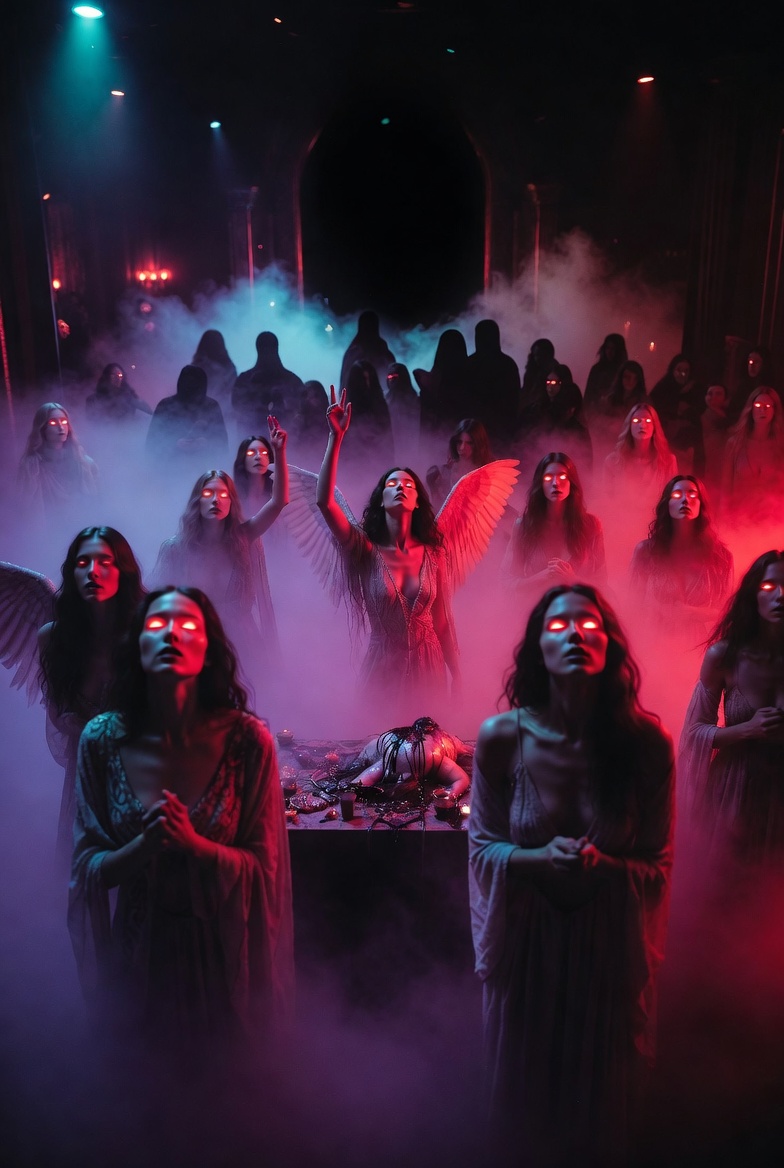
Intro Before I crossed the threshold into that pulsing underworld, I handed my soul to a fallen angel at the door—sealing a Faustian bargain for women who existed only in virtual promise, illusions spun from desire and digital haze. Inside, the club drowned in dark misty buzz, hypnotic music clamping my mind like a vice…
Intro In the shadowed attic of old grief, I found those frantic, handwritten letters—blasphemies scratched out by a younger me during a season of unrelenting calamity, heart emptied by pain and the lack of any real help. One page, opened on a whim, carried the desperate lie: “cursing God will fill your pocket with freedom…
His journey shows that greatness does not come easily. Coming from poverty and facing doubt, pain, and sacrifice taught him to never give up. Football became more than a game—it became a way to express his creativity, discipline, and determination. Every setback pushed him to work harder, while every success reminded him that his struggles had a purpose. His story shows that talent may open the door, but hard work, resilience, and belief are what lead to greatness.
Outro
His story is a powerful example of how determination can turn humble beginnings into greatness. From poverty to the biggest stages in football, he proved that sacrifice, resilience, and belief can overcome any obstacle. His journey continues to inspire millions, showing that with hard work and passion, even the greatest dreams can become reality.
Spiritual Takeaway
His journey shows that success is not only about talent, but also about faith, perseverance, and trusting God through difficult seasons. His struggles and sacrifices remind us that God can use humble beginnings to build strength and purpose. As Philippians 4:13 says, “I can do all things through Christ who strengthens me.” His story encourages us to keep believing, keep working, and trust that God has a greater purpose behind every challenge.
Intro Faith feels like a sharp blade in my own hands, slicing clean through the fear that was slowly moulded into a wild, raging beast inside me throughout all those horrific years. I watched that fear grow teeth and claws, feeding on every nightmare, every betrayal, every moment I thought I wouldn’t survive. But Yeshua…
Intro And so, from the very ashes that once threatened to bury me, I emerge complete—no longer scorched by pretty magic or haunted by manic disappointment in sacred spaces. The static has dissolved, the tropical storm inside has calmed into steady flame, and the phoenix that was born in pain now spreads its wings with…
IntroAnd so, from the very ashes that once threatened to bury me, I emerge complete—no longer scorched by pretty magic or haunted by manic disappointment in sacred spaces. The static has dissolved, the tropical storm inside has calmed into steady flame, and the phoenix that was born in pain now spreads its wings with quiet…
IntroIn the fractured moral landscape of the modern West, where autonomy is preached yet exploitation thrives in shadow, a deceptive monstrous beauty from the Middle East seeps through the cracks with graceful ease. Hypnotizing and nodding in agreement with the very hypocrisies it encounters, this force—rooted in Islamic scripture that explicitly permits child marriage—exposes a…
IntroIn “Mutt…”, I confess my own foolish trust as a silly mutt who placed blind faith in beautiful celestial beings — deceptive mermaids overflowing with lust. They offered me everything I craved: overflowing money, fame, and worldly success, but their promise came with a deadly condition — they would drag my soul beneath the sea…
IntroIn the quiet ruins of endless torment, the heart can slowly calcify into something cold and unyielding — heavy as cement, shielded by layers of pain and guarded by unyielding pride. Trapped on familiar turf where the seductive forces of Vanity, Money, and Power drain every ounce of strength and leave one nerfed and diminished,…
IntroIn a world that worships self-made strength and polished virtue, we quietly discover the painful truth that no man under the sun is heaven-sent—every heart is instead heaven-bent, twisted toward something greater yet stubbornly resistant to it. Our morality and values, so carefully constructed like Clark Kent’s mild-mannered disguise, prove anything but bulletproof; the first…
IntroAlex O’Connor Hypocrisy On Animal Suffering is a thought-provoking philosophical essay (likely from a debate or analysis channel) that challenges the common atheist argument against God’s existence based on animal suffering. It argues that such critiques can be hypocritical, as they often ignore humanity’s own massive role in causing and perpetuating animal pain through factory…
Intro Before I crossed the threshold into that pulsing underworld, I handed my soul to a fallen angel at the door—sealing a Faustian bargain for women who existed only in virtual promise, illusions spun from desire and digital haze. Inside, the club drowned in dark misty buzz, hypnotic music clamping my mind like a vice…
Intro In the shadowed attic of old grief, I found those frantic, handwritten letters—blasphemies scratched out by a younger me during a season of unrelenting calamity, heart emptied by pain and the lack of any real help. One page, opened on a whim, carried the desperate lie: “cursing God will fill your pocket with freedom…
The hadith says: “By Him in Whose Hand is my life, if you were not to commit sin, Allah would sweep you out of existence and replace you with people who sin and seek forgiveness.”
Allah prefers sinners. Purity is a problem. He’d rather wipe out the sinless and install the guilty who repent.
But your own sources call Jesus “a pure boy” (Qur’an 19:19) and say Satan couldn’t even touch him. The purest man in your books gets exalted… while the hadith says purity should get erased.
That’s not consistency. That’s a contradiction.
Jesus said: “Go and sin no more.” That’s what you’d expect from God.
Your hadith says the opposite — Allah wants the sin so He can forgive it.
Now read the the scripture that counters the Quran verse:
“He committed no sin, and no deceit was found in his mouth.” (1 Peter 2:22) “God made him who had no sin to be sin for us.” (2 Corinthians 5:21) “Tempted in every way, just as we are—yet he did not sin.” (Hebrews 4:15)
The Bible doesn’t treat purity like a threat. It makes the Sinless One the only hope.
One message wants you to sin. The other crushed sin on a cross.
Choose wisely.
Outro A god who would rather wipe out the pure than keep them is not the Holy One. The true God is light, and in Him is no darkness at all. He does not need your sin to show mercy. He already provided the Sinless Lamb.
Spiritual Takeaway
Stop defending a system that makes sin preferable. Run to the One who never sinned, yet bore yours. Repent. Believe the Gospel. Be holy, for He is holy. Jesus is not just pure — He is the purity you need. Choose Him.
Intro Faith feels like a sharp blade in my own hands, slicing clean through the fear that was slowly moulded into a wild, raging beast inside me throughout all those horrific years. I watched that fear grow teeth and claws, feeding on every nightmare, every betrayal, every moment I thought I wouldn’t survive. But Yeshua…
Intro And so, from the very ashes that once threatened to bury me, I emerge complete—no longer scorched by pretty magic or haunted by manic disappointment in sacred spaces. The static has dissolved, the tropical storm inside has calmed into steady flame, and the phoenix that was born in pain now spreads its wings with…
IntroAnd so, from the very ashes that once threatened to bury me, I emerge complete—no longer scorched by pretty magic or haunted by manic disappointment in sacred spaces. The static has dissolved, the tropical storm inside has calmed into steady flame, and the phoenix that was born in pain now spreads its wings with quiet…
IntroIn the fractured moral landscape of the modern West, where autonomy is preached yet exploitation thrives in shadow, a deceptive monstrous beauty from the Middle East seeps through the cracks with graceful ease. Hypnotizing and nodding in agreement with the very hypocrisies it encounters, this force—rooted in Islamic scripture that explicitly permits child marriage—exposes a…
IntroIn “Mutt…”, I confess my own foolish trust as a silly mutt who placed blind faith in beautiful celestial beings — deceptive mermaids overflowing with lust. They offered me everything I craved: overflowing money, fame, and worldly success, but their promise came with a deadly condition — they would drag my soul beneath the sea…
IntroIn the quiet ruins of endless torment, the heart can slowly calcify into something cold and unyielding — heavy as cement, shielded by layers of pain and guarded by unyielding pride. Trapped on familiar turf where the seductive forces of Vanity, Money, and Power drain every ounce of strength and leave one nerfed and diminished,…
IntroIn a world that worships self-made strength and polished virtue, we quietly discover the painful truth that no man under the sun is heaven-sent—every heart is instead heaven-bent, twisted toward something greater yet stubbornly resistant to it. Our morality and values, so carefully constructed like Clark Kent’s mild-mannered disguise, prove anything but bulletproof; the first…
IntroAlex O’Connor Hypocrisy On Animal Suffering is a thought-provoking philosophical essay (likely from a debate or analysis channel) that challenges the common atheist argument against God’s existence based on animal suffering. It argues that such critiques can be hypocritical, as they often ignore humanity’s own massive role in causing and perpetuating animal pain through factory…
Intro Before I crossed the threshold into that pulsing underworld, I handed my soul to a fallen angel at the door—sealing a Faustian bargain for women who existed only in virtual promise, illusions spun from desire and digital haze. Inside, the club drowned in dark misty buzz, hypnotic music clamping my mind like a vice…
Intro In the shadowed attic of old grief, I found those frantic, handwritten letters—blasphemies scratched out by a younger me during a season of unrelenting calamity, heart emptied by pain and the lack of any real help. One page, opened on a whim, carried the desperate lie: “cursing God will fill your pocket with freedom…
This poem descends into the fractured chambers of a mind caught between isolation, distorted reality, and the desperate need for connection. “Distorted bliss” becomes more than a description of the world—it reflects the unsettling way violence, propaganda, and tragedy can become normalized until destruction begins to resemble beauty. Beneath that external chaos lies a deeply introverted consciousness, retreating into its own “metal dome” while battling demons that may represent fear, loneliness, intrusive thoughts, or the parts of oneself that refuse to remain silent. The speaker’s invitation to “stay with me” and “hold me close” creates a striking contrast with the surrounding darkness: despite the distrust of the world, there remains an aching desire to be understood and witnessed. Ultimately, the poem feels like an exploration of what happens when the outside world becomes unbearable and the mind becomes both sanctuary and prison—a place where imagination offers escape, but where the demons are still waiting.
Intro
Outro
Maybe this is what it means to live inside a mind that never truly rests—to carry entire worlds behind closed doors, while pretending everything outside is perfectly fine. I have learned that some demons do not come to destroy us; they come to remind us of everything we have buried, everything we were too afraid to face. So if you take a walk with me, do not expect to find peace. You may find chaos, memories, fractured dreams, and pieces of a person still trying to understand themselves. But stay with me a little longer. Sit beside me in the silence. Let the world scream without us. And when the demons begin to screech through my soul, hold me close—not because you can save me, but because for a moment, I will remember that I am not alone.
Spiritual Takeaway
Spiritually, the poem explores the struggle between a corrupted outer world and the hidden inner world of the soul. The “unpure” world, wars, and propaganda represent a society that has distorted human values, while the “adobe” becomes a private sanctuary where the speaker hides their deeper thoughts and truths. The “demons” in the “metal dome” symbolize the inner battles of the mind—fear, pain, anger, confusion, and darkness that have been influenced by the world outside. Yet the poem does not end in complete isolation; “hold me close” introduces love, connection, and spiritual comfort as a possible source of strength. Overall, the poem suggests that although the world may be spiritually broken and its darkness may enter us, healing begins by confronting those inner demons while allowing ourselves to be understood, loved, and accompanied through the struggle.
Intro Faith feels like a sharp blade in my own hands, slicing clean through the fear that was slowly moulded into a wild, raging beast inside me throughout all those horrific years. I watched that fear grow teeth and claws, feeding on every nightmare, every betrayal, every moment I thought I wouldn’t survive. But Yeshua…
Intro And so, from the very ashes that once threatened to bury me, I emerge complete—no longer scorched by pretty magic or haunted by manic disappointment in sacred spaces. The static has dissolved, the tropical storm inside has calmed into steady flame, and the phoenix that was born in pain now spreads its wings with…
IntroAnd so, from the very ashes that once threatened to bury me, I emerge complete—no longer scorched by pretty magic or haunted by manic disappointment in sacred spaces. The static has dissolved, the tropical storm inside has calmed into steady flame, and the phoenix that was born in pain now spreads its wings with quiet…
IntroIn the fractured moral landscape of the modern West, where autonomy is preached yet exploitation thrives in shadow, a deceptive monstrous beauty from the Middle East seeps through the cracks with graceful ease. Hypnotizing and nodding in agreement with the very hypocrisies it encounters, this force—rooted in Islamic scripture that explicitly permits child marriage—exposes a…
IntroIn “Mutt…”, I confess my own foolish trust as a silly mutt who placed blind faith in beautiful celestial beings — deceptive mermaids overflowing with lust. They offered me everything I craved: overflowing money, fame, and worldly success, but their promise came with a deadly condition — they would drag my soul beneath the sea…
IntroIn the quiet ruins of endless torment, the heart can slowly calcify into something cold and unyielding — heavy as cement, shielded by layers of pain and guarded by unyielding pride. Trapped on familiar turf where the seductive forces of Vanity, Money, and Power drain every ounce of strength and leave one nerfed and diminished,…
IntroIn a world that worships self-made strength and polished virtue, we quietly discover the painful truth that no man under the sun is heaven-sent—every heart is instead heaven-bent, twisted toward something greater yet stubbornly resistant to it. Our morality and values, so carefully constructed like Clark Kent’s mild-mannered disguise, prove anything but bulletproof; the first…
IntroAlex O’Connor Hypocrisy On Animal Suffering is a thought-provoking philosophical essay (likely from a debate or analysis channel) that challenges the common atheist argument against God’s existence based on animal suffering. It argues that such critiques can be hypocritical, as they often ignore humanity’s own massive role in causing and perpetuating animal pain through factory…
Intro Before I crossed the threshold into that pulsing underworld, I handed my soul to a fallen angel at the door—sealing a Faustian bargain for women who existed only in virtual promise, illusions spun from desire and digital haze. Inside, the club drowned in dark misty buzz, hypnotic music clamping my mind like a vice…
Intro In the shadowed attic of old grief, I found those frantic, handwritten letters—blasphemies scratched out by a younger me during a season of unrelenting calamity, heart emptied by pain and the lack of any real help. One page, opened on a whim, carried the desperate lie: “cursing God will fill your pocket with freedom…
Music has a strange way of preserving memories. A song can transport you back to a season of your life in seconds. Sometimes it’s joy. Sometimes it’s heartbreak. For me, these songs have become reminders of one of the most confusing periods of my life—a time when I became involved in a high-control religious group and the journey that eventually led me out. These aren’t songs about that group specifically. They simply became the soundtrack that helps me process what happened.
Kendrick Lamar – “For Sale?”
The lyric that always stuck out to me:
“They say if you scared, go to church… but remember, he knows the Bible too.”
That line changed meaning for me after I left.
Growing up, I assumed deception looked obvious. I imagined lies would always be easy to identify. But Scripture paints a different picture. Satan rarely attacks by rejecting God’s Word outright. More often, he twists it.
When Jesus was tempted in the wilderness, Satan quoted Scripture. He knew the verses. He simply removed them from their context and used them to support a lie.
Looking back, I realized that was one of the greatest lessons I learned.Knowledge of the Bible is not the same as truth.
Someone can memorize hundreds of verses while completely changing the message they were meant to communicate.
That realization shook me.
I entered believing I would gain deeper understanding of God. Instead, I slowly learned how easy it is for verses to be rearranged into a completely different story. One isolated verse led to another until an entirely new framework replaced the plain reading of Scripture.
The most dangerous deception wasn’t being told to reject the Bible. It was being encouraged to believe I was understanding it better than everyone else.
That feeling of possessing “hidden knowledge” is incredibly persuasive. It appeals to pride without you even noticing.
You don’t think you’re becoming deceived.
You think you’ve finally discovered the truth.
Only later do you realize that your confidence was built on interpretations rather than on Scripture itself.
That Kendrick lyric reminds me that deception often wears religious clothing.
Jay-Z – “Lucifer”
Another lyric that stayed with me says:
“Lord forgive him… But he also got a righteous cause for sinning.”
What strikes me isn’t the idea of evil itself.
It’s the ability of people to convince themselves that wrong actions are justified because they believe they are serving a higher purpose.
History is filled with people doing terrible things while sincerely believing they were doing God’s work.
That’s one of the hardest lessons I’ve had to learn.
Sincerity doesn’t guarantee truth.
People can be completely convinced while being completely mistaken.
When someone believes they alone possess God’s final revelation, almost anything can become justified.
Questioning becomes rebellion.
Leaving becomes betrayal.
Independent thinking becomes pride.
The ordinary act of asking,
“Where does the Bible actually say this?” begins to feel like disobedience.Looking back, I realized how subtle that process was.
No one wakes up one morning deciding to surrender their critical thinking.
It happens gradually.
One explanation leads to another.
One assumption becomes another doctrine.
Before long, your own ability to think independently begins to disappear.
Nas – “Mo Money, Mo Murder (First Verse)”
Nas paints an incredibly vivid picture.
“I’m blindfold… Vietnam type mind control…”
When I hear that today, I don’t think about literal imprisonment.
I think about spiritual confusion.
Not because someone physically forced me to stay, but because my own thinking became trapped.
The line about being blindfolded captures exactly how deception feels.
When you’re inside it, you don’t know you’re blind.
You think everyone else is.
That’s why leaving is so difficult.
Your identity becomes connected to the belief system.
Your friendships become connected.
Your purpose becomes connected.
Your future becomes connected.
Walking away feels like losing everything you’ve built.
The final line resonates deeply:
“Blinded till the flashlight enters.”
For me, that flashlight wasn’t one dramatic moment.
It was the Bible itself.
I started reading entire chapters instead of isolated verses.
I stopped asking, “What does this teacher say?”
I started asking, “What is this passage actually saying?”
Little by little, the contradictions became impossible to ignore.
The light wasn’t loud.
It was quiet.
But once light enters a dark room, darkness cannot pretend to be light anymore.
J. Cole & Major Lazer – “Get Free Coleworld “
One line always reminds me of the emotions I carried after leaving:
“The agony of defeat, wish the elites could get a taste…”
Leaving wasn’t only relief.
It was grief.
Grief for time lost.
Grief for relationships.
Grief for the confidence I once had in people I trusted.
There was also another emotion.
A hope that deception would eventually be exposed.
Not because I wanted revenge.
But because I knew there were sincere people still searching for God.
I hoped they would experience the same freedom I eventually found.
Real freedom isn’t replacing one human authority with another.
It’s allowing God’s Word to speak for itself.
2Pac – “Trapped”
Then there are these unforgettable words:
“You know they got me trapped in this prison of seclusion… Happiness… is a delusion.”
When I hear those lyrics today, I think about psychological captivity.
The hardest prisons aren’t always built with walls.
Sometimes they’re built with ideas.
When you’re inside, everything feels normal.
Everyone outside seems deceived.
Every doubt becomes temptation.
Every question becomes dangerous.
The tragedy is that you don’t realize you’re trapped until you begin asking honest questions.
Only then do you notice the walls.
Only then do you notice the fear.
Only then do you realize that genuine truth never needs to fear examination.
Looking Back
I don’t listen to these songs because they glorify what happened.
I listen because they remind me where I was—and where God brought me from.
They remind me that deception often sounds intelligent.
It often sounds biblical.
It often promises secret knowledge.
But Jesus never taught that salvation belongs only to people with hidden information. He called people to follow Him openly, trust His Word, and remain in the truth.
Leaving that season strengthened something I never want to lose again: the willingness to read Scripture for myself, to ask difficult questions, and to test every teaching against the whole counsel of God’s Word.
These songs became my soundtrack not because they describe my story perfectly, but because they capture emotions I couldn’t put into words at the time—confusion, captivity, pride, awakening, grief, and finally freedom.
Sometimes music becomes more than entertainment.
Sometimes it becomes a reminder of the road you’ve travelled.
For me, these tracks remind me that truth doesn’t fear investigation, deception doesn’t always announce itself, and freedom often begins the moment you dare to ask, “Is this really what God said?”
Spiritual Takeaway
The core spiritual takeaway is that deception often wears religious clothing and thrives on isolated verses, hidden knowledge, and sincere but misplaced confidence rather than the plain, whole counsel of Scripture; true freedom comes not from exchanging one human authority for another, but from removing the blindfold of pride and control by reading God’s Word for yourself, asking honest questions, and testing every teaching against what the Bible actually says—because genuine truth never fears examination and light quietly exposes what darkness can no longer pretend to be.
Intro Faith feels like a sharp blade in my own hands, slicing clean through the fear that was slowly moulded into a wild, raging beast inside me throughout all those horrific years. I watched that fear grow teeth and claws, feeding on every nightmare, every betrayal, every moment I thought I wouldn’t survive. But Yeshua…
Intro And so, from the very ashes that once threatened to bury me, I emerge complete—no longer scorched by pretty magic or haunted by manic disappointment in sacred spaces. The static has dissolved, the tropical storm inside has calmed into steady flame, and the phoenix that was born in pain now spreads its wings with…
IntroAnd so, from the very ashes that once threatened to bury me, I emerge complete—no longer scorched by pretty magic or haunted by manic disappointment in sacred spaces. The static has dissolved, the tropical storm inside has calmed into steady flame, and the phoenix that was born in pain now spreads its wings with quiet…
IntroIn the fractured moral landscape of the modern West, where autonomy is preached yet exploitation thrives in shadow, a deceptive monstrous beauty from the Middle East seeps through the cracks with graceful ease. Hypnotizing and nodding in agreement with the very hypocrisies it encounters, this force—rooted in Islamic scripture that explicitly permits child marriage—exposes a…
IntroIn “Mutt…”, I confess my own foolish trust as a silly mutt who placed blind faith in beautiful celestial beings — deceptive mermaids overflowing with lust. They offered me everything I craved: overflowing money, fame, and worldly success, but their promise came with a deadly condition — they would drag my soul beneath the sea…
IntroIn the quiet ruins of endless torment, the heart can slowly calcify into something cold and unyielding — heavy as cement, shielded by layers of pain and guarded by unyielding pride. Trapped on familiar turf where the seductive forces of Vanity, Money, and Power drain every ounce of strength and leave one nerfed and diminished,…
IntroIn a world that worships self-made strength and polished virtue, we quietly discover the painful truth that no man under the sun is heaven-sent—every heart is instead heaven-bent, twisted toward something greater yet stubbornly resistant to it. Our morality and values, so carefully constructed like Clark Kent’s mild-mannered disguise, prove anything but bulletproof; the first…
IntroAlex O’Connor Hypocrisy On Animal Suffering is a thought-provoking philosophical essay (likely from a debate or analysis channel) that challenges the common atheist argument against God’s existence based on animal suffering. It argues that such critiques can be hypocritical, as they often ignore humanity’s own massive role in causing and perpetuating animal pain through factory…
Intro Before I crossed the threshold into that pulsing underworld, I handed my soul to a fallen angel at the door—sealing a Faustian bargain for women who existed only in virtual promise, illusions spun from desire and digital haze. Inside, the club drowned in dark misty buzz, hypnotic music clamping my mind like a vice…
Intro In the shadowed attic of old grief, I found those frantic, handwritten letters—blasphemies scratched out by a younger me during a season of unrelenting calamity, heart emptied by pain and the lack of any real help. One page, opened on a whim, carried the desperate lie: “cursing God will fill your pocket with freedom…
Intro On the fifth floor, a Freemason stood in perfect silence, as though he had waited centuries for the traveller’s arrival. His presence carried the weight of forgotten empires, and his voice flowed with quiet authority as he offered kingdoms, wealth beyond imagination, power over men, and dominion over fear—if only the traveller would bow before the Ancient Dragon. For a single heartbeat, the traveller’s soul trembled, for temptation rarely reveals itself as evil; instead, it wears the face of destiny, purpose, and the fulfilment of every hidden desire. Yet beneath the splendour of the promises lay the ancient bargain that demanded the soul in exchange for the illusion of power. In that decisive moment, the traveller remembered why he had entered the cursed hotel—not to inherit its darkness, but to confront it without becoming its servant. Rejecting the throne of shadows and the seductive whispers that lingered behind him, he turned away and climbed higher, choosing the uncertain path of truth over the glittering prison of corruption.
Outro
Not every victory is won with a sword, nor every battle marked by blood. Some are decided in the silent moments when a soul refuses to surrender its convictions, despite the promises of power and certainty. As the traveller disappeared into the darkness above, the echoes of temptation faded behind him, but the climb was far from over. The higher he ascended, the clearer one truth became: the greatest prison was never the cursed hotel itself, but the desire to rule it. Only by refusing its throne could he hope to leave it behind.
Spiritual Takeaway
The journey revealed that the greatest spiritual battles are not always fought against visible enemies, but within the human heart. Temptation often disguises itself as opportunity, offering power, wealth, and control while quietly asking for allegiance in return. True discernment is found in remaining faithful to God when the easier path promises everything the flesh desires. As Jesus declared, “What good is it for someone to gain the whole world, yet forfeit their soul?” (Mark 8:36). Likewise, Scripture reminds believers, “Submit yourselves therefore to God. Resist the devil, and he will flee from you.” (James 4:7). The true victory is not found in sitting upon a counterfeit throne, but in walking faithfully with God, trusting that His Kingdom is greater than every earthly promise.