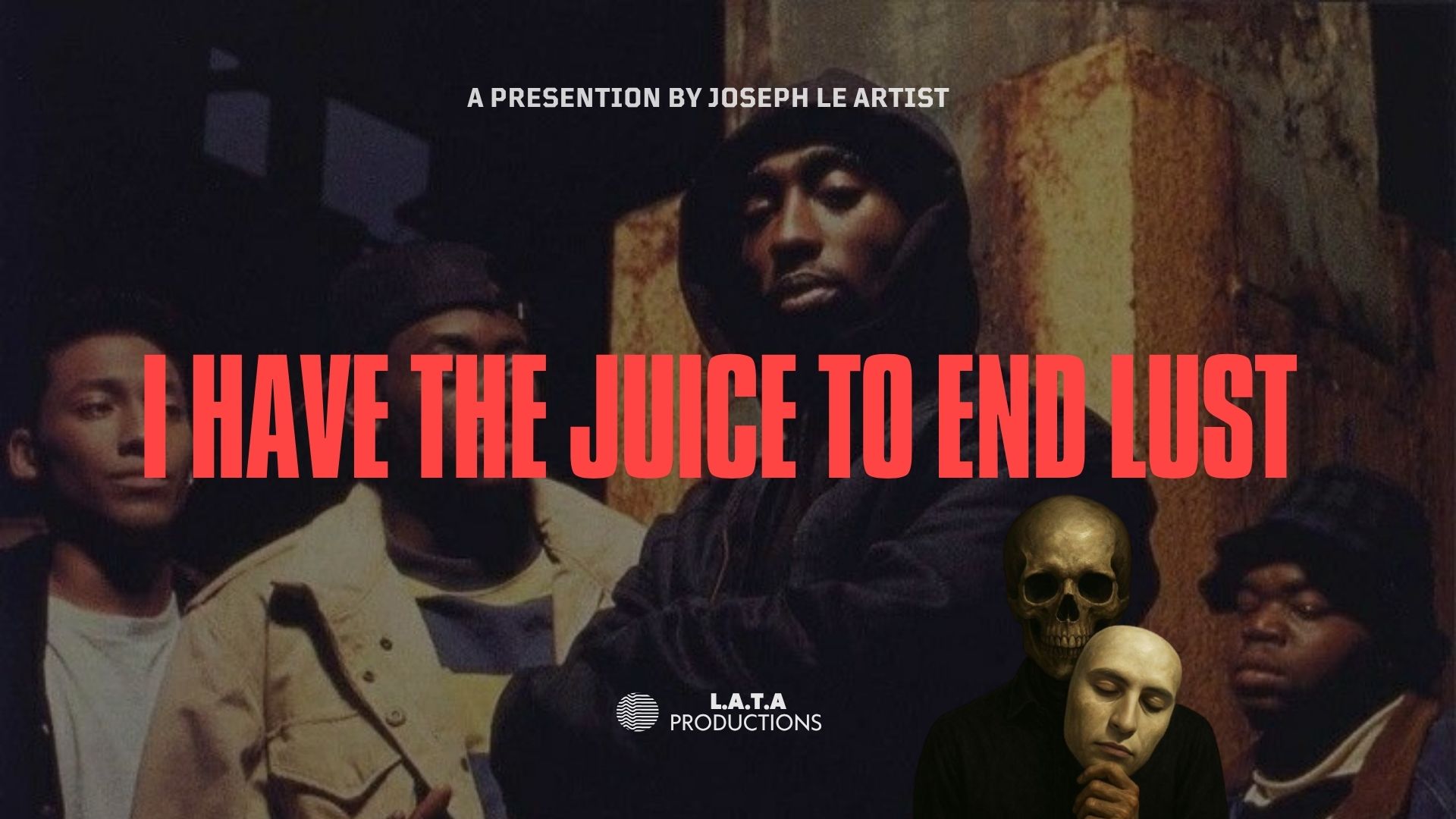
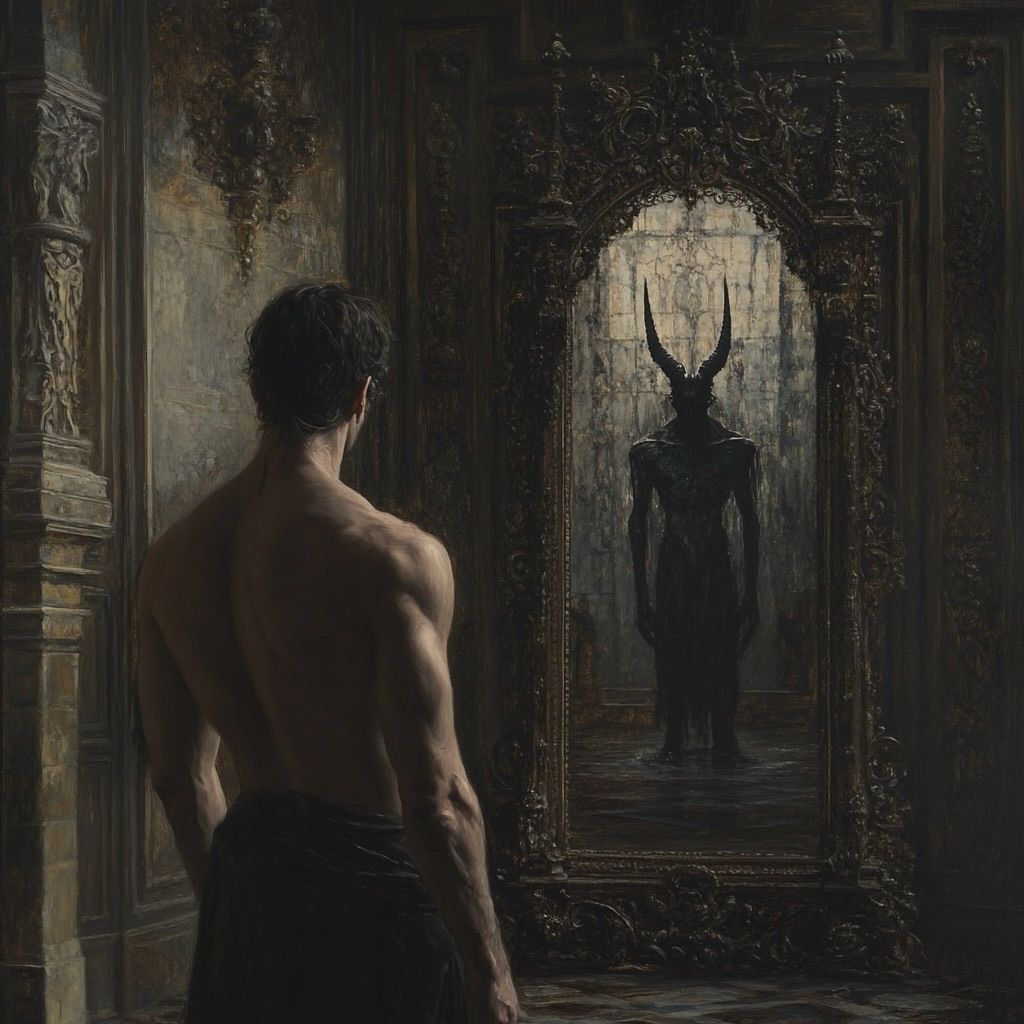
Details : Explore the powerful parallels between Jay-Z’s “I Know” and Tragic Hero’s “Mercy,” two hip-hop tracks that personify addiction as a seductive woman. Through vivid metaphors of lust, materialism, and dependency, both songs delve into the emotional and physical toll of temptation, with Jay-Z’s confident swagger contrasting Tragic Hero’s introspective struggle. Poem Treads :…
I stand at the edge of philosophy’s abyss, and it calls to me. Its questions—vast as starlit skies, sharp as a blade—cut through the quiet of my mind. Why am I here? What is real? What holds meaning when the world feels like a fleeting shadow? Each inquiry is a thread, spiraling, twisting, weaving a…
This poem descends into the fractured chambers of a mind caught between isolation, distorted reality, and the desperate need for connection. “Distorted bliss” becomes more than a description of the world—it reflects the unsettling way violence, propaganda, and tragedy can become normalized until destruction begins to resemble beauty. Beneath that external chaos lies a deeply introverted consciousness, retreating into its own “metal dome” while battling demons that may represent fear, loneliness, intrusive thoughts, or the parts of oneself that refuse to remain silent. The speaker’s invitation to “stay with me” and “hold me close” creates a striking contrast with the surrounding darkness: despite the distrust of the world, there remains an aching desire to be understood and witnessed. Ultimately, the poem feels like an exploration of what happens when the outside world becomes unbearable and the mind becomes both sanctuary and prison—a place where imagination offers escape, but where the demons are still waiting.
Intro
Outro
Maybe this is what it means to live inside a mind that never truly rests—to carry entire worlds behind closed doors, while pretending everything outside is perfectly fine. I have learned that some demons do not come to destroy us; they come to remind us of everything we have buried, everything we were too afraid to face. So if you take a walk with me, do not expect to find peace. You may find chaos, memories, fractured dreams, and pieces of a person still trying to understand themselves. But stay with me a little longer. Sit beside me in the silence. Let the world scream without us. And when the demons begin to screech through my soul, hold me close—not because you can save me, but because for a moment, I will remember that I am not alone.
Spiritual Takeaway
Spiritually, the poem explores the struggle between a corrupted outer world and the hidden inner world of the soul. The “unpure” world, wars, and propaganda represent a society that has distorted human values, while the “adobe” becomes a private sanctuary where the speaker hides their deeper thoughts and truths. The “demons” in the “metal dome” symbolize the inner battles of the mind—fear, pain, anger, confusion, and darkness that have been influenced by the world outside. Yet the poem does not end in complete isolation; “hold me close” introduces love, connection, and spiritual comfort as a possible source of strength. Overall, the poem suggests that although the world may be spiritually broken and its darkness may enter us, healing begins by confronting those inner demons while allowing ourselves to be understood, loved, and accompanied through the struggle.
Details : Explore the powerful parallels between Jay-Z’s “I Know” and Tragic Hero’s “Mercy,” two hip-hop tracks that personify addiction as a seductive woman. Through vivid metaphors of lust, materialism, and dependency, both songs delve into the emotional and physical toll of temptation, with Jay-Z’s confident swagger contrasting Tragic Hero’s introspective struggle. Poem Treads :…
I stand at the edge of philosophy’s abyss, and it calls to me. Its questions—vast as starlit skies, sharp as a blade—cut through the quiet of my mind. Why am I here? What is real? What holds meaning when the world feels like a fleeting shadow? Each inquiry is a thread, spiraling, twisting, weaving a…
Music has a strange way of preserving memories. A song can transport you back to a season of your life in seconds. Sometimes it’s joy. Sometimes it’s heartbreak. For me, these songs have become reminders of one of the most confusing periods of my life—a time when I became involved in a high-control religious group and the journey that eventually led me out. These aren’t songs about that group specifically. They simply became the soundtrack that helps me process what happened.
Kendrick Lamar – “For Sale?”
The lyric that always stuck out to me:
“They say if you scared, go to church… but remember, he knows the Bible too.”
That line changed meaning for me after I left.
Growing up, I assumed deception looked obvious. I imagined lies would always be easy to identify. But Scripture paints a different picture. Satan rarely attacks by rejecting God’s Word outright. More often, he twists it.
When Jesus was tempted in the wilderness, Satan quoted Scripture. He knew the verses. He simply removed them from their context and used them to support a lie.
Looking back, I realized that was one of the greatest lessons I learned.Knowledge of the Bible is not the same as truth.
Someone can memorize hundreds of verses while completely changing the message they were meant to communicate.
That realization shook me.
I entered believing I would gain deeper understanding of God. Instead, I slowly learned how easy it is for verses to be rearranged into a completely different story. One isolated verse led to another until an entirely new framework replaced the plain reading of Scripture.
The most dangerous deception wasn’t being told to reject the Bible. It was being encouraged to believe I was understanding it better than everyone else.
That feeling of possessing “hidden knowledge” is incredibly persuasive. It appeals to pride without you even noticing.
You don’t think you’re becoming deceived.
You think you’ve finally discovered the truth.
Only later do you realize that your confidence was built on interpretations rather than on Scripture itself.
That Kendrick lyric reminds me that deception often wears religious clothing.
Jay-Z – “Lucifer”
Another lyric that stayed with me says:
“Lord forgive him… But he also got a righteous cause for sinning.”
What strikes me isn’t the idea of evil itself.
It’s the ability of people to convince themselves that wrong actions are justified because they believe they are serving a higher purpose.
History is filled with people doing terrible things while sincerely believing they were doing God’s work.
That’s one of the hardest lessons I’ve had to learn.
Sincerity doesn’t guarantee truth.
People can be completely convinced while being completely mistaken.
When someone believes they alone possess God’s final revelation, almost anything can become justified.
Questioning becomes rebellion.
Leaving becomes betrayal.
Independent thinking becomes pride.
The ordinary act of asking,
“Where does the Bible actually say this?” begins to feel like disobedience.Looking back, I realized how subtle that process was.
No one wakes up one morning deciding to surrender their critical thinking.
It happens gradually.
One explanation leads to another.
One assumption becomes another doctrine.
Before long, your own ability to think independently begins to disappear.
Nas – “Mo Money, Mo Murder (First Verse)”
Nas paints an incredibly vivid picture.
“I’m blindfold… Vietnam type mind control…”
When I hear that today, I don’t think about literal imprisonment.
I think about spiritual confusion.
Not because someone physically forced me to stay, but because my own thinking became trapped.
The line about being blindfolded captures exactly how deception feels.
When you’re inside it, you don’t know you’re blind.
You think everyone else is.
That’s why leaving is so difficult.
Your identity becomes connected to the belief system.
Your friendships become connected.
Your purpose becomes connected.
Your future becomes connected.
Walking away feels like losing everything you’ve built.
The final line resonates deeply:
“Blinded till the flashlight enters.”
For me, that flashlight wasn’t one dramatic moment.
It was the Bible itself.
I started reading entire chapters instead of isolated verses.
I stopped asking, “What does this teacher say?”
I started asking, “What is this passage actually saying?”
Little by little, the contradictions became impossible to ignore.
The light wasn’t loud.
It was quiet.
But once light enters a dark room, darkness cannot pretend to be light anymore.
J. Cole & Major Lazer – “Get Free Coleworld “
One line always reminds me of the emotions I carried after leaving:
“The agony of defeat, wish the elites could get a taste…”
Leaving wasn’t only relief.
It was grief.
Grief for time lost.
Grief for relationships.
Grief for the confidence I once had in people I trusted.
There was also another emotion.
A hope that deception would eventually be exposed.
Not because I wanted revenge.
But because I knew there were sincere people still searching for God.
I hoped they would experience the same freedom I eventually found.
Real freedom isn’t replacing one human authority with another.
It’s allowing God’s Word to speak for itself.
2Pac – “Trapped”
Then there are these unforgettable words:
“You know they got me trapped in this prison of seclusion… Happiness… is a delusion.”
When I hear those lyrics today, I think about psychological captivity.
The hardest prisons aren’t always built with walls.
Sometimes they’re built with ideas.
When you’re inside, everything feels normal.
Everyone outside seems deceived.
Every doubt becomes temptation.
Every question becomes dangerous.
The tragedy is that you don’t realize you’re trapped until you begin asking honest questions.
Only then do you notice the walls.
Only then do you notice the fear.
Only then do you realize that genuine truth never needs to fear examination.
Looking Back
I don’t listen to these songs because they glorify what happened.
I listen because they remind me where I was—and where God brought me from.
They remind me that deception often sounds intelligent.
It often sounds biblical.
It often promises secret knowledge.
But Jesus never taught that salvation belongs only to people with hidden information. He called people to follow Him openly, trust His Word, and remain in the truth.
Leaving that season strengthened something I never want to lose again: the willingness to read Scripture for myself, to ask difficult questions, and to test every teaching against the whole counsel of God’s Word.
These songs became my soundtrack not because they describe my story perfectly, but because they capture emotions I couldn’t put into words at the time—confusion, captivity, pride, awakening, grief, and finally freedom.
Sometimes music becomes more than entertainment.
Sometimes it becomes a reminder of the road you’ve travelled.
For me, these tracks remind me that truth doesn’t fear investigation, deception doesn’t always announce itself, and freedom often begins the moment you dare to ask, “Is this really what God said?”
Spiritual Takeaway
The core spiritual takeaway is that deception often wears religious clothing and thrives on isolated verses, hidden knowledge, and sincere but misplaced confidence rather than the plain, whole counsel of Scripture; true freedom comes not from exchanging one human authority for another, but from removing the blindfold of pride and control by reading God’s Word for yourself, asking honest questions, and testing every teaching against what the Bible actually says—because genuine truth never fears examination and light quietly exposes what darkness can no longer pretend to be.
Details : Explore the powerful parallels between Jay-Z’s “I Know” and Tragic Hero’s “Mercy,” two hip-hop tracks that personify addiction as a seductive woman. Through vivid metaphors of lust, materialism, and dependency, both songs delve into the emotional and physical toll of temptation, with Jay-Z’s confident swagger contrasting Tragic Hero’s introspective struggle. Poem Treads :…
I stand at the edge of philosophy’s abyss, and it calls to me. Its questions—vast as starlit skies, sharp as a blade—cut through the quiet of my mind. Why am I here? What is real? What holds meaning when the world feels like a fleeting shadow? Each inquiry is a thread, spiraling, twisting, weaving a…
Intro On the fifth floor, a Freemason stood in perfect silence, as though he had waited centuries for the traveller’s arrival. His presence carried the weight of forgotten empires, and his voice flowed with quiet authority as he offered kingdoms, wealth beyond imagination, power over men, and dominion over fear—if only the traveller would bow before the Ancient Dragon. For a single heartbeat, the traveller’s soul trembled, for temptation rarely reveals itself as evil; instead, it wears the face of destiny, purpose, and the fulfilment of every hidden desire. Yet beneath the splendour of the promises lay the ancient bargain that demanded the soul in exchange for the illusion of power. In that decisive moment, the traveller remembered why he had entered the cursed hotel—not to inherit its darkness, but to confront it without becoming its servant. Rejecting the throne of shadows and the seductive whispers that lingered behind him, he turned away and climbed higher, choosing the uncertain path of truth over the glittering prison of corruption.
Outro
Not every victory is won with a sword, nor every battle marked by blood. Some are decided in the silent moments when a soul refuses to surrender its convictions, despite the promises of power and certainty. As the traveller disappeared into the darkness above, the echoes of temptation faded behind him, but the climb was far from over. The higher he ascended, the clearer one truth became: the greatest prison was never the cursed hotel itself, but the desire to rule it. Only by refusing its throne could he hope to leave it behind.
Spiritual Takeaway
The journey revealed that the greatest spiritual battles are not always fought against visible enemies, but within the human heart. Temptation often disguises itself as opportunity, offering power, wealth, and control while quietly asking for allegiance in return. True discernment is found in remaining faithful to God when the easier path promises everything the flesh desires. As Jesus declared, “What good is it for someone to gain the whole world, yet forfeit their soul?” (Mark 8:36). Likewise, Scripture reminds believers, “Submit yourselves therefore to God. Resist the devil, and he will flee from you.” (James 4:7). The true victory is not found in sitting upon a counterfeit throne, but in walking faithfully with God, trusting that His Kingdom is greater than every earthly promise.
Details : Explore the powerful parallels between Jay-Z’s “I Know” and Tragic Hero’s “Mercy,” two hip-hop tracks that personify addiction as a seductive woman. Through vivid metaphors of lust, materialism, and dependency, both songs delve into the emotional and physical toll of temptation, with Jay-Z’s confident swagger contrasting Tragic Hero’s introspective struggle. Poem Treads :…
I stand at the edge of philosophy’s abyss, and it calls to me. Its questions—vast as starlit skies, sharp as a blade—cut through the quiet of my mind. Why am I here? What is real? What holds meaning when the world feels like a fleeting shadow? Each inquiry is a thread, spiraling, twisting, weaving a…
Intro He once loved the Bride of Christ with burning sincerity, yet that same devotion quietly twisted into betrayal as cultish certainty poisoned his sight, turning her imperfections into unforgivable sins. In the grip of self-righteous delusion, he longed for her violent death — bloodied, broken, and replaced — so a new bride, sculpted in the image of his own pride and deception, could rise instead. What he defended so fiercely all those years was never her true form, but a false version that mirrored his growing arrogance and hidden need for control. The deepest wound revealed in these lines is the terrifying realization that the war he waged against the Bride was never truly external; it was an internal civil war, a projection of his own fractured soul. In the end, he stands exposed: the greatest threat to the Bride of Christ was not the world, but the zealous lover who once claimed to cherish her most, until his love became idolatry and his truth became a lie.
Outro
I once stood on the edge of fully accepting Shincheonji’s teaching that the traditional Church was the “parable church” — nothing more than Babylon, the fallen harlot. Convinced by their doctrine, I wanted the Bride of Christ to be slain, covered in blood and suffering, so she could be replaced by what they called the new true bride. I was ready to call the Church what Jesus never did.But as critical thinking returned, I saw the blasphemy clearly. Scripture declares, “Christ loved the church and gave himself up for her, to present her to himself as a radiant church, without stain or wrinkle” (Ephesians 5:25-27). By labeling His Bride as Babylon and claiming her identity for themselves, Shincheonji directly contradicted the Word. I had defended pride and deception while attacking the one Christ calls His own.Today I have renounced their lies. With humbled eyes, I now cherish the true Bride of Christ — imperfect yet deeply loved — with truth and quiet delight.
Spiritual Takeaway
The greatest revelation of this journey is that the Bride of Christ cannot be replaced. She is not an institution to be destroyed and rebuilt by human hands, nor a prize to be claimed by any single group. Jesus Himself is the One who sanctifies and presents her as His own (Ephesians 5:25-27). Shincheonji’s deception — calling the Church Babylon while claiming to be the only true Bride — is ultimately an attack on the love and authority of Christ. The deepest spiritual lesson I learned is this: when we exalt ourselves as the perfect bride, we stop being part of her. True belonging to the Bride comes not through exclusive knowledge or a new leader, but through humility, love for Jesus, and simple devotion to the Groom.I left the chains of false doctrine and returned to the wounded but beloved Bride. She is still His. And in returning to her, I finally found freedom.
Details : Explore the powerful parallels between Jay-Z’s “I Know” and Tragic Hero’s “Mercy,” two hip-hop tracks that personify addiction as a seductive woman. Through vivid metaphors of lust, materialism, and dependency, both songs delve into the emotional and physical toll of temptation, with Jay-Z’s confident swagger contrasting Tragic Hero’s introspective struggle. Poem Treads :…
I stand at the edge of philosophy’s abyss, and it calls to me. Its questions—vast as starlit skies, sharp as a blade—cut through the quiet of my mind. Why am I here? What is real? What holds meaning when the world feels like a fleeting shadow? Each inquiry is a thread, spiraling, twisting, weaving a…
Intro I wrote this poem because the 2026 FIFA World Cup reminded me that football is more than a game—it is a stage where dreams, sacrifice, and legacy come together. Watching the tournament inspired me to reflect on Erling Haaland’s ambition, imagining the determination it takes to chase the one trophy he has admired since childhood. Through this poem, I wanted to capture not only his strength on the pitch but also the quiet fire within him that drives him to pursue greatness and leave a lasting legacy in football.
Outro
Inspired by the passion, drama, and global unity of the 2026 FIFA World Cup, this poem represents more than a celebration of football—it is a reflection on dreams, ambition, and the pursuit of greatness. The tournament reminds the world that every player carries a story, a childhood vision, and a desire to create unforgettable moments on the biggest stage. Through Haaland’s journey, this poem explores the battle between expectation and determination, showing how a player must continue pushing beyond limits to achieve something extraordinary. Every goal, every challenge, and every moment of pressure becomes part of a greater story—the search for legacy. Ultimately, this poem is a reminder that behind every football icon is a dreamer who once watched the world’s greatest players and believed that one day they too could inspire millions.
Spiritual Takeaway
This poem carries a deeper message beyond football—it reflects the spiritual journey of chasing a purpose greater than oneself. Haaland’s story represents the power of faith, patience, discipline, and the courage to keep walking toward a dream even when the destination feels distant. The World Cup symbolises a shared human desire to rise, overcome challenges, and leave a positive mark on the world. Through this poem, the reminder is that true greatness is not only measured by trophies or achievements, but by the passion, humility, and dedication shown along the journey. Every dream begins with belief, and every step taken with purpose can become part of a meaningful legacy.