Thread :
Inspired By :


Intro Faith feels like a sharp blade in my own hands, slicing clean through the fear that was slowly moulded into a wild, raging beast inside me throughout all those horrific years. I watched that fear grow teeth and claws, feeding on every nightmare, every betrayal, every moment I thought I wouldn’t survive. But Yeshua…

Intro And so, from the very ashes that once threatened to bury me, I emerge complete—no longer scorched by pretty magic or haunted by manic disappointment in sacred spaces. The static has dissolved, the tropical storm inside has calmed into steady flame, and the phoenix that was born in pain now spreads its wings with…

IntroAnd so, from the very ashes that once threatened to bury me, I emerge complete—no longer scorched by pretty magic or haunted by manic disappointment in sacred spaces. The static has dissolved, the tropical storm inside has calmed into steady flame, and the phoenix that was born in pain now spreads its wings with quiet…

IntroIn the fractured moral landscape of the modern West, where autonomy is preached yet exploitation thrives in shadow, a deceptive monstrous beauty from the Middle East seeps through the cracks with graceful ease. Hypnotizing and nodding in agreement with the very hypocrisies it encounters, this force—rooted in Islamic scripture that explicitly permits child marriage—exposes a…

IntroIn “Mutt…”, I confess my own foolish trust as a silly mutt who placed blind faith in beautiful celestial beings — deceptive mermaids overflowing with lust. They offered me everything I craved: overflowing money, fame, and worldly success, but their promise came with a deadly condition — they would drag my soul beneath the sea…
IntroIn the quiet ruins of endless torment, the heart can slowly calcify into something cold and unyielding — heavy as cement, shielded by layers of pain and guarded by unyielding pride. Trapped on familiar turf where the seductive forces of Vanity, Money, and Power drain every ounce of strength and leave one nerfed and diminished,…
IntroIn a world that worships self-made strength and polished virtue, we quietly discover the painful truth that no man under the sun is heaven-sent—every heart is instead heaven-bent, twisted toward something greater yet stubbornly resistant to it. Our morality and values, so carefully constructed like Clark Kent’s mild-mannered disguise, prove anything but bulletproof; the first…

IntroAlex O’Connor Hypocrisy On Animal Suffering is a thought-provoking philosophical essay (likely from a debate or analysis channel) that challenges the common atheist argument against God’s existence based on animal suffering. It argues that such critiques can be hypocritical, as they often ignore humanity’s own massive role in causing and perpetuating animal pain through factory…
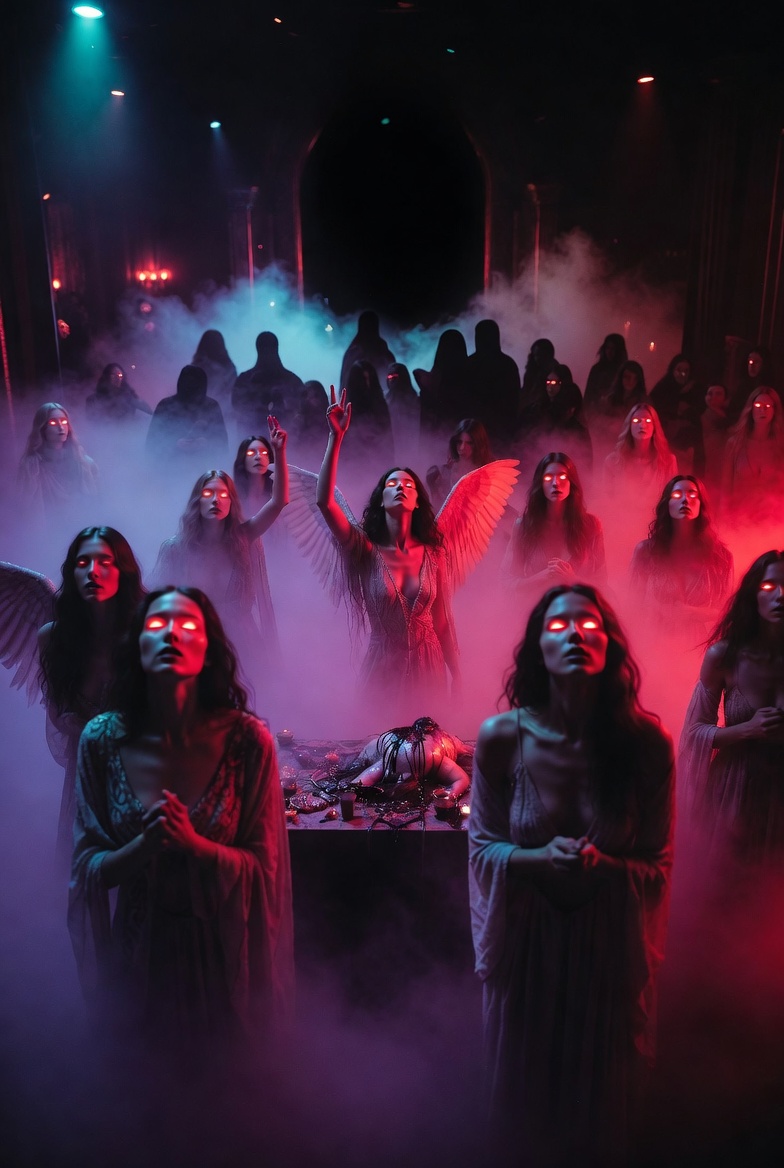
Intro Before I crossed the threshold into that pulsing underworld, I handed my soul to a fallen angel at the door—sealing a Faustian bargain for women who existed only in virtual promise, illusions spun from desire and digital haze. Inside, the club drowned in dark misty buzz, hypnotic music clamping my mind like a vice…
Intro In the shadowed attic of old grief, I found those frantic, handwritten letters—blasphemies scratched out by a younger me during a season of unrelenting calamity, heart emptied by pain and the lack of any real help. One page, opened on a whim, carried the desperate lie: “cursing God will fill your pocket with freedom…
Thread :
Inspired By :
Intro Faith feels like a sharp blade in my own hands, slicing clean through the fear that was slowly moulded into a wild, raging beast inside me throughout all those horrific years. I watched that fear grow teeth and claws, feeding on every nightmare, every betrayal, every moment I thought I wouldn’t survive. But Yeshua…
Intro And so, from the very ashes that once threatened to bury me, I emerge complete—no longer scorched by pretty magic or haunted by manic disappointment in sacred spaces. The static has dissolved, the tropical storm inside has calmed into steady flame, and the phoenix that was born in pain now spreads its wings with…
IntroAnd so, from the very ashes that once threatened to bury me, I emerge complete—no longer scorched by pretty magic or haunted by manic disappointment in sacred spaces. The static has dissolved, the tropical storm inside has calmed into steady flame, and the phoenix that was born in pain now spreads its wings with quiet…
IntroIn the fractured moral landscape of the modern West, where autonomy is preached yet exploitation thrives in shadow, a deceptive monstrous beauty from the Middle East seeps through the cracks with graceful ease. Hypnotizing and nodding in agreement with the very hypocrisies it encounters, this force—rooted in Islamic scripture that explicitly permits child marriage—exposes a…
IntroIn “Mutt…”, I confess my own foolish trust as a silly mutt who placed blind faith in beautiful celestial beings — deceptive mermaids overflowing with lust. They offered me everything I craved: overflowing money, fame, and worldly success, but their promise came with a deadly condition — they would drag my soul beneath the sea…
IntroIn the quiet ruins of endless torment, the heart can slowly calcify into something cold and unyielding — heavy as cement, shielded by layers of pain and guarded by unyielding pride. Trapped on familiar turf where the seductive forces of Vanity, Money, and Power drain every ounce of strength and leave one nerfed and diminished,…
IntroIn a world that worships self-made strength and polished virtue, we quietly discover the painful truth that no man under the sun is heaven-sent—every heart is instead heaven-bent, twisted toward something greater yet stubbornly resistant to it. Our morality and values, so carefully constructed like Clark Kent’s mild-mannered disguise, prove anything but bulletproof; the first…
IntroAlex O’Connor Hypocrisy On Animal Suffering is a thought-provoking philosophical essay (likely from a debate or analysis channel) that challenges the common atheist argument against God’s existence based on animal suffering. It argues that such critiques can be hypocritical, as they often ignore humanity’s own massive role in causing and perpetuating animal pain through factory…
Intro Before I crossed the threshold into that pulsing underworld, I handed my soul to a fallen angel at the door—sealing a Faustian bargain for women who existed only in virtual promise, illusions spun from desire and digital haze. Inside, the club drowned in dark misty buzz, hypnotic music clamping my mind like a vice…
Intro In the shadowed attic of old grief, I found those frantic, handwritten letters—blasphemies scratched out by a younger me during a season of unrelenting calamity, heart emptied by pain and the lack of any real help. One page, opened on a whim, carried the desperate lie: “cursing God will fill your pocket with freedom…
“Do not store up for yourselves treasures on earth, where moths and vermin destroy, and where thieves break in and steal. But store up for yourselves treasures in heaven… For where your treasure is, there your heart will be also.”
— Matthew 6:19-21 (NIV)As I reflect on the words of my own heart poured into verse, I find myself wrestling with a timeless tension: the allure of worldly success versus the quiet radiance of a soul refined by grace. My poem begins with a vivid image: “Once it is said and done, / I will feel like J. Cole—with the Roc-A-Fella chain / hanging politely around his neck.” The Roc-A-Fella chain, a symbol of material triumph and cultural prestige, glistens with the promise of recognition, wealth, and power. In my mind’s eye, I see J. Cole in 2014, at the height of his ascent, wearing that chain not as a burden but as a badge of success.
It’s a tempting vision—one that stirs pride and makes the flesh feel “boastful,” as I write, “when my materialistic gains glisten with might.”Yet, as I journey through this “turbulent life,” I am confronted by a deeper truth, one echoed in Scripture and wrestled with by philosophers through the ages: no material gain, no matter how dazzling, can outshine the soul when it is freed from its vices. The Bible reminds us in Ecclesiastes 5:10, “Whoever loves money never has enough; whoever loves wealth is never satisfied with their income. This too is meaningless.” The Roc-A-Fella chain may hang politely, but it cannot illuminate.

It may glisten, but it cannot endure .The Pride of the Flesh and the Humility of the Soul In the second stanza, I confess, “With pride growing tense, / I feel boastful in the flesh / when my materialistic gains glisten with might.” This pride is a familiar temptation, one that the Apostle Paul addresses in Galatians 6:14: “May I never boast except in the cross of our Lord Jesus Christ, through which the world has been crucified to me, and I to the world.” Pride, born of material success, is a fleeting fire—it burns brightly but leaves ashes. The “turbulent life” I describe is not just a personal struggle but a universal one, where the pursuit of worldly acclaim often drowns out the still, small voice of the soul.Philosophically, this tension resonates with Søren Kierkegaard’s concept of the “aesthetic” versus the “ethical” or “religious” life. In Either/Or, Kierkegaard warns that a life devoted to external pleasures and achievements—whether fame, wealth, or even a Roc-A-Fella chain—leads to despair when it fails to anchor the self in something eternal. My poem’s boastfulness in the flesh reflects this aesthetic stage, where the ego revels in what it can see and touch. But as Kierkegaard suggests, true fulfillment lies in transcending the self, aligning with a higher purpose.

For me, that purpose is found in the biblical call to “seek first his kingdom and his righteousness” (Matthew 6:33), where the soul begins to shed its vices.Shedding Vices, Illuminating the SoulThe heart of the poem—and my own spiritual journey—lies in the lines: “No material gains can outshine / my soul when it sheds its vices / I have consumed through my iris.” Here, I acknowledge that the vices I’ve taken in through my eyes—envy, greed, pride—have clouded my soul. Yet, there is hope in the shedding. The verb “sheds” evokes a snake sloughing off its old skin, a process both painful and liberating. In biblical terms, this mirrors the process of sanctification, where we are “transformed by the renewing of [our] mind” (Romans 12:2). The vices I’ve consumed are not permanent; they can be cast off through repentance and grace.Philosophically, this aligns with Plato’s allegory of the cave, where the soul, initially captivated by shadows on the wall (material illusions), ascends toward the light of truth. The “iris” in my poem becomes a gateway—not just for taking in the world’s temptations but for beholding the divine. When I write, “On the stage of life, / my soul continues to shed and illuminate like stars at night,” I envision a soul that, though still on the stage of an imperfect world, shines with a light that is not its own. Psalm 36:9 declares, “For with you is the fountain of life; in your light we see light.” My soul’s illumination is not self-generated; it reflects the eternal light of God, just as stars reflect the sun’s glow in the night sky.The Illusion of the Chain and the Reality of GraceThe poem’s closing lines bring the imagery full circle: “From afar, you might think I’m wearing a Roc-A-Fella chain / like 2014 J. Cole / when my soul shines through this life’s horrific episode.” Here, I grapple with perception versus reality. From a distance, my life might look like J. Cole’s in his 2014 Forest Hills Drive era—successful, polished, adorned with the trappings of achievement. But the true radiance comes not from a chain but from a soul refined by God’s grace, shining through the “horrific episode” of life’s trials.This distinction echoes Jesus’ teaching in Matthew 23:27-28, where he compares the Pharisees to “whitewashed tombs” that appear beautiful outwardly but are “full of dead people’s bones” within. The Roc-A-Fella chain, like the Pharisees’ outward piety, is a facade if it lacks inner transformation. Philosophically, this resonates with Jean-Jacques Rousseau’s critique of societal masks in The Social Contract, where he argues that humans often lose their authentic selves to the pressures of social status. My poem rejects this mask, choosing instead the authenticity of a soul that shines despite life’s horrors.A Call to Eternal TreasureAs I reflect on my poem and its deeper meaning, I am reminded of 1 Peter 1:24-25: “All people are like grass, and all their glory is like the flowers of the field; the grass withers and the flowers fall, but the word of the Lord endures forever.” The Roc-A-Fella chain, like all material gains, will fade. But the soul, when it sheds its vices and aligns with God’s truth, becomes a star in the eternal night sky—a light that endures.This journey is not mine alone. It is the human condition to wrestle with pride, to chase fleeting treasures, and to seek something greater. As I navigate this turbulent life, I hold fast to the promise of Philippians 1:6: “He who began a good work in you will carry it on to completion until the day of Christ Jesus.” My soul’s illumination is not complete, but it is ongoing, a process of shedding and shining, of letting go of chains to embrace the eternal.In the end, I hope that when you see me from afar, you don’t see a Roc-A-Fella chain but a soul that, by God’s grace, reflects His light. For it is in that light, not in the glitter of worldly gains, that I find my true self—and my true home.
Inspired By :
Intro Faith feels like a sharp blade in my own hands, slicing clean through the fear that was slowly moulded into a wild, raging beast inside me throughout all those horrific years. I watched that fear grow teeth and claws, feeding on every nightmare, every betrayal, every moment I thought I wouldn’t survive. But Yeshua…
Intro And so, from the very ashes that once threatened to bury me, I emerge complete—no longer scorched by pretty magic or haunted by manic disappointment in sacred spaces. The static has dissolved, the tropical storm inside has calmed into steady flame, and the phoenix that was born in pain now spreads its wings with…
IntroAnd so, from the very ashes that once threatened to bury me, I emerge complete—no longer scorched by pretty magic or haunted by manic disappointment in sacred spaces. The static has dissolved, the tropical storm inside has calmed into steady flame, and the phoenix that was born in pain now spreads its wings with quiet…
IntroIn the fractured moral landscape of the modern West, where autonomy is preached yet exploitation thrives in shadow, a deceptive monstrous beauty from the Middle East seeps through the cracks with graceful ease. Hypnotizing and nodding in agreement with the very hypocrisies it encounters, this force—rooted in Islamic scripture that explicitly permits child marriage—exposes a…
IntroIn “Mutt…”, I confess my own foolish trust as a silly mutt who placed blind faith in beautiful celestial beings — deceptive mermaids overflowing with lust. They offered me everything I craved: overflowing money, fame, and worldly success, but their promise came with a deadly condition — they would drag my soul beneath the sea…
IntroIn the quiet ruins of endless torment, the heart can slowly calcify into something cold and unyielding — heavy as cement, shielded by layers of pain and guarded by unyielding pride. Trapped on familiar turf where the seductive forces of Vanity, Money, and Power drain every ounce of strength and leave one nerfed and diminished,…
IntroIn a world that worships self-made strength and polished virtue, we quietly discover the painful truth that no man under the sun is heaven-sent—every heart is instead heaven-bent, twisted toward something greater yet stubbornly resistant to it. Our morality and values, so carefully constructed like Clark Kent’s mild-mannered disguise, prove anything but bulletproof; the first…
IntroAlex O’Connor Hypocrisy On Animal Suffering is a thought-provoking philosophical essay (likely from a debate or analysis channel) that challenges the common atheist argument against God’s existence based on animal suffering. It argues that such critiques can be hypocritical, as they often ignore humanity’s own massive role in causing and perpetuating animal pain through factory…
Intro Before I crossed the threshold into that pulsing underworld, I handed my soul to a fallen angel at the door—sealing a Faustian bargain for women who existed only in virtual promise, illusions spun from desire and digital haze. Inside, the club drowned in dark misty buzz, hypnotic music clamping my mind like a vice…
Intro In the shadowed attic of old grief, I found those frantic, handwritten letters—blasphemies scratched out by a younger me during a season of unrelenting calamity, heart emptied by pain and the lack of any real help. One page, opened on a whim, carried the desperate lie: “cursing God will fill your pocket with freedom…

Thread :
Inspired By :
Intro Faith feels like a sharp blade in my own hands, slicing clean through the fear that was slowly moulded into a wild, raging beast inside me throughout all those horrific years. I watched that fear grow teeth and claws, feeding on every nightmare, every betrayal, every moment I thought I wouldn’t survive. But Yeshua…
Intro And so, from the very ashes that once threatened to bury me, I emerge complete—no longer scorched by pretty magic or haunted by manic disappointment in sacred spaces. The static has dissolved, the tropical storm inside has calmed into steady flame, and the phoenix that was born in pain now spreads its wings with…
IntroAnd so, from the very ashes that once threatened to bury me, I emerge complete—no longer scorched by pretty magic or haunted by manic disappointment in sacred spaces. The static has dissolved, the tropical storm inside has calmed into steady flame, and the phoenix that was born in pain now spreads its wings with quiet…
IntroIn the fractured moral landscape of the modern West, where autonomy is preached yet exploitation thrives in shadow, a deceptive monstrous beauty from the Middle East seeps through the cracks with graceful ease. Hypnotizing and nodding in agreement with the very hypocrisies it encounters, this force—rooted in Islamic scripture that explicitly permits child marriage—exposes a…
IntroIn “Mutt…”, I confess my own foolish trust as a silly mutt who placed blind faith in beautiful celestial beings — deceptive mermaids overflowing with lust. They offered me everything I craved: overflowing money, fame, and worldly success, but their promise came with a deadly condition — they would drag my soul beneath the sea…
IntroIn the quiet ruins of endless torment, the heart can slowly calcify into something cold and unyielding — heavy as cement, shielded by layers of pain and guarded by unyielding pride. Trapped on familiar turf where the seductive forces of Vanity, Money, and Power drain every ounce of strength and leave one nerfed and diminished,…
IntroIn a world that worships self-made strength and polished virtue, we quietly discover the painful truth that no man under the sun is heaven-sent—every heart is instead heaven-bent, twisted toward something greater yet stubbornly resistant to it. Our morality and values, so carefully constructed like Clark Kent’s mild-mannered disguise, prove anything but bulletproof; the first…
IntroAlex O’Connor Hypocrisy On Animal Suffering is a thought-provoking philosophical essay (likely from a debate or analysis channel) that challenges the common atheist argument against God’s existence based on animal suffering. It argues that such critiques can be hypocritical, as they often ignore humanity’s own massive role in causing and perpetuating animal pain through factory…
Intro Before I crossed the threshold into that pulsing underworld, I handed my soul to a fallen angel at the door—sealing a Faustian bargain for women who existed only in virtual promise, illusions spun from desire and digital haze. Inside, the club drowned in dark misty buzz, hypnotic music clamping my mind like a vice…
Intro In the shadowed attic of old grief, I found those frantic, handwritten letters—blasphemies scratched out by a younger me during a season of unrelenting calamity, heart emptied by pain and the lack of any real help. One page, opened on a whim, carried the desperate lie: “cursing God will fill your pocket with freedom…
I woke to a shadow in my room, my own face staring back, twisted with a grin that wasn’t mine. It held my gun, accusing me: “You thought you could embody the essence of wrath’s?” Its words cut deep, naming “friends” I’d killed—lives I’d ended or betrayed in moments I can’t unmake. Jean-Paul Sartre’s words haunt me: I’m condemned to be free, chained to every choice I’ve made. I tried to deny it, to flee this mirror of my guilt, but Sartre’s “bad faith” mocks my escape. I can’t outrun myself.
The shadow is me, my truth, my past, demanding I face it. Running through Paris, the city warped into a nightmare—Champs-Élysées turned to “shadowed veins,” ghosts whispering my sins. Martin Heidegger’s Angst grips me; this is dread, not just of death, but of being. My “heart racing like a bullet train,” my “eyes wide open and sharply aware like an eagle”—these are my body screaming what Heidegger calls Being-toward-death. The world collapses into this moment, this chase, where I’m stripped bare, my existence raw and exposed. The streets screech, the wolf howls, and I’m alone with my finitude. Friedrich Nietzsche’s voice echoes: “You have not yet overcome your shadow.” This doppelgänger is my shadow, the parts of me I’ve buried—rage, guilt, the blood on my hands. It threatens to “cage” my soul in a “permanent curse,” like Nietzsche’s eternal recurrence, forcing me to relive my failures forever. I want to scream, to reject it, but it’s me. I’m the accuser and the accused.Søren Kierkegaard’s despair claws at me. My “storm of anxiety” is his sickness unto death—I’m torn between fleeing who I am and fearing to become who I must be.
The shadow’s gun at my head is my own refusal to reconcile with myself. It says, “This is for all my friends you have killed,” and I feel the weight of every wrong, every wound I’ve caused. Despair chokes me, but Kierkegaard whispers of a leap—to face myself, to choose authenticity. Then the trigger clicks, and I wake, “horrifically sweating heavily.” Albert Camus’ absurdism floods in. The world is absurd—beauty in the “moon beaming,” terror in the “streets screeching.” I’m Sisyphus, waking to push the boulder again. The shadow hasn’t vanished; it lingers in my mirror, my conscience. But Camus urges me to rebel, to create meaning in this chaos. I’m alive, breathing, despite the dread. I must forge purpose, not find it, confronting my shadow not with fear but with defiance, building a life from the fragments of my broken self.
Poem Treads
Inspired By :
Intro Faith feels like a sharp blade in my own hands, slicing clean through the fear that was slowly moulded into a wild, raging beast inside me throughout all those horrific years. I watched that fear grow teeth and claws, feeding on every nightmare, every betrayal, every moment I thought I wouldn’t survive. But Yeshua…
Intro And so, from the very ashes that once threatened to bury me, I emerge complete—no longer scorched by pretty magic or haunted by manic disappointment in sacred spaces. The static has dissolved, the tropical storm inside has calmed into steady flame, and the phoenix that was born in pain now spreads its wings with…
IntroAnd so, from the very ashes that once threatened to bury me, I emerge complete—no longer scorched by pretty magic or haunted by manic disappointment in sacred spaces. The static has dissolved, the tropical storm inside has calmed into steady flame, and the phoenix that was born in pain now spreads its wings with quiet…
IntroIn the fractured moral landscape of the modern West, where autonomy is preached yet exploitation thrives in shadow, a deceptive monstrous beauty from the Middle East seeps through the cracks with graceful ease. Hypnotizing and nodding in agreement with the very hypocrisies it encounters, this force—rooted in Islamic scripture that explicitly permits child marriage—exposes a…
IntroIn “Mutt…”, I confess my own foolish trust as a silly mutt who placed blind faith in beautiful celestial beings — deceptive mermaids overflowing with lust. They offered me everything I craved: overflowing money, fame, and worldly success, but their promise came with a deadly condition — they would drag my soul beneath the sea…
IntroIn the quiet ruins of endless torment, the heart can slowly calcify into something cold and unyielding — heavy as cement, shielded by layers of pain and guarded by unyielding pride. Trapped on familiar turf where the seductive forces of Vanity, Money, and Power drain every ounce of strength and leave one nerfed and diminished,…
IntroIn a world that worships self-made strength and polished virtue, we quietly discover the painful truth that no man under the sun is heaven-sent—every heart is instead heaven-bent, twisted toward something greater yet stubbornly resistant to it. Our morality and values, so carefully constructed like Clark Kent’s mild-mannered disguise, prove anything but bulletproof; the first…
IntroAlex O’Connor Hypocrisy On Animal Suffering is a thought-provoking philosophical essay (likely from a debate or analysis channel) that challenges the common atheist argument against God’s existence based on animal suffering. It argues that such critiques can be hypocritical, as they often ignore humanity’s own massive role in causing and perpetuating animal pain through factory…
Intro Before I crossed the threshold into that pulsing underworld, I handed my soul to a fallen angel at the door—sealing a Faustian bargain for women who existed only in virtual promise, illusions spun from desire and digital haze. Inside, the club drowned in dark misty buzz, hypnotic music clamping my mind like a vice…
Intro In the shadowed attic of old grief, I found those frantic, handwritten letters—blasphemies scratched out by a younger me during a season of unrelenting calamity, heart emptied by pain and the lack of any real help. One page, opened on a whim, carried the desperate lie: “cursing God will fill your pocket with freedom…


Thread :
Inspired By :