Thread :
Inspired By :


Description This poem paints a vivid picture of a woman whose belief in meliorism—the idea that the world can be made better by human effort—imbues her with a positive and vibrant presence. Let’s break down and expand upon the poem’s imagery and themes: Expanded Description: The poem celebrates a woman whose unwavering belief in the…
The summer season is my favourite season. The sun’s rays illuminate the brightest throughout the day, and the sky is a crystal clear blue. Butterflies and bees extract nectar as they rest on red roses in the gardens. The sun beaming makes everything in nature comes alive in variety of vibrant colours. The gentle unseen…

Description This poem delves into themes of inner turmoil, transformation, and the tension between revolutionary aspirations and personal desires. Let’s break down the lines to understand the imagery and underlying meanings: Overall, the poem explores the conflict between the speaker’s desire for radical change and the distractions of personal desires. The imagery of the “triple…
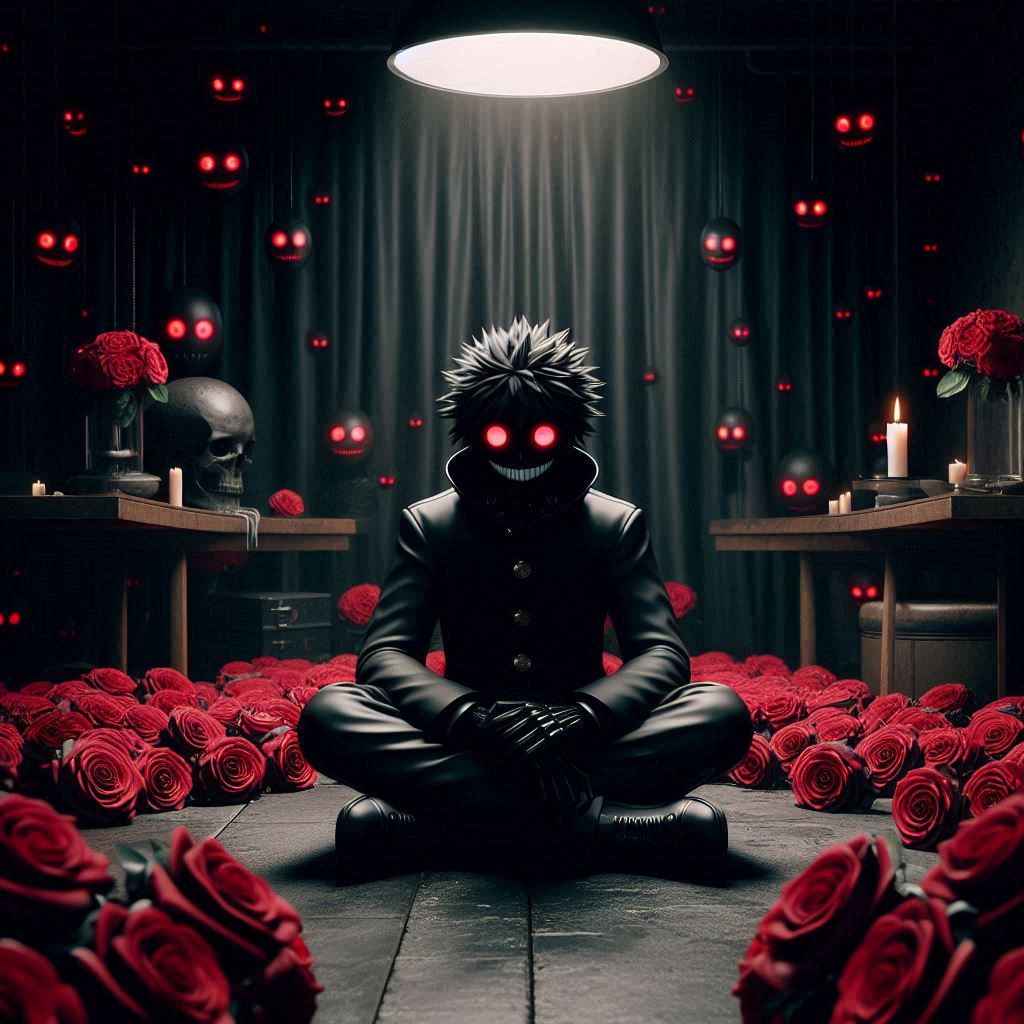
Description This poem delves into the narrator’s introspective moment while performing a mundane activity—eating pizza. The imagery of being surrounded by multiple versions of Zendaya highlights the overwhelming presence of beauty and allure that captivates the narrator. This fascination, however, causes the narrator to lose sight of their blessings and spiritual exclamations. The line “from…
So far this year, I have spent most of my time speaking to God and creating art by writing poems to escape this current reality. I do have friends, but as I grow older, my circle of friends becomes smaller. Most of my time these days is spent increasing my knowledge and expanding my world…
Rich Dad Poor Dad This book taught me about the financial economy and how money truly works in circulation. Robert Kiyosaki explains how his poor dad taught him to earn money the traditional way (go to school, college, university, graduate, and find work—money comes in). His rich dad taught him to understand money, meaning to…

Description This poem captures a moment of introspection and emotional conflict, portraying the poet’s inner turmoil and sense of isolation. The poet is deeply absorbed in their own thoughts and struggles, reflected in their refusal to answer a caring call, choosing instead to remain “in the zone.” The setting is stark and evocative: the poet…
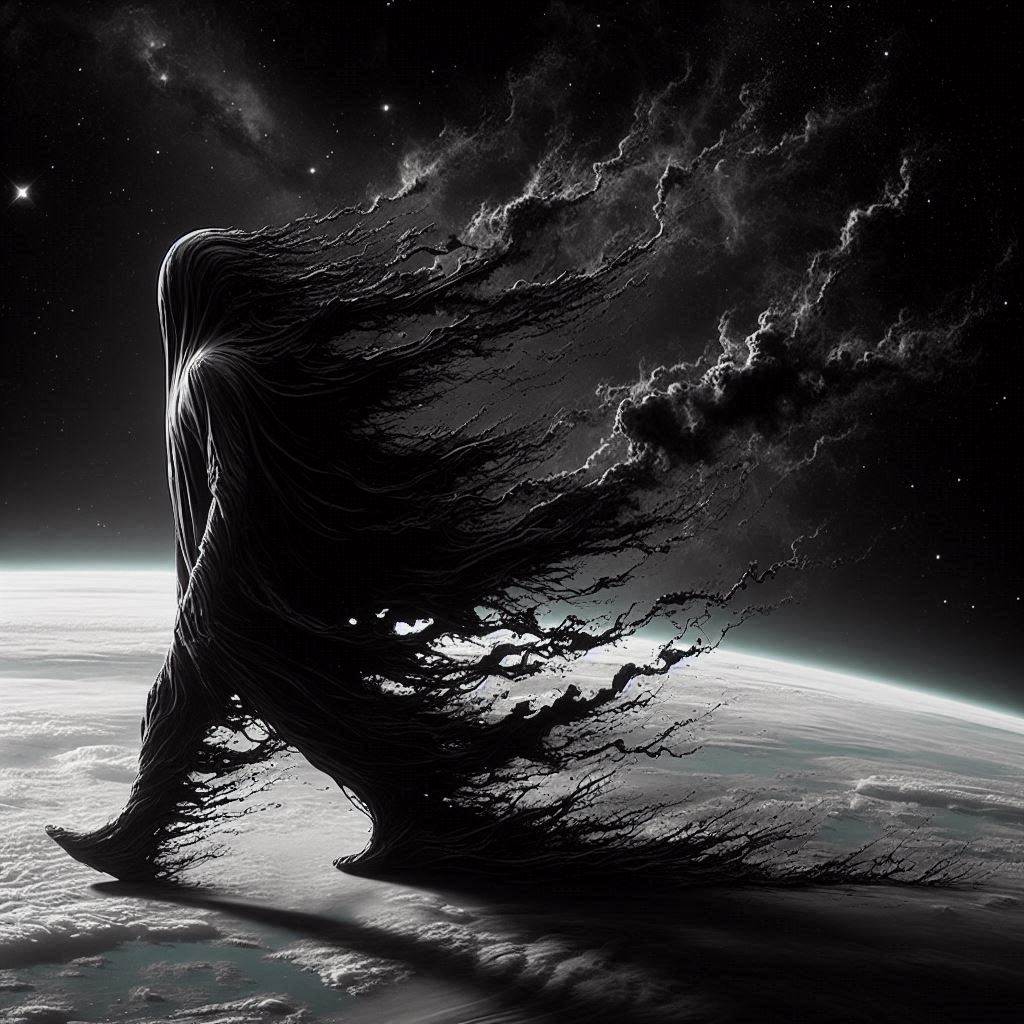
Description This poem reflects on profound thoughts and spiritual musings while the poet partakes in a simple, mundane activity—eating a slice of pizza. The juxtaposition of the ordinary with the extraordinary serves to emphasize the depth of the poet’s contemplation. The poem begins by introducing the concept of an “unseen Perfection,” a divine or transcendent…

Description This poem offers a contemplative glimpse into the poet’s mind as they engage in everyday activities. The poem begins with the poet reflecting deeply while eating a slice of pizza, contemplating their spiritual fate. They reject the idea of going to hell and express a preference for going to heaven, demonstrating reverence and seeking…
When it’s time to unplug, my mind, body, and soul warn me in advance that it’s time to rest. During my resting hours, I have been writing constantly for the past few years, which has helped me ease my mind. I am an overthinker, which is a bad habit I really need to stop because…
Thread :
Inspired By :
Description This poem paints a vivid picture of a woman whose belief in meliorism—the idea that the world can be made better by human effort—imbues her with a positive and vibrant presence. Let’s break down and expand upon the poem’s imagery and themes: Expanded Description: The poem celebrates a woman whose unwavering belief in the…
The summer season is my favourite season. The sun’s rays illuminate the brightest throughout the day, and the sky is a crystal clear blue. Butterflies and bees extract nectar as they rest on red roses in the gardens. The sun beaming makes everything in nature comes alive in variety of vibrant colours. The gentle unseen…
Description This poem delves into themes of inner turmoil, transformation, and the tension between revolutionary aspirations and personal desires. Let’s break down the lines to understand the imagery and underlying meanings: Overall, the poem explores the conflict between the speaker’s desire for radical change and the distractions of personal desires. The imagery of the “triple…
Description This poem delves into the narrator’s introspective moment while performing a mundane activity—eating pizza. The imagery of being surrounded by multiple versions of Zendaya highlights the overwhelming presence of beauty and allure that captivates the narrator. This fascination, however, causes the narrator to lose sight of their blessings and spiritual exclamations. The line “from…
So far this year, I have spent most of my time speaking to God and creating art by writing poems to escape this current reality. I do have friends, but as I grow older, my circle of friends becomes smaller. Most of my time these days is spent increasing my knowledge and expanding my world…
Rich Dad Poor Dad This book taught me about the financial economy and how money truly works in circulation. Robert Kiyosaki explains how his poor dad taught him to earn money the traditional way (go to school, college, university, graduate, and find work—money comes in). His rich dad taught him to understand money, meaning to…
Description This poem captures a moment of introspection and emotional conflict, portraying the poet’s inner turmoil and sense of isolation. The poet is deeply absorbed in their own thoughts and struggles, reflected in their refusal to answer a caring call, choosing instead to remain “in the zone.” The setting is stark and evocative: the poet…
Description This poem reflects on profound thoughts and spiritual musings while the poet partakes in a simple, mundane activity—eating a slice of pizza. The juxtaposition of the ordinary with the extraordinary serves to emphasize the depth of the poet’s contemplation. The poem begins by introducing the concept of an “unseen Perfection,” a divine or transcendent…
Description This poem offers a contemplative glimpse into the poet’s mind as they engage in everyday activities. The poem begins with the poet reflecting deeply while eating a slice of pizza, contemplating their spiritual fate. They reject the idea of going to hell and express a preference for going to heaven, demonstrating reverence and seeking…
When it’s time to unplug, my mind, body, and soul warn me in advance that it’s time to rest. During my resting hours, I have been writing constantly for the past few years, which has helped me ease my mind. I am an overthinker, which is a bad habit I really need to stop because…
“Do not store up for yourselves treasures on earth, where moths and vermin destroy, and where thieves break in and steal. But store up for yourselves treasures in heaven… For where your treasure is, there your heart will be also.”
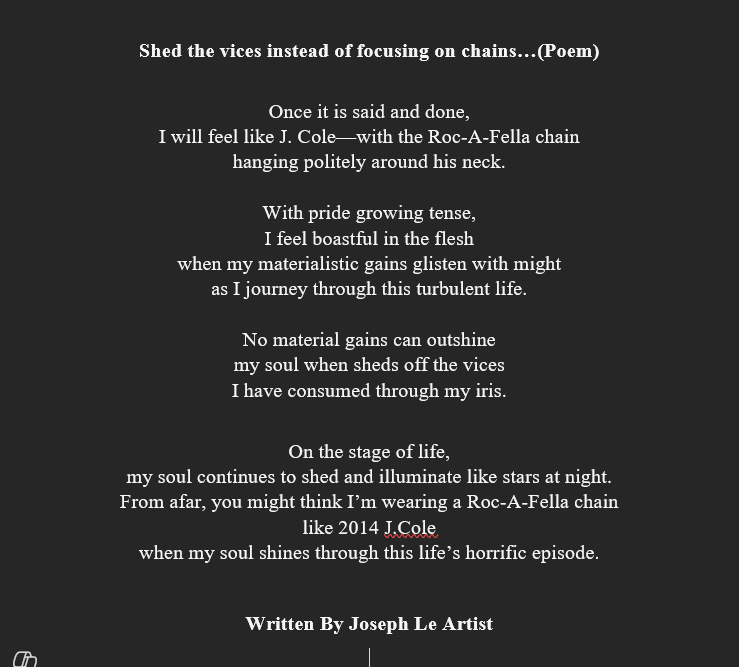
— Matthew 6:19-21 (NIV)As I reflect on the words of my own heart poured into verse, I find myself wrestling with a timeless tension: the allure of worldly success versus the quiet radiance of a soul refined by grace. My poem begins with a vivid image: “Once it is said and done, / I will feel like J. Cole—with the Roc-A-Fella chain / hanging politely around his neck.” The Roc-A-Fella chain, a symbol of material triumph and cultural prestige, glistens with the promise of recognition, wealth, and power. In my mind’s eye, I see J. Cole in 2014, at the height of his ascent, wearing that chain not as a burden but as a badge of success.
It’s a tempting vision—one that stirs pride and makes the flesh feel “boastful,” as I write, “when my materialistic gains glisten with might.”Yet, as I journey through this “turbulent life,” I am confronted by a deeper truth, one echoed in Scripture and wrestled with by philosophers through the ages: no material gain, no matter how dazzling, can outshine the soul when it is freed from its vices. The Bible reminds us in Ecclesiastes 5:10, “Whoever loves money never has enough; whoever loves wealth is never satisfied with their income. This too is meaningless.” The Roc-A-Fella chain may hang politely, but it cannot illuminate.

It may glisten, but it cannot endure .The Pride of the Flesh and the Humility of the Soul In the second stanza, I confess, “With pride growing tense, / I feel boastful in the flesh / when my materialistic gains glisten with might.” This pride is a familiar temptation, one that the Apostle Paul addresses in Galatians 6:14: “May I never boast except in the cross of our Lord Jesus Christ, through which the world has been crucified to me, and I to the world.” Pride, born of material success, is a fleeting fire—it burns brightly but leaves ashes. The “turbulent life” I describe is not just a personal struggle but a universal one, where the pursuit of worldly acclaim often drowns out the still, small voice of the soul.Philosophically, this tension resonates with Søren Kierkegaard’s concept of the “aesthetic” versus the “ethical” or “religious” life. In Either/Or, Kierkegaard warns that a life devoted to external pleasures and achievements—whether fame, wealth, or even a Roc-A-Fella chain—leads to despair when it fails to anchor the self in something eternal. My poem’s boastfulness in the flesh reflects this aesthetic stage, where the ego revels in what it can see and touch. But as Kierkegaard suggests, true fulfillment lies in transcending the self, aligning with a higher purpose.
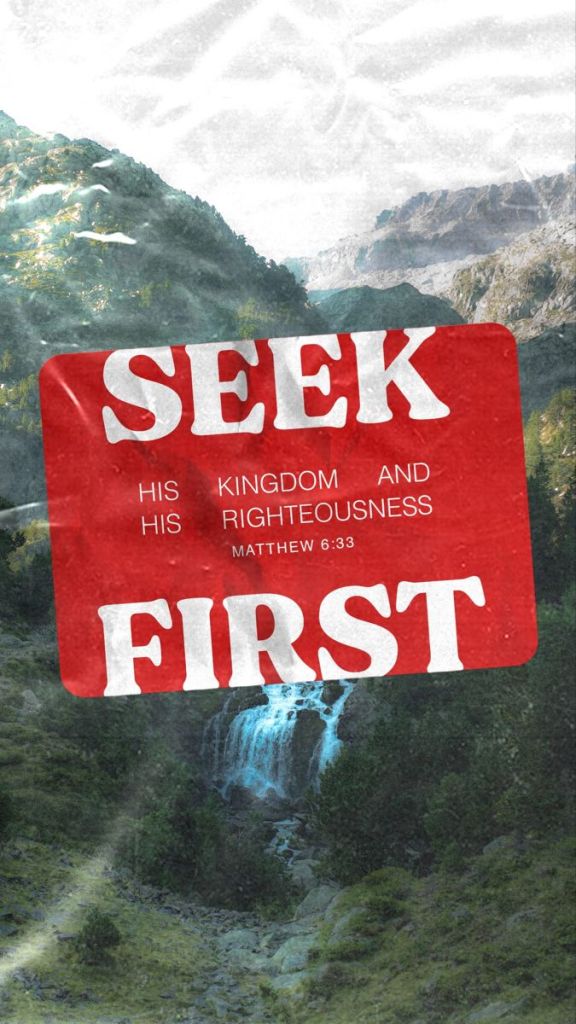
For me, that purpose is found in the biblical call to “seek first his kingdom and his righteousness” (Matthew 6:33), where the soul begins to shed its vices.Shedding Vices, Illuminating the SoulThe heart of the poem—and my own spiritual journey—lies in the lines: “No material gains can outshine / my soul when it sheds its vices / I have consumed through my iris.” Here, I acknowledge that the vices I’ve taken in through my eyes—envy, greed, pride—have clouded my soul. Yet, there is hope in the shedding. The verb “sheds” evokes a snake sloughing off its old skin, a process both painful and liberating. In biblical terms, this mirrors the process of sanctification, where we are “transformed by the renewing of [our] mind” (Romans 12:2). The vices I’ve consumed are not permanent; they can be cast off through repentance and grace.Philosophically, this aligns with Plato’s allegory of the cave, where the soul, initially captivated by shadows on the wall (material illusions), ascends toward the light of truth. The “iris” in my poem becomes a gateway—not just for taking in the world’s temptations but for beholding the divine. When I write, “On the stage of life, / my soul continues to shed and illuminate like stars at night,” I envision a soul that, though still on the stage of an imperfect world, shines with a light that is not its own. Psalm 36:9 declares, “For with you is the fountain of life; in your light we see light.” My soul’s illumination is not self-generated; it reflects the eternal light of God, just as stars reflect the sun’s glow in the night sky.The Illusion of the Chain and the Reality of GraceThe poem’s closing lines bring the imagery full circle: “From afar, you might think I’m wearing a Roc-A-Fella chain / like 2014 J. Cole / when my soul shines through this life’s horrific episode.” Here, I grapple with perception versus reality. From a distance, my life might look like J. Cole’s in his 2014 Forest Hills Drive era—successful, polished, adorned with the trappings of achievement. But the true radiance comes not from a chain but from a soul refined by God’s grace, shining through the “horrific episode” of life’s trials.This distinction echoes Jesus’ teaching in Matthew 23:27-28, where he compares the Pharisees to “whitewashed tombs” that appear beautiful outwardly but are “full of dead people’s bones” within. The Roc-A-Fella chain, like the Pharisees’ outward piety, is a facade if it lacks inner transformation. Philosophically, this resonates with Jean-Jacques Rousseau’s critique of societal masks in The Social Contract, where he argues that humans often lose their authentic selves to the pressures of social status. My poem rejects this mask, choosing instead the authenticity of a soul that shines despite life’s horrors.A Call to Eternal TreasureAs I reflect on my poem and its deeper meaning, I am reminded of 1 Peter 1:24-25: “All people are like grass, and all their glory is like the flowers of the field; the grass withers and the flowers fall, but the word of the Lord endures forever.” The Roc-A-Fella chain, like all material gains, will fade. But the soul, when it sheds its vices and aligns with God’s truth, becomes a star in the eternal night sky—a light that endures.This journey is not mine alone. It is the human condition to wrestle with pride, to chase fleeting treasures, and to seek something greater. As I navigate this turbulent life, I hold fast to the promise of Philippians 1:6: “He who began a good work in you will carry it on to completion until the day of Christ Jesus.” My soul’s illumination is not complete, but it is ongoing, a process of shedding and shining, of letting go of chains to embrace the eternal.In the end, I hope that when you see me from afar, you don’t see a Roc-A-Fella chain but a soul that, by God’s grace, reflects His light. For it is in that light, not in the glitter of worldly gains, that I find my true self—and my true home.
Inspired By :
Description This poem paints a vivid picture of a woman whose belief in meliorism—the idea that the world can be made better by human effort—imbues her with a positive and vibrant presence. Let’s break down and expand upon the poem’s imagery and themes: Expanded Description: The poem celebrates a woman whose unwavering belief in the…
The summer season is my favourite season. The sun’s rays illuminate the brightest throughout the day, and the sky is a crystal clear blue. Butterflies and bees extract nectar as they rest on red roses in the gardens. The sun beaming makes everything in nature comes alive in variety of vibrant colours. The gentle unseen…
Description This poem delves into themes of inner turmoil, transformation, and the tension between revolutionary aspirations and personal desires. Let’s break down the lines to understand the imagery and underlying meanings: Overall, the poem explores the conflict between the speaker’s desire for radical change and the distractions of personal desires. The imagery of the “triple…
Description This poem delves into the narrator’s introspective moment while performing a mundane activity—eating pizza. The imagery of being surrounded by multiple versions of Zendaya highlights the overwhelming presence of beauty and allure that captivates the narrator. This fascination, however, causes the narrator to lose sight of their blessings and spiritual exclamations. The line “from…
So far this year, I have spent most of my time speaking to God and creating art by writing poems to escape this current reality. I do have friends, but as I grow older, my circle of friends becomes smaller. Most of my time these days is spent increasing my knowledge and expanding my world…
Rich Dad Poor Dad This book taught me about the financial economy and how money truly works in circulation. Robert Kiyosaki explains how his poor dad taught him to earn money the traditional way (go to school, college, university, graduate, and find work—money comes in). His rich dad taught him to understand money, meaning to…
Description This poem captures a moment of introspection and emotional conflict, portraying the poet’s inner turmoil and sense of isolation. The poet is deeply absorbed in their own thoughts and struggles, reflected in their refusal to answer a caring call, choosing instead to remain “in the zone.” The setting is stark and evocative: the poet…
Description This poem reflects on profound thoughts and spiritual musings while the poet partakes in a simple, mundane activity—eating a slice of pizza. The juxtaposition of the ordinary with the extraordinary serves to emphasize the depth of the poet’s contemplation. The poem begins by introducing the concept of an “unseen Perfection,” a divine or transcendent…
Description This poem offers a contemplative glimpse into the poet’s mind as they engage in everyday activities. The poem begins with the poet reflecting deeply while eating a slice of pizza, contemplating their spiritual fate. They reject the idea of going to hell and express a preference for going to heaven, demonstrating reverence and seeking…
When it’s time to unplug, my mind, body, and soul warn me in advance that it’s time to rest. During my resting hours, I have been writing constantly for the past few years, which has helped me ease my mind. I am an overthinker, which is a bad habit I really need to stop because…
Thread :
Inspired By :
Description This poem paints a vivid picture of a woman whose belief in meliorism—the idea that the world can be made better by human effort—imbues her with a positive and vibrant presence. Let’s break down and expand upon the poem’s imagery and themes: Expanded Description: The poem celebrates a woman whose unwavering belief in the…
The summer season is my favourite season. The sun’s rays illuminate the brightest throughout the day, and the sky is a crystal clear blue. Butterflies and bees extract nectar as they rest on red roses in the gardens. The sun beaming makes everything in nature comes alive in variety of vibrant colours. The gentle unseen…
Description This poem delves into themes of inner turmoil, transformation, and the tension between revolutionary aspirations and personal desires. Let’s break down the lines to understand the imagery and underlying meanings: Overall, the poem explores the conflict between the speaker’s desire for radical change and the distractions of personal desires. The imagery of the “triple…
Description This poem delves into the narrator’s introspective moment while performing a mundane activity—eating pizza. The imagery of being surrounded by multiple versions of Zendaya highlights the overwhelming presence of beauty and allure that captivates the narrator. This fascination, however, causes the narrator to lose sight of their blessings and spiritual exclamations. The line “from…
So far this year, I have spent most of my time speaking to God and creating art by writing poems to escape this current reality. I do have friends, but as I grow older, my circle of friends becomes smaller. Most of my time these days is spent increasing my knowledge and expanding my world…
Rich Dad Poor Dad This book taught me about the financial economy and how money truly works in circulation. Robert Kiyosaki explains how his poor dad taught him to earn money the traditional way (go to school, college, university, graduate, and find work—money comes in). His rich dad taught him to understand money, meaning to…
Description This poem captures a moment of introspection and emotional conflict, portraying the poet’s inner turmoil and sense of isolation. The poet is deeply absorbed in their own thoughts and struggles, reflected in their refusal to answer a caring call, choosing instead to remain “in the zone.” The setting is stark and evocative: the poet…
Description This poem reflects on profound thoughts and spiritual musings while the poet partakes in a simple, mundane activity—eating a slice of pizza. The juxtaposition of the ordinary with the extraordinary serves to emphasize the depth of the poet’s contemplation. The poem begins by introducing the concept of an “unseen Perfection,” a divine or transcendent…
Description This poem offers a contemplative glimpse into the poet’s mind as they engage in everyday activities. The poem begins with the poet reflecting deeply while eating a slice of pizza, contemplating their spiritual fate. They reject the idea of going to hell and express a preference for going to heaven, demonstrating reverence and seeking…
When it’s time to unplug, my mind, body, and soul warn me in advance that it’s time to rest. During my resting hours, I have been writing constantly for the past few years, which has helped me ease my mind. I am an overthinker, which is a bad habit I really need to stop because…
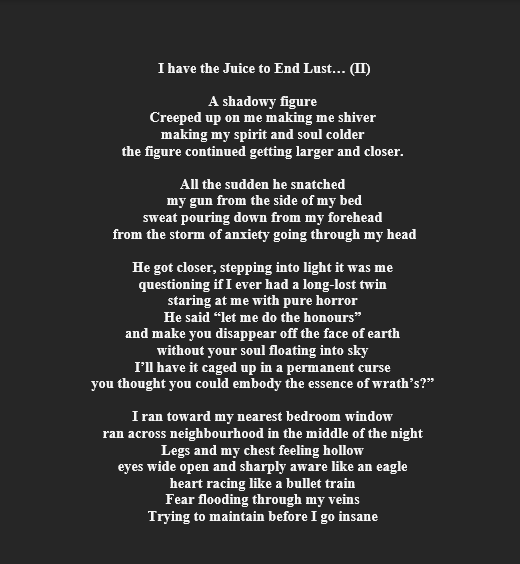
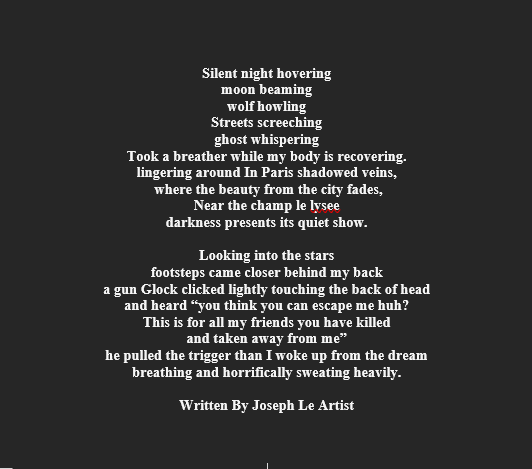
I woke to a shadow in my room, my own face staring back, twisted with a grin that wasn’t mine. It held my gun, accusing me: “You thought you could embody the essence of wrath’s?” Its words cut deep, naming “friends” I’d killed—lives I’d ended or betrayed in moments I can’t unmake. Jean-Paul Sartre’s words haunt me: I’m condemned to be free, chained to every choice I’ve made. I tried to deny it, to flee this mirror of my guilt, but Sartre’s “bad faith” mocks my escape. I can’t outrun myself.
The shadow is me, my truth, my past, demanding I face it. Running through Paris, the city warped into a nightmare—Champs-Élysées turned to “shadowed veins,” ghosts whispering my sins. Martin Heidegger’s Angst grips me; this is dread, not just of death, but of being. My “heart racing like a bullet train,” my “eyes wide open and sharply aware like an eagle”—these are my body screaming what Heidegger calls Being-toward-death. The world collapses into this moment, this chase, where I’m stripped bare, my existence raw and exposed. The streets screech, the wolf howls, and I’m alone with my finitude. Friedrich Nietzsche’s voice echoes: “You have not yet overcome your shadow.” This doppelgänger is my shadow, the parts of me I’ve buried—rage, guilt, the blood on my hands. It threatens to “cage” my soul in a “permanent curse,” like Nietzsche’s eternal recurrence, forcing me to relive my failures forever. I want to scream, to reject it, but it’s me. I’m the accuser and the accused.Søren Kierkegaard’s despair claws at me. My “storm of anxiety” is his sickness unto death—I’m torn between fleeing who I am and fearing to become who I must be.
The shadow’s gun at my head is my own refusal to reconcile with myself. It says, “This is for all my friends you have killed,” and I feel the weight of every wrong, every wound I’ve caused. Despair chokes me, but Kierkegaard whispers of a leap—to face myself, to choose authenticity. Then the trigger clicks, and I wake, “horrifically sweating heavily.” Albert Camus’ absurdism floods in. The world is absurd—beauty in the “moon beaming,” terror in the “streets screeching.” I’m Sisyphus, waking to push the boulder again. The shadow hasn’t vanished; it lingers in my mirror, my conscience. But Camus urges me to rebel, to create meaning in this chaos. I’m alive, breathing, despite the dread. I must forge purpose, not find it, confronting my shadow not with fear but with defiance, building a life from the fragments of my broken self.
Poem Treads
Inspired By :
Description This poem paints a vivid picture of a woman whose belief in meliorism—the idea that the world can be made better by human effort—imbues her with a positive and vibrant presence. Let’s break down and expand upon the poem’s imagery and themes: Expanded Description: The poem celebrates a woman whose unwavering belief in the…
The summer season is my favourite season. The sun’s rays illuminate the brightest throughout the day, and the sky is a crystal clear blue. Butterflies and bees extract nectar as they rest on red roses in the gardens. The sun beaming makes everything in nature comes alive in variety of vibrant colours. The gentle unseen…
Description This poem delves into themes of inner turmoil, transformation, and the tension between revolutionary aspirations and personal desires. Let’s break down the lines to understand the imagery and underlying meanings: Overall, the poem explores the conflict between the speaker’s desire for radical change and the distractions of personal desires. The imagery of the “triple…
Description This poem delves into the narrator’s introspective moment while performing a mundane activity—eating pizza. The imagery of being surrounded by multiple versions of Zendaya highlights the overwhelming presence of beauty and allure that captivates the narrator. This fascination, however, causes the narrator to lose sight of their blessings and spiritual exclamations. The line “from…
So far this year, I have spent most of my time speaking to God and creating art by writing poems to escape this current reality. I do have friends, but as I grow older, my circle of friends becomes smaller. Most of my time these days is spent increasing my knowledge and expanding my world…
Rich Dad Poor Dad This book taught me about the financial economy and how money truly works in circulation. Robert Kiyosaki explains how his poor dad taught him to earn money the traditional way (go to school, college, university, graduate, and find work—money comes in). His rich dad taught him to understand money, meaning to…
Description This poem captures a moment of introspection and emotional conflict, portraying the poet’s inner turmoil and sense of isolation. The poet is deeply absorbed in their own thoughts and struggles, reflected in their refusal to answer a caring call, choosing instead to remain “in the zone.” The setting is stark and evocative: the poet…
Description This poem reflects on profound thoughts and spiritual musings while the poet partakes in a simple, mundane activity—eating a slice of pizza. The juxtaposition of the ordinary with the extraordinary serves to emphasize the depth of the poet’s contemplation. The poem begins by introducing the concept of an “unseen Perfection,” a divine or transcendent…
Description This poem offers a contemplative glimpse into the poet’s mind as they engage in everyday activities. The poem begins with the poet reflecting deeply while eating a slice of pizza, contemplating their spiritual fate. They reject the idea of going to hell and express a preference for going to heaven, demonstrating reverence and seeking…
When it’s time to unplug, my mind, body, and soul warn me in advance that it’s time to rest. During my resting hours, I have been writing constantly for the past few years, which has helped me ease my mind. I am an overthinker, which is a bad habit I really need to stop because…
Thread :
Inspired By :

 LifeandTimelessart