IntroIn the fractured moral landscape of the modern West, where autonomy is preached yet exploitation thrives in shadow, a deceptive monstrous beauty from the Middle East seeps through the cracks with graceful ease. Hypnotizing and nodding in agreement with the very hypocrisies it encounters, this force—rooted in Islamic scripture that explicitly permits child marriage—exposes a…
IntroIn “Mutt…”, I confess my own foolish trust as a silly mutt who placed blind faith in beautiful celestial beings — deceptive mermaids overflowing with lust. They offered me everything I craved: overflowing money, fame, and worldly success, but their promise came with a deadly condition — they would drag my soul beneath the sea…
IntroIn the quiet ruins of endless torment, the heart can slowly calcify into something cold and unyielding — heavy as cement, shielded by layers of pain and guarded by unyielding pride. Trapped on familiar turf where the seductive forces of Vanity, Money, and Power drain every ounce of strength and leave one nerfed and diminished,…
IntroIn a world that worships self-made strength and polished virtue, we quietly discover the painful truth that no man under the sun is heaven-sent—every heart is instead heaven-bent, twisted toward something greater yet stubbornly resistant to it. Our morality and values, so carefully constructed like Clark Kent’s mild-mannered disguise, prove anything but bulletproof; the first…
IntroAlex O’Connor Hypocrisy On Animal Suffering is a thought-provoking philosophical essay (likely from a debate or analysis channel) that challenges the common atheist argument against God’s existence based on animal suffering. It argues that such critiques can be hypocritical, as they often ignore humanity’s own massive role in causing and perpetuating animal pain through factory…
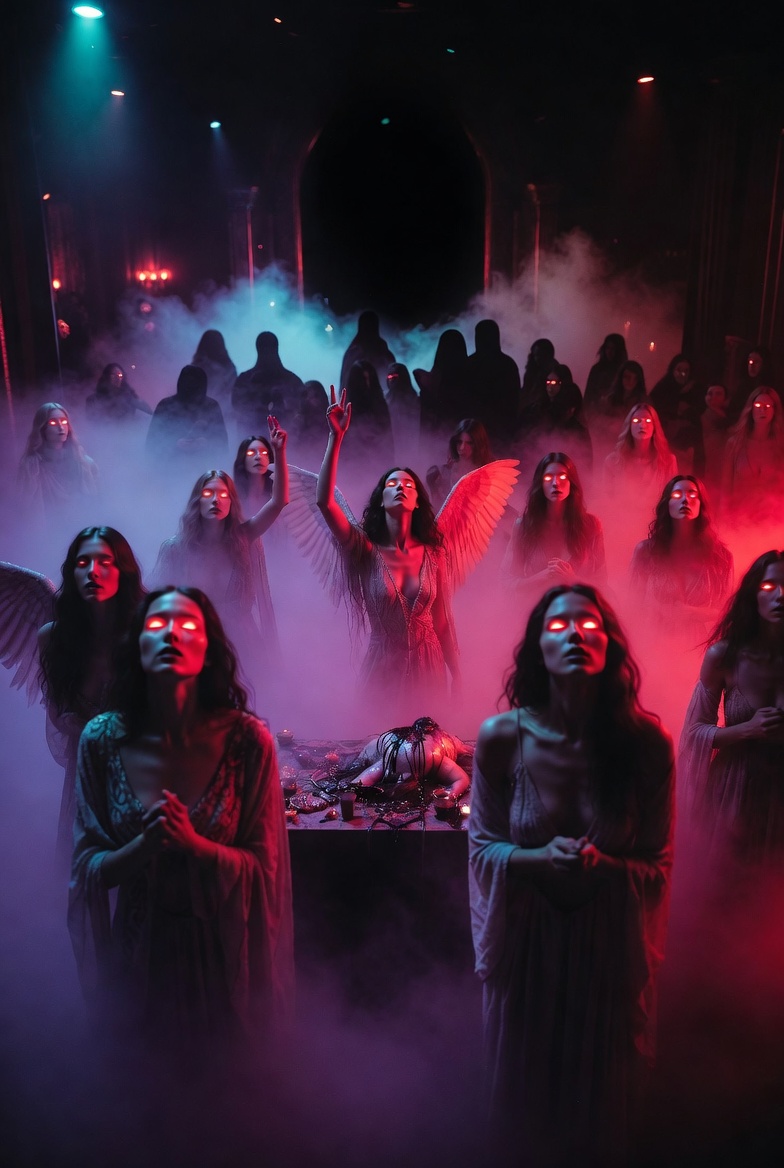
Intro Before I crossed the threshold into that pulsing underworld, I handed my soul to a fallen angel at the door—sealing a Faustian bargain for women who existed only in virtual promise, illusions spun from desire and digital haze. Inside, the club drowned in dark misty buzz, hypnotic music clamping my mind like a vice…
Intro In the shadowed attic of old grief, I found those frantic, handwritten letters—blasphemies scratched out by a younger me during a season of unrelenting calamity, heart emptied by pain and the lack of any real help. One page, opened on a whim, carried the desperate lie: “cursing God will fill your pocket with freedom…
Intro Sometimes I think about why the urge to create feels so natural, almost unavoidable, as if it was placed inside us long before we understood what art even was. It makes me wonder if creativity is part of the reason we exist at all—like God invented us so imagination could move through human hands…
Intro In an age where virtue is performed beneath studio lights and righteousness is rehearsed for applause, the loudest saviors often cast the longest shadows. History has shown how public personas can crumble — from the fall of R. Kelly to the scandal surrounding Jeffrey Epstein — revealing how influence and power can conceal disturbing…
IntroThis poem presents a sharp and cautionary portrait of a woman whose outer beauty conceals inner danger. By comparing her appearance to Stacy Dash, the speaker immediately establishes an image of striking physical attractiveness, only to contrast it with the darker image of a “fallen angel.” Throughout the poem, religious symbolism—halos, horns, heaven—blends with modern…
This poem is for people haunted by eyes that once sparkled with wonder, now overflowing with ruin.
She chose and obsessed—to go to the soul cage. I wrote this once I saw: love without real caution is just code waiting to flood. Faith sank deeper when pretence ended and her obsession met my disarray. No sermon here just the confession of waves that overwhelmed what she pursued.
Conclusion
Love that surges without invitation is violence disguised as depth—my rage proved it merciless. She came as mermaid, seeking hidden seas; she left hollow, drowned by what I could not contain. In the silence after the flood, I hold only echoes and the weight of what I almost kept. If this stirs you, it is freedom calling—love true never refuses the mercy of goodbye
IntroIn the fractured moral landscape of the modern West, where autonomy is preached yet exploitation thrives in shadow, a deceptive monstrous beauty from the Middle East seeps through the cracks with graceful ease. Hypnotizing and nodding in agreement with the very hypocrisies it encounters, this force—rooted in Islamic scripture that explicitly permits child marriage—exposes a…
IntroIn “Mutt…”, I confess my own foolish trust as a silly mutt who placed blind faith in beautiful celestial beings — deceptive mermaids overflowing with lust. They offered me everything I craved: overflowing money, fame, and worldly success, but their promise came with a deadly condition — they would drag my soul beneath the sea…
IntroIn the quiet ruins of endless torment, the heart can slowly calcify into something cold and unyielding — heavy as cement, shielded by layers of pain and guarded by unyielding pride. Trapped on familiar turf where the seductive forces of Vanity, Money, and Power drain every ounce of strength and leave one nerfed and diminished,…
IntroIn a world that worships self-made strength and polished virtue, we quietly discover the painful truth that no man under the sun is heaven-sent—every heart is instead heaven-bent, twisted toward something greater yet stubbornly resistant to it. Our morality and values, so carefully constructed like Clark Kent’s mild-mannered disguise, prove anything but bulletproof; the first…
IntroAlex O’Connor Hypocrisy On Animal Suffering is a thought-provoking philosophical essay (likely from a debate or analysis channel) that challenges the common atheist argument against God’s existence based on animal suffering. It argues that such critiques can be hypocritical, as they often ignore humanity’s own massive role in causing and perpetuating animal pain through factory…
Intro Before I crossed the threshold into that pulsing underworld, I handed my soul to a fallen angel at the door—sealing a Faustian bargain for women who existed only in virtual promise, illusions spun from desire and digital haze. Inside, the club drowned in dark misty buzz, hypnotic music clamping my mind like a vice…
Intro In the shadowed attic of old grief, I found those frantic, handwritten letters—blasphemies scratched out by a younger me during a season of unrelenting calamity, heart emptied by pain and the lack of any real help. One page, opened on a whim, carried the desperate lie: “cursing God will fill your pocket with freedom…
Intro Sometimes I think about why the urge to create feels so natural, almost unavoidable, as if it was placed inside us long before we understood what art even was. It makes me wonder if creativity is part of the reason we exist at all—like God invented us so imagination could move through human hands…
Intro In an age where virtue is performed beneath studio lights and righteousness is rehearsed for applause, the loudest saviors often cast the longest shadows. History has shown how public personas can crumble — from the fall of R. Kelly to the scandal surrounding Jeffrey Epstein — revealing how influence and power can conceal disturbing…
IntroThis poem presents a sharp and cautionary portrait of a woman whose outer beauty conceals inner danger. By comparing her appearance to Stacy Dash, the speaker immediately establishes an image of striking physical attractiveness, only to contrast it with the darker image of a “fallen angel.” Throughout the poem, religious symbolism—halos, horns, heaven—blends with modern…
The poem “Eminently…” by Joseph Le Artist captures the double-edged nature of ecstasy: an overwhelming force that initially electrifies the soul and psychology but ultimately acts as a curse, pinning the speaker down like a fallen angel chained to earth. This intoxicating high feeds vices, nightmares, and a once-heartless existence, revealing itself as bondage rather than freedom. The true turning point arrives through deliberate purging—a painful yet liberating process of confronting and expelling demonic inner forces.
What emerges is genuine healing: an intimate reconnection with soberness that hushes chaos, restores emotional depth, and transforms a hardened heart into one capable of renewal. The core takeaway is clear—unchecked ecstasy leads to spiritual and psychological imprisonment, while intentional release and grounded clarity pave the way to authentic wholeness.In practical terms, the poem offers a roadmap for anyone wrestling with destructive highs, whether emotional, addictive, or obsessive.
First, recognize when euphoria becomes a chain by tracking its signs (racing thoughts, detachment, escalating vices) and choosing to purge rather than indulge—through detox, shadow work, physical release, or creative expression like poetry itself. Then, cultivate steady intimacy with soberness via daily grounding practices (mindfulness, nature, meaningful connections) and consistent inner battles against lingering patterns. If the struggle feels overwhelming, seek support from therapy, communities, or spiritual guidance. The poem’s hopeful arc reminds us: healing isn’t about avoiding highs entirely but refusing to let them rule. By embracing the purge as sacred work, what once felt like a curse becomes the catalyst for a more resilient, authentic life.
IntroIn the fractured moral landscape of the modern West, where autonomy is preached yet exploitation thrives in shadow, a deceptive monstrous beauty from the Middle East seeps through the cracks with graceful ease. Hypnotizing and nodding in agreement with the very hypocrisies it encounters, this force—rooted in Islamic scripture that explicitly permits child marriage—exposes a…
IntroIn “Mutt…”, I confess my own foolish trust as a silly mutt who placed blind faith in beautiful celestial beings — deceptive mermaids overflowing with lust. They offered me everything I craved: overflowing money, fame, and worldly success, but their promise came with a deadly condition — they would drag my soul beneath the sea…
IntroIn the quiet ruins of endless torment, the heart can slowly calcify into something cold and unyielding — heavy as cement, shielded by layers of pain and guarded by unyielding pride. Trapped on familiar turf where the seductive forces of Vanity, Money, and Power drain every ounce of strength and leave one nerfed and diminished,…
IntroIn a world that worships self-made strength and polished virtue, we quietly discover the painful truth that no man under the sun is heaven-sent—every heart is instead heaven-bent, twisted toward something greater yet stubbornly resistant to it. Our morality and values, so carefully constructed like Clark Kent’s mild-mannered disguise, prove anything but bulletproof; the first…
IntroAlex O’Connor Hypocrisy On Animal Suffering is a thought-provoking philosophical essay (likely from a debate or analysis channel) that challenges the common atheist argument against God’s existence based on animal suffering. It argues that such critiques can be hypocritical, as they often ignore humanity’s own massive role in causing and perpetuating animal pain through factory…
Intro Before I crossed the threshold into that pulsing underworld, I handed my soul to a fallen angel at the door—sealing a Faustian bargain for women who existed only in virtual promise, illusions spun from desire and digital haze. Inside, the club drowned in dark misty buzz, hypnotic music clamping my mind like a vice…
Intro In the shadowed attic of old grief, I found those frantic, handwritten letters—blasphemies scratched out by a younger me during a season of unrelenting calamity, heart emptied by pain and the lack of any real help. One page, opened on a whim, carried the desperate lie: “cursing God will fill your pocket with freedom…
Intro Sometimes I think about why the urge to create feels so natural, almost unavoidable, as if it was placed inside us long before we understood what art even was. It makes me wonder if creativity is part of the reason we exist at all—like God invented us so imagination could move through human hands…
Intro In an age where virtue is performed beneath studio lights and righteousness is rehearsed for applause, the loudest saviors often cast the longest shadows. History has shown how public personas can crumble — from the fall of R. Kelly to the scandal surrounding Jeffrey Epstein — revealing how influence and power can conceal disturbing…
IntroThis poem presents a sharp and cautionary portrait of a woman whose outer beauty conceals inner danger. By comparing her appearance to Stacy Dash, the speaker immediately establishes an image of striking physical attractiveness, only to contrast it with the darker image of a “fallen angel.” Throughout the poem, religious symbolism—halos, horns, heaven—blends with modern…
IntroIn the fractured moral landscape of the modern West, where autonomy is preached yet exploitation thrives in shadow, a deceptive monstrous beauty from the Middle East seeps through the cracks with graceful ease. Hypnotizing and nodding in agreement with the very hypocrisies it encounters, this force—rooted in Islamic scripture that explicitly permits child marriage—exposes a…
IntroIn “Mutt…”, I confess my own foolish trust as a silly mutt who placed blind faith in beautiful celestial beings — deceptive mermaids overflowing with lust. They offered me everything I craved: overflowing money, fame, and worldly success, but their promise came with a deadly condition — they would drag my soul beneath the sea…
IntroIn the quiet ruins of endless torment, the heart can slowly calcify into something cold and unyielding — heavy as cement, shielded by layers of pain and guarded by unyielding pride. Trapped on familiar turf where the seductive forces of Vanity, Money, and Power drain every ounce of strength and leave one nerfed and diminished,…
IntroIn a world that worships self-made strength and polished virtue, we quietly discover the painful truth that no man under the sun is heaven-sent—every heart is instead heaven-bent, twisted toward something greater yet stubbornly resistant to it. Our morality and values, so carefully constructed like Clark Kent’s mild-mannered disguise, prove anything but bulletproof; the first…
IntroAlex O’Connor Hypocrisy On Animal Suffering is a thought-provoking philosophical essay (likely from a debate or analysis channel) that challenges the common atheist argument against God’s existence based on animal suffering. It argues that such critiques can be hypocritical, as they often ignore humanity’s own massive role in causing and perpetuating animal pain through factory…
Intro Before I crossed the threshold into that pulsing underworld, I handed my soul to a fallen angel at the door—sealing a Faustian bargain for women who existed only in virtual promise, illusions spun from desire and digital haze. Inside, the club drowned in dark misty buzz, hypnotic music clamping my mind like a vice…
Intro In the shadowed attic of old grief, I found those frantic, handwritten letters—blasphemies scratched out by a younger me during a season of unrelenting calamity, heart emptied by pain and the lack of any real help. One page, opened on a whim, carried the desperate lie: “cursing God will fill your pocket with freedom…
Intro Sometimes I think about why the urge to create feels so natural, almost unavoidable, as if it was placed inside us long before we understood what art even was. It makes me wonder if creativity is part of the reason we exist at all—like God invented us so imagination could move through human hands…
Intro In an age where virtue is performed beneath studio lights and righteousness is rehearsed for applause, the loudest saviors often cast the longest shadows. History has shown how public personas can crumble — from the fall of R. Kelly to the scandal surrounding Jeffrey Epstein — revealing how influence and power can conceal disturbing…
IntroThis poem presents a sharp and cautionary portrait of a woman whose outer beauty conceals inner danger. By comparing her appearance to Stacy Dash, the speaker immediately establishes an image of striking physical attractiveness, only to contrast it with the darker image of a “fallen angel.” Throughout the poem, religious symbolism—halos, horns, heaven—blends with modern…
The strangest thing about human desire is its capacity to clothe illusion in the radiance of truth. We behold the caramel glow of skin, the flowing mane of hair, the whispered “Papi” that promises to uproot mountains, and we name it beauty—perhaps even salvation. Yet beneath the sunlit surface lies an upside-down dimension, a realm where warmth is merely the finest mirage cast by hidden vengeance.
The soul, drawn inexorably toward the light, mistakes the heated ray for nourishment, watering a garden long deprived, only to discover that the beams scorch rather than revive. In this dance of attraction and deception, we reveal our deepest fragility: the willingness to trade the integrity of our own essence for the fleeting illusion of connection. Thus, the ultimate strangeness lies not in her manipulative intent, but in our quiet refusal to surrender. To withhold the soul is not mere defense; it is the silent affirmation of an inner equilibrium that no external force—no matter how seductive—can truly displace. In guarding what cannot be twisted, we acknowledge a deeper truth: genuine radiance needs no possession, and true gardens bloom not from borrowed suns, but from the steady light we cultivate within. The strangest, and perhaps most liberating, thing is this unyielding core that observes the illusion, feels its pull, and yet remains unmoved—forever one in a million, not because it is rare, but because it chooses to remain whole.
IntroIn the fractured moral landscape of the modern West, where autonomy is preached yet exploitation thrives in shadow, a deceptive monstrous beauty from the Middle East seeps through the cracks with graceful ease. Hypnotizing and nodding in agreement with the very hypocrisies it encounters, this force—rooted in Islamic scripture that explicitly permits child marriage—exposes a…
IntroIn “Mutt…”, I confess my own foolish trust as a silly mutt who placed blind faith in beautiful celestial beings — deceptive mermaids overflowing with lust. They offered me everything I craved: overflowing money, fame, and worldly success, but their promise came with a deadly condition — they would drag my soul beneath the sea…
IntroIn the quiet ruins of endless torment, the heart can slowly calcify into something cold and unyielding — heavy as cement, shielded by layers of pain and guarded by unyielding pride. Trapped on familiar turf where the seductive forces of Vanity, Money, and Power drain every ounce of strength and leave one nerfed and diminished,…
IntroIn a world that worships self-made strength and polished virtue, we quietly discover the painful truth that no man under the sun is heaven-sent—every heart is instead heaven-bent, twisted toward something greater yet stubbornly resistant to it. Our morality and values, so carefully constructed like Clark Kent’s mild-mannered disguise, prove anything but bulletproof; the first…
IntroAlex O’Connor Hypocrisy On Animal Suffering is a thought-provoking philosophical essay (likely from a debate or analysis channel) that challenges the common atheist argument against God’s existence based on animal suffering. It argues that such critiques can be hypocritical, as they often ignore humanity’s own massive role in causing and perpetuating animal pain through factory…
Intro Before I crossed the threshold into that pulsing underworld, I handed my soul to a fallen angel at the door—sealing a Faustian bargain for women who existed only in virtual promise, illusions spun from desire and digital haze. Inside, the club drowned in dark misty buzz, hypnotic music clamping my mind like a vice…
Intro In the shadowed attic of old grief, I found those frantic, handwritten letters—blasphemies scratched out by a younger me during a season of unrelenting calamity, heart emptied by pain and the lack of any real help. One page, opened on a whim, carried the desperate lie: “cursing God will fill your pocket with freedom…
Intro Sometimes I think about why the urge to create feels so natural, almost unavoidable, as if it was placed inside us long before we understood what art even was. It makes me wonder if creativity is part of the reason we exist at all—like God invented us so imagination could move through human hands…
Intro In an age where virtue is performed beneath studio lights and righteousness is rehearsed for applause, the loudest saviors often cast the longest shadows. History has shown how public personas can crumble — from the fall of R. Kelly to the scandal surrounding Jeffrey Epstein — revealing how influence and power can conceal disturbing…
IntroThis poem presents a sharp and cautionary portrait of a woman whose outer beauty conceals inner danger. By comparing her appearance to Stacy Dash, the speaker immediately establishes an image of striking physical attractiveness, only to contrast it with the darker image of a “fallen angel.” Throughout the poem, religious symbolism—halos, horns, heaven—blends with modern…