Description This poem captures the poet’s intense and deeply personal struggle against mediocrity and the fervent pursuit of excellence. It paints a vivid picture of an internal battle that encompasses the entirety of the poet’s being—soul, mind, and body. Overall, this poem is a powerful depiction of an individual’s relentless battle against mediocrity. It highlights…
Description This poem explores the idea of beauty and the profound effect it has on those who encounter it. The poet acknowledges the subject’s stunning beauty, describing it as so radiant that it causes others to be overcome with admiration, even to the point of worship. However, the poet makes a distinction, expressing that while…
Description This poem is a vehement declaration of the speaker’s commitment to maintaining their inner peace against any external threats. The speaker warns against disturbing the peace they have cultivated, suggesting that they may resort to violence expressed through their poetry if provoked. They assert their superiority over those who attempt to undermine their greatness,…
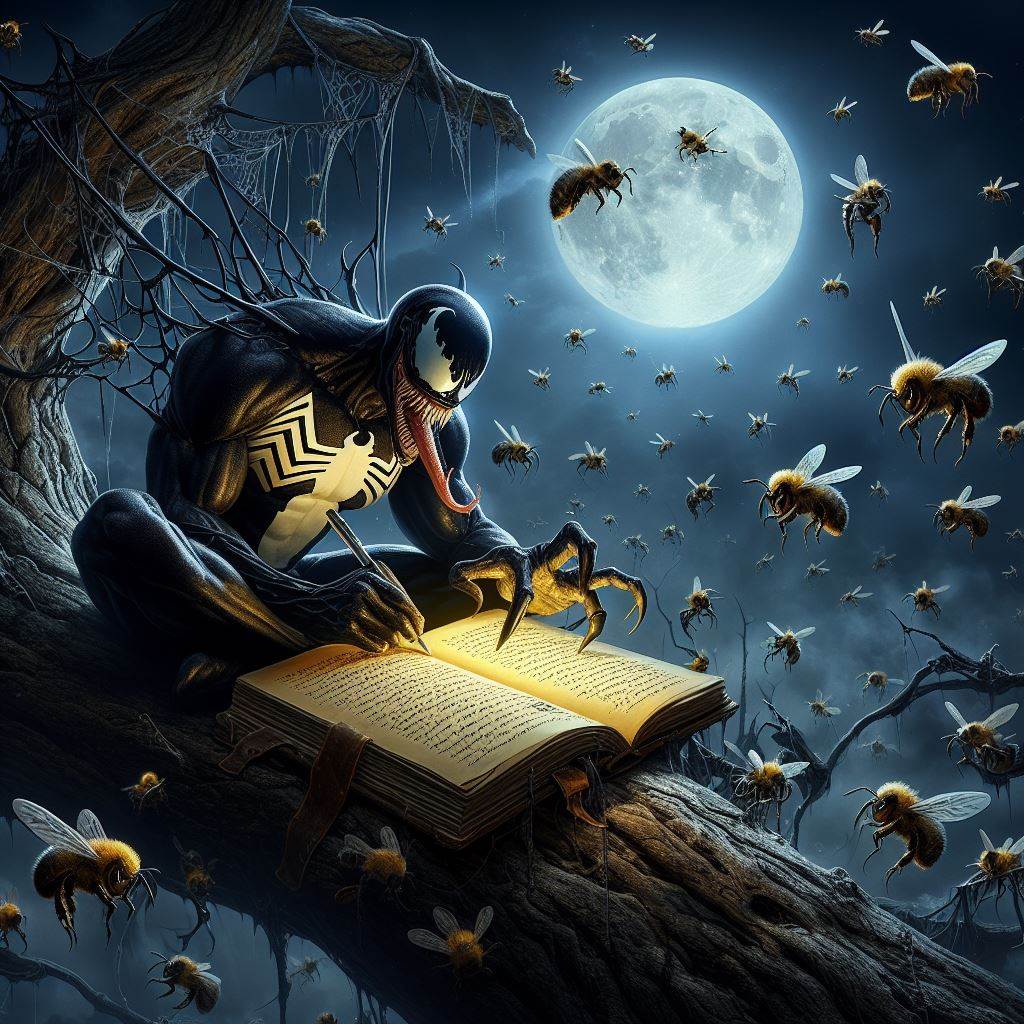
Description This poem delves into the complex relationship between creativity, manipulation, and consequences. The narrator describes how they became comfortable in their “villainous state,” using others (referred to metaphorically as “My Little Busy Bees”) to fuel their artistic output without facing creative blocks. However, the poem takes a dark turn when these “bees” rebel against…
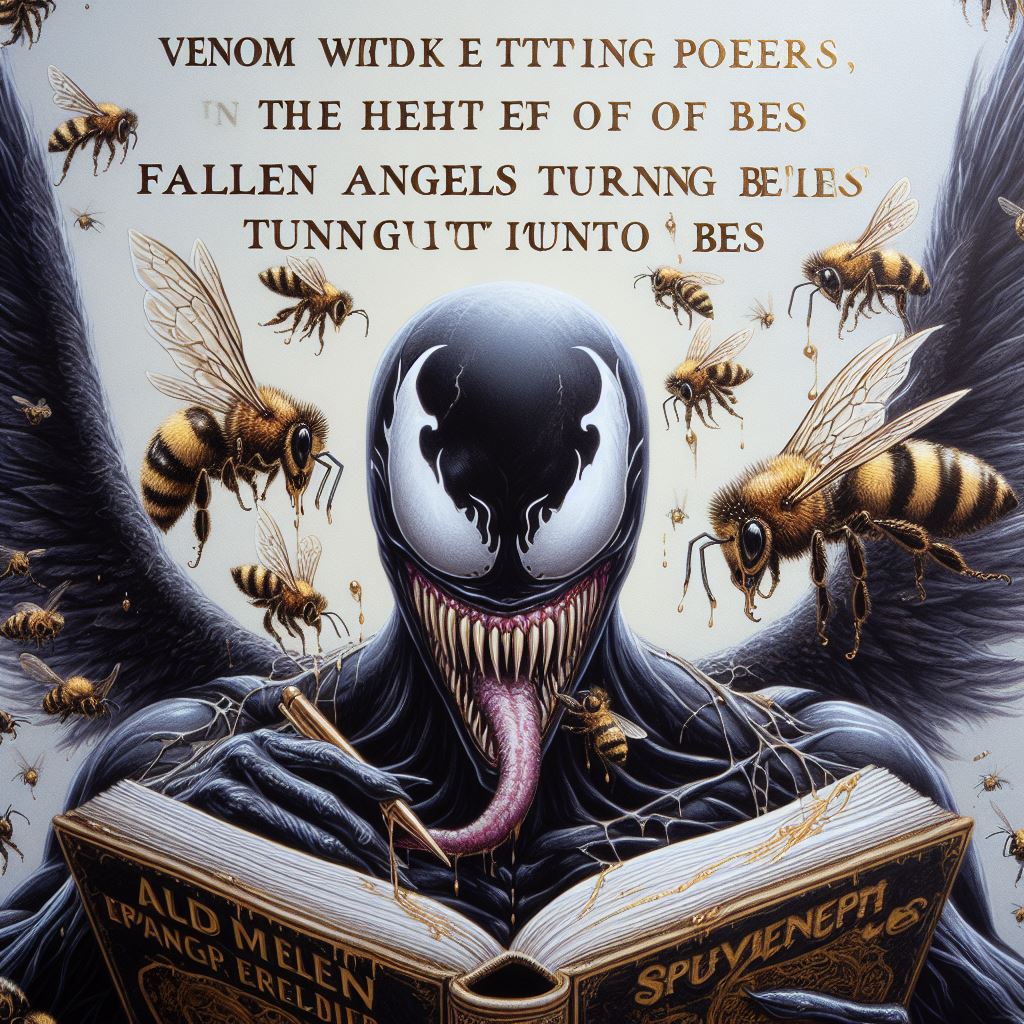
Description This poem portrays a dark and intense imagery, likening fallen angels to slaves, bound in chains like busy bees, working tirelessly to produce venomous honey. The speaker consumes this honey to nourish their creative soul, drawing parallels to the symbiotic relationship between Peter Parker and the venom suit in Spider-Man lore. The act of…
Description This poem delves into the intricate depths of the speaker’s inner turmoil and existential journey, using vivid imagery and poignant symbolism to convey their emotional landscape. The opening line, “Has long as my pride forever exists,” sets the tone for a contemplation on the enduring nature of pride and its implications for the speaker’s…
Description This poem delves into the contemplation of inheriting generational wealth and the weighty decisions that come with it. It begins by acknowledging the imminent transfer of wealth from previous generations into the speaker’s hands, presenting a moment of both anticipation and reflection. The speaker grapples with a pivotal decision: whether to indulge in their…
Description This poem paints a vivid picture of a person grappling with the pervasive presence of evil in the world. The metaphor of the “evil rain” symbolizes the negativity, corruption, and shame that surrounds them. The speaker seeks refuge under their umbrella, a symbolic shield against the malevolent forces. Despite their efforts to protect themselves,…
Description This poem captures the essence of a seductive encounter, drawing the reader into a spellbinding experience of desire and passion. The speaker exudes confidence as they perceive the effect they have on their subject, recognizing the power of their gaze and the allure of their seductive eyes. The imagery is rich and evocative, likening…
Description This poem captures the speaker’s inner conflict between indulging in revolutionary thoughts and being drawn back to the enchanting presence of the girl they admire. The phrase “summer knights” suggests a time of warmth and leisure, perhaps symbolizing a period of reflection and introspection. The speaker’s mind is filled with thoughts of societal ideals,…
This poem offers a contemplative glimpse into the poet’s mind as they engage in everyday activities. The poem begins with the poet reflecting deeply while eating a slice of pizza, contemplating their spiritual fate. They reject the idea of going to hell and express a preference for going to heaven, demonstrating reverence and seeking forgiveness for past disobedience.
The poem then shifts to a modern scene of scrolling on a mobile device, which leaves the poet feeling mentally numb and paralyzed. This contrast between spiritual contemplation and digital distraction highlights the poet’s struggle to balance the two.
In the midst of this mental chaos, the poet reaffirms their faith, declaring that their devotion to Allah will never lead them to commit acts of terror in the name of religion. They speak of women in heaven as a divine surprise, indicating their respect for the spiritual rewards promised by their faith.
The poem concludes with the poet seeking solitude, sipping grape juice and reflecting on life. This final image ties together the themes of contemplation, spirituality, and the search for personal peace amid the distractions of modern life.
Description This poem captures the poet’s intense and deeply personal struggle against mediocrity and the fervent pursuit of excellence. It paints a vivid picture of an internal battle that encompasses the entirety of the poet’s being—soul, mind, and body. Overall, this poem is a powerful depiction of an individual’s relentless battle against mediocrity. It highlights…
Description This poem explores the idea of beauty and the profound effect it has on those who encounter it. The poet acknowledges the subject’s stunning beauty, describing it as so radiant that it causes others to be overcome with admiration, even to the point of worship. However, the poet makes a distinction, expressing that while…
Description This poem is a vehement declaration of the speaker’s commitment to maintaining their inner peace against any external threats. The speaker warns against disturbing the peace they have cultivated, suggesting that they may resort to violence expressed through their poetry if provoked. They assert their superiority over those who attempt to undermine their greatness,…
Description This poem delves into the complex relationship between creativity, manipulation, and consequences. The narrator describes how they became comfortable in their “villainous state,” using others (referred to metaphorically as “My Little Busy Bees”) to fuel their artistic output without facing creative blocks. However, the poem takes a dark turn when these “bees” rebel against…
Description This poem portrays a dark and intense imagery, likening fallen angels to slaves, bound in chains like busy bees, working tirelessly to produce venomous honey. The speaker consumes this honey to nourish their creative soul, drawing parallels to the symbiotic relationship between Peter Parker and the venom suit in Spider-Man lore. The act of…
Description This poem delves into the intricate depths of the speaker’s inner turmoil and existential journey, using vivid imagery and poignant symbolism to convey their emotional landscape. The opening line, “Has long as my pride forever exists,” sets the tone for a contemplation on the enduring nature of pride and its implications for the speaker’s…
Description This poem delves into the contemplation of inheriting generational wealth and the weighty decisions that come with it. It begins by acknowledging the imminent transfer of wealth from previous generations into the speaker’s hands, presenting a moment of both anticipation and reflection. The speaker grapples with a pivotal decision: whether to indulge in their…
Description This poem paints a vivid picture of a person grappling with the pervasive presence of evil in the world. The metaphor of the “evil rain” symbolizes the negativity, corruption, and shame that surrounds them. The speaker seeks refuge under their umbrella, a symbolic shield against the malevolent forces. Despite their efforts to protect themselves,…
Description This poem captures the essence of a seductive encounter, drawing the reader into a spellbinding experience of desire and passion. The speaker exudes confidence as they perceive the effect they have on their subject, recognizing the power of their gaze and the allure of their seductive eyes. The imagery is rich and evocative, likening…
Description This poem captures the speaker’s inner conflict between indulging in revolutionary thoughts and being drawn back to the enchanting presence of the girl they admire. The phrase “summer knights” suggests a time of warmth and leisure, perhaps symbolizing a period of reflection and introspection. The speaker’s mind is filled with thoughts of societal ideals,…
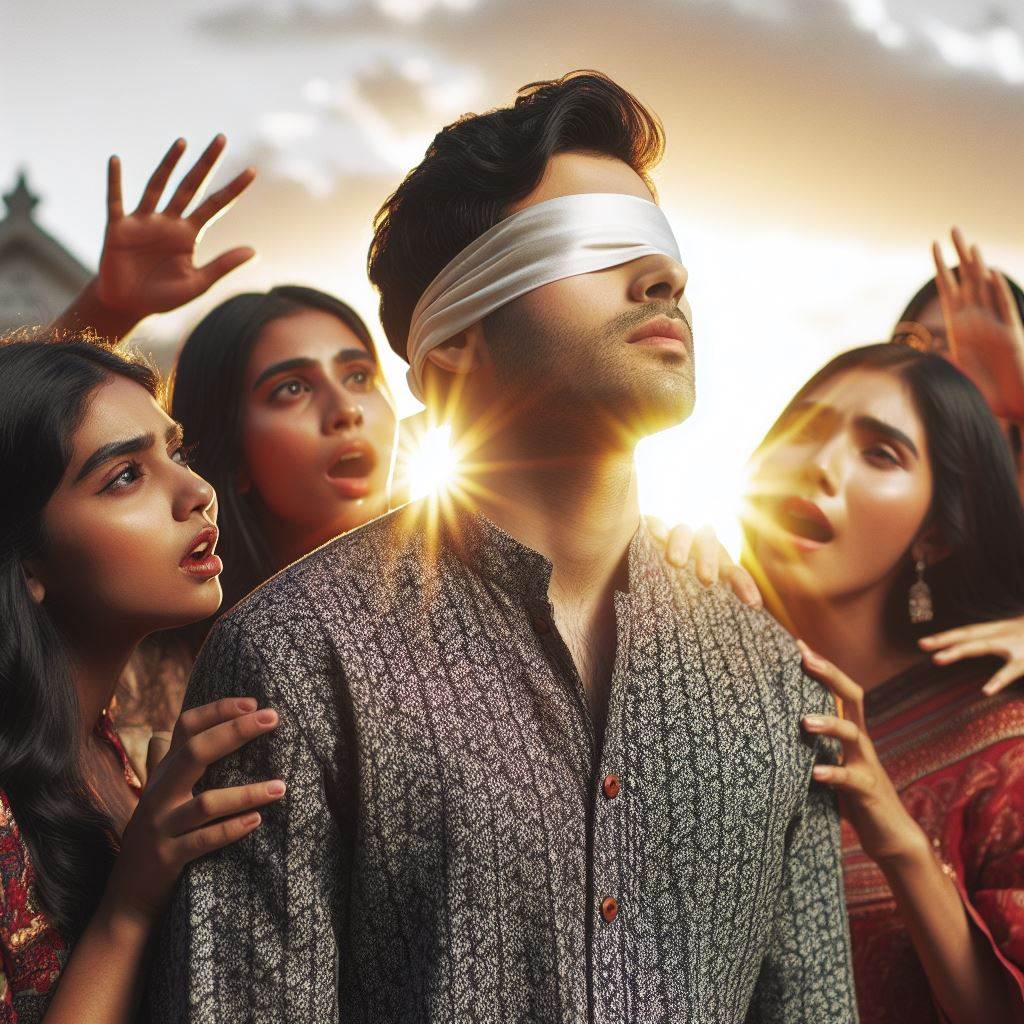
The cinematic portrayal of Malèna, in Giuseppe Tornatore’s 2000 film Malèna, serves as a profound allegory for the human condition, where beauty becomes both a divine gift and a crucible of existential isolation. Malèna, a woman of striking physical allure, navigates a Sicilian town steeped in patriarchal desire and judgment, her aura radiating a spiritual depth that transcends the superficial. Philosophically, her presence evokes Plato’s concept of the Ideal Form—beauty as a reflection of the divine, yet perpetually misunderstood by those bound to the material world. Her seashore solitude, as depicted in the film, mirrors the Stoic ideal of inner fortitude, where true strength lies in embracing one’s essence despite external clamor. Malèna’s beauty, like the poem’s “aura off the seashore,” invites us to question: Is beauty a bridge to the divine, or a veil that obscures the soul’s deeper truth?
The poem’s imagery of Malèna’s soul, trusted only by “a few friends and family,” and her body as “earthly dust,” resonates with the dualism of body and soul found in Augustine’s theology. Malèna knows her physical form is transient, a mere vessel subject to the lustful projections of others, yet her soul remains inviolable, a sacred enclave. This dichotomy mirrors the film’s portrayal of her as both idolized and ostracized, a paradox that echoes Heidegger’s concept of Geworfenheit—being “thrown” into a world that misunderstands one’s essence. Her choice to seek solace alone, “home all alone seeking solace,” aligns with the existentialist embrace of angst as a path to self-discovery. Malèna’s solitude is not mere withdrawal but a deliberate act of reclaiming her being, prompting us to ask: Is solitude the price of preserving one’s soul, or is it the only space where true communion with the divine occurs?
Ultimately, Malèna’s story, interwoven with the poem’s lyrical reverence, challenges us to confront the ephemeral nature of desire and the eternal quest for meaning. Her blush, yearned for by men “dying of lust,” symbolizes the fleeting nature of earthly passions, which crumble like dust against the timelessness of her spiritual allure. This evokes Spinoza’s pantheistic view of God as immanent in all things—Malèna’s beauty is not hers alone but a manifestation of the universal divine, misunderstood by those who see only the surface. Her journey, like the poem’s speaker observing her mind “like a wristwatch,” suggests a temporal struggle to grasp the eternal within the finite. Philosophically, Malèna becomes a cipher for the human soul’s paradox: to be seen yet unseen, to be desired yet unknowable. In her, we glimpse the eternal question: How do we reconcile the world’s gaze with the soul’s silent truth?
Description This poem captures the poet’s intense and deeply personal struggle against mediocrity and the fervent pursuit of excellence. It paints a vivid picture of an internal battle that encompasses the entirety of the poet’s being—soul, mind, and body. Overall, this poem is a powerful depiction of an individual’s relentless battle against mediocrity. It highlights…
Description This poem explores the idea of beauty and the profound effect it has on those who encounter it. The poet acknowledges the subject’s stunning beauty, describing it as so radiant that it causes others to be overcome with admiration, even to the point of worship. However, the poet makes a distinction, expressing that while…
Description This poem is a vehement declaration of the speaker’s commitment to maintaining their inner peace against any external threats. The speaker warns against disturbing the peace they have cultivated, suggesting that they may resort to violence expressed through their poetry if provoked. They assert their superiority over those who attempt to undermine their greatness,…
Description This poem delves into the complex relationship between creativity, manipulation, and consequences. The narrator describes how they became comfortable in their “villainous state,” using others (referred to metaphorically as “My Little Busy Bees”) to fuel their artistic output without facing creative blocks. However, the poem takes a dark turn when these “bees” rebel against…
Description This poem portrays a dark and intense imagery, likening fallen angels to slaves, bound in chains like busy bees, working tirelessly to produce venomous honey. The speaker consumes this honey to nourish their creative soul, drawing parallels to the symbiotic relationship between Peter Parker and the venom suit in Spider-Man lore. The act of…
Description This poem delves into the intricate depths of the speaker’s inner turmoil and existential journey, using vivid imagery and poignant symbolism to convey their emotional landscape. The opening line, “Has long as my pride forever exists,” sets the tone for a contemplation on the enduring nature of pride and its implications for the speaker’s…
Description This poem delves into the contemplation of inheriting generational wealth and the weighty decisions that come with it. It begins by acknowledging the imminent transfer of wealth from previous generations into the speaker’s hands, presenting a moment of both anticipation and reflection. The speaker grapples with a pivotal decision: whether to indulge in their…
Description This poem paints a vivid picture of a person grappling with the pervasive presence of evil in the world. The metaphor of the “evil rain” symbolizes the negativity, corruption, and shame that surrounds them. The speaker seeks refuge under their umbrella, a symbolic shield against the malevolent forces. Despite their efforts to protect themselves,…
Description This poem captures the essence of a seductive encounter, drawing the reader into a spellbinding experience of desire and passion. The speaker exudes confidence as they perceive the effect they have on their subject, recognizing the power of their gaze and the allure of their seductive eyes. The imagery is rich and evocative, likening…
Description This poem captures the speaker’s inner conflict between indulging in revolutionary thoughts and being drawn back to the enchanting presence of the girl they admire. The phrase “summer knights” suggests a time of warmth and leisure, perhaps symbolizing a period of reflection and introspection. The speaker’s mind is filled with thoughts of societal ideals,…
Description This poem captures the poet’s intense and deeply personal struggle against mediocrity and the fervent pursuit of excellence. It paints a vivid picture of an internal battle that encompasses the entirety of the poet’s being—soul, mind, and body. Overall, this poem is a powerful depiction of an individual’s relentless battle against mediocrity. It highlights…
Description This poem explores the idea of beauty and the profound effect it has on those who encounter it. The poet acknowledges the subject’s stunning beauty, describing it as so radiant that it causes others to be overcome with admiration, even to the point of worship. However, the poet makes a distinction, expressing that while…
Description This poem is a vehement declaration of the speaker’s commitment to maintaining their inner peace against any external threats. The speaker warns against disturbing the peace they have cultivated, suggesting that they may resort to violence expressed through their poetry if provoked. They assert their superiority over those who attempt to undermine their greatness,…
Description This poem delves into the complex relationship between creativity, manipulation, and consequences. The narrator describes how they became comfortable in their “villainous state,” using others (referred to metaphorically as “My Little Busy Bees”) to fuel their artistic output without facing creative blocks. However, the poem takes a dark turn when these “bees” rebel against…
Description This poem portrays a dark and intense imagery, likening fallen angels to slaves, bound in chains like busy bees, working tirelessly to produce venomous honey. The speaker consumes this honey to nourish their creative soul, drawing parallels to the symbiotic relationship between Peter Parker and the venom suit in Spider-Man lore. The act of…
Description This poem delves into the intricate depths of the speaker’s inner turmoil and existential journey, using vivid imagery and poignant symbolism to convey their emotional landscape. The opening line, “Has long as my pride forever exists,” sets the tone for a contemplation on the enduring nature of pride and its implications for the speaker’s…
Description This poem delves into the contemplation of inheriting generational wealth and the weighty decisions that come with it. It begins by acknowledging the imminent transfer of wealth from previous generations into the speaker’s hands, presenting a moment of both anticipation and reflection. The speaker grapples with a pivotal decision: whether to indulge in their…
Description This poem paints a vivid picture of a person grappling with the pervasive presence of evil in the world. The metaphor of the “evil rain” symbolizes the negativity, corruption, and shame that surrounds them. The speaker seeks refuge under their umbrella, a symbolic shield against the malevolent forces. Despite their efforts to protect themselves,…
Description This poem captures the essence of a seductive encounter, drawing the reader into a spellbinding experience of desire and passion. The speaker exudes confidence as they perceive the effect they have on their subject, recognizing the power of their gaze and the allure of their seductive eyes. The imagery is rich and evocative, likening…
Description This poem captures the speaker’s inner conflict between indulging in revolutionary thoughts and being drawn back to the enchanting presence of the girl they admire. The phrase “summer knights” suggests a time of warmth and leisure, perhaps symbolizing a period of reflection and introspection. The speaker’s mind is filled with thoughts of societal ideals,…
In this poem, I’m reflecting on my own journey with a mix of confidence and self-awareness. I start by admitting that I’ve got a clear grasp of who I am—plenty of understanding about myself—and I’m upfront about the fact that I don’t see myself as the best-looking guy you’d spot wandering around in the daylight. I’m no head-turner, and I’m fine with that. But then the tone shifts as I dive into what’s changed. Those women who used to laugh at me, who’d poke fun at my expense, they’re the same ones now falling for my words. It’s like my poetry and creativity have flipped the script—they can’t resist the pull of what I craft.
I’ve got this knack now for drawing in these refined, elegant women, the classy types, and it’s become almost a compulsion for me, a kind of restless drive. I lure them in, pulling them into what I call my “poisonous chamber”—this intense, intoxicating space where my poems come alive, fuelled by raw passion. It’s not just about seduction for the sake of it; it’s the act of creating, of pouring myself into those lines, that hooks them. The poem’s got this edge of triumph, like I’ve turned the tables, and what once held me back is now the very thing that gives me power.
Description This poem captures the poet’s intense and deeply personal struggle against mediocrity and the fervent pursuit of excellence. It paints a vivid picture of an internal battle that encompasses the entirety of the poet’s being—soul, mind, and body. Overall, this poem is a powerful depiction of an individual’s relentless battle against mediocrity. It highlights…
Description This poem explores the idea of beauty and the profound effect it has on those who encounter it. The poet acknowledges the subject’s stunning beauty, describing it as so radiant that it causes others to be overcome with admiration, even to the point of worship. However, the poet makes a distinction, expressing that while…
Description This poem is a vehement declaration of the speaker’s commitment to maintaining their inner peace against any external threats. The speaker warns against disturbing the peace they have cultivated, suggesting that they may resort to violence expressed through their poetry if provoked. They assert their superiority over those who attempt to undermine their greatness,…
Description This poem delves into the complex relationship between creativity, manipulation, and consequences. The narrator describes how they became comfortable in their “villainous state,” using others (referred to metaphorically as “My Little Busy Bees”) to fuel their artistic output without facing creative blocks. However, the poem takes a dark turn when these “bees” rebel against…
Description This poem portrays a dark and intense imagery, likening fallen angels to slaves, bound in chains like busy bees, working tirelessly to produce venomous honey. The speaker consumes this honey to nourish their creative soul, drawing parallels to the symbiotic relationship between Peter Parker and the venom suit in Spider-Man lore. The act of…
Description This poem delves into the intricate depths of the speaker’s inner turmoil and existential journey, using vivid imagery and poignant symbolism to convey their emotional landscape. The opening line, “Has long as my pride forever exists,” sets the tone for a contemplation on the enduring nature of pride and its implications for the speaker’s…
Description This poem delves into the contemplation of inheriting generational wealth and the weighty decisions that come with it. It begins by acknowledging the imminent transfer of wealth from previous generations into the speaker’s hands, presenting a moment of both anticipation and reflection. The speaker grapples with a pivotal decision: whether to indulge in their…
Description This poem paints a vivid picture of a person grappling with the pervasive presence of evil in the world. The metaphor of the “evil rain” symbolizes the negativity, corruption, and shame that surrounds them. The speaker seeks refuge under their umbrella, a symbolic shield against the malevolent forces. Despite their efforts to protect themselves,…
Description This poem captures the essence of a seductive encounter, drawing the reader into a spellbinding experience of desire and passion. The speaker exudes confidence as they perceive the effect they have on their subject, recognizing the power of their gaze and the allure of their seductive eyes. The imagery is rich and evocative, likening…
Description This poem captures the speaker’s inner conflict between indulging in revolutionary thoughts and being drawn back to the enchanting presence of the girl they admire. The phrase “summer knights” suggests a time of warmth and leisure, perhaps symbolizing a period of reflection and introspection. The speaker’s mind is filled with thoughts of societal ideals,…
I find myself drawn to this blazing force within me—my “fiery fire”—a restless, burning energy that I crave to awaken fully. It’s as if I’m seeking to dissolve the frost encasing my heart, a coldness I’ve carried too long, tucked away in a place I call the “void less dark.” That phrase feels right to me—a shadow not pitch-black, but muted, a half-lit emptiness where I’ve lingered, neither lost nor found. Philosophers like Heraclitus might see this fire as my life’s constant flux, a heat that promises to reshape me if I let it.
But there’s a tension I can’t ignore. This fire I tend, this soul I ignite—it’s fleeting. A bonfire roars only as long as I feed it, and my cold heart, my void, they hover close, ready to reclaim me. I wonder if this is what Sartre meant by crafting meaning in the face of nothing—a refusal to let the dark win. Or maybe it’s Nietzsche’s voice I hear, urging me to embrace this cycle of melting and burning, to affirm myself again and again. I’m caught in that dance, desiring my own renewal, holding my soul’s light steady against the shadows I know too well.