Dissected Treads
Tread One : Growing 10x Better:
Journey of Self-Improvement and Authentic Allure
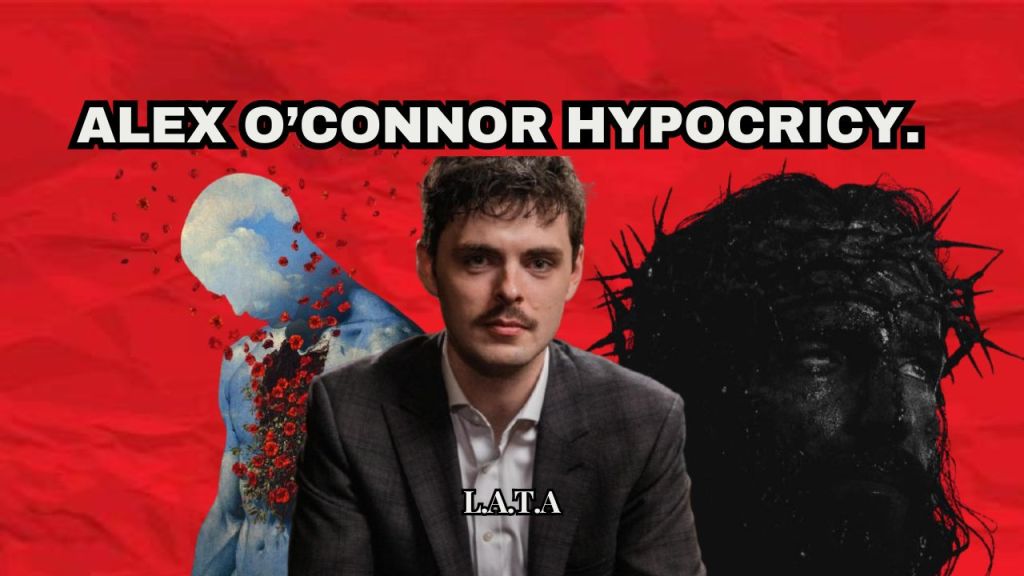
IntroAlex O’Connor Hypocrisy On Animal Suffering is a thought-provoking philosophical essay (likely from a debate or analysis channel) that challenges the common atheist argument against God’s existence based on animal suffering. It argues that such critiques can be hypocritical, as they often ignore humanity’s own massive role in causing and perpetuating animal pain through factory…
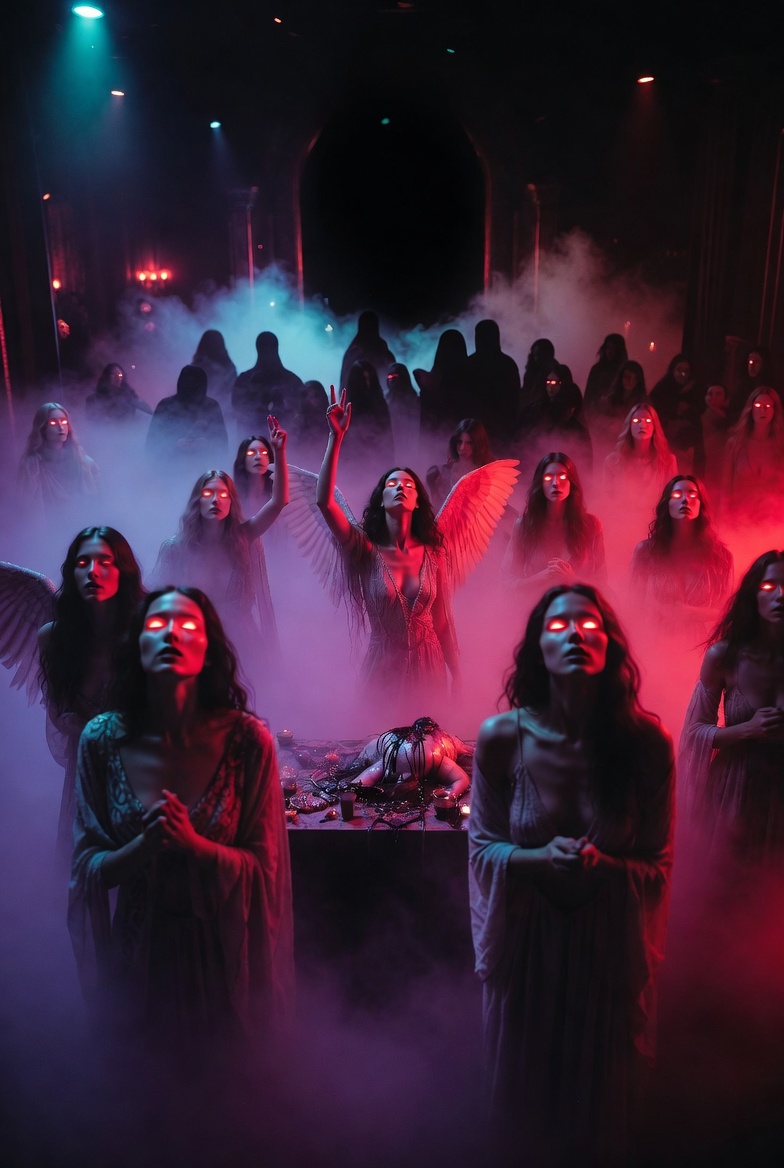
Intro Before I crossed the threshold into that pulsing underworld, I handed my soul to a fallen angel at the door—sealing a Faustian bargain for women who existed only in virtual promise, illusions spun from desire and digital haze. Inside, the club drowned in dark misty buzz, hypnotic music clamping my mind like a vice…
Intro In the shadowed attic of old grief, I found those frantic, handwritten letters—blasphemies scratched out by a younger me during a season of unrelenting calamity, heart emptied by pain and the lack of any real help. One page, opened on a whim, carried the desperate lie: “cursing God will fill your pocket with freedom…
Intro Sometimes I think about why the urge to create feels so natural, almost unavoidable, as if it was placed inside us long before we understood what art even was. It makes me wonder if creativity is part of the reason we exist at all—like God invented us so imagination could move through human hands…
Intro In an age where virtue is performed beneath studio lights and righteousness is rehearsed for applause, the loudest saviors often cast the longest shadows. History has shown how public personas can crumble — from the fall of R. Kelly to the scandal surrounding Jeffrey Epstein — revealing how influence and power can conceal disturbing…

IntroThis poem presents a sharp and cautionary portrait of a woman whose outer beauty conceals inner danger. By comparing her appearance to Stacy Dash, the speaker immediately establishes an image of striking physical attractiveness, only to contrast it with the darker image of a “fallen angel.” Throughout the poem, religious symbolism—halos, horns, heaven—blends with modern…

IntroPurpose and destiny have always guided me, embodied in figures like Tia and Tamara, whose presence kept me steady and focused on achieving higher victories. Their influence lit a path toward growth and fulfillment, shaping my choices and ambitions. Yet, life’s temptations came in the form of vices resembling Samara, pulling me toward darker paths…
IntroThrough powerful biblical symbolism and vivid, confrontational imagery, the poem examines the complex tension between femininity, masculinity, and authority. By invoking Moses parting the Red Sea as a metaphor for spiritual revelation and division, the speaker establishes a dramatic tone that carries throughout the piece. The contrasting portrayals of “quiet and feminine grace” against loud,…

IntroThrough powerful biblical symbolism and vivid, confrontational imagery, the poem examines the complex tension between femininity, masculinity, and authority. By invoking Moses parting the Red Sea as a metaphor for spiritual revelation and division, the speaker establishes a dramatic tone that carries throughout the piece. The contrasting portrayals of “quiet and feminine grace” against loud,…
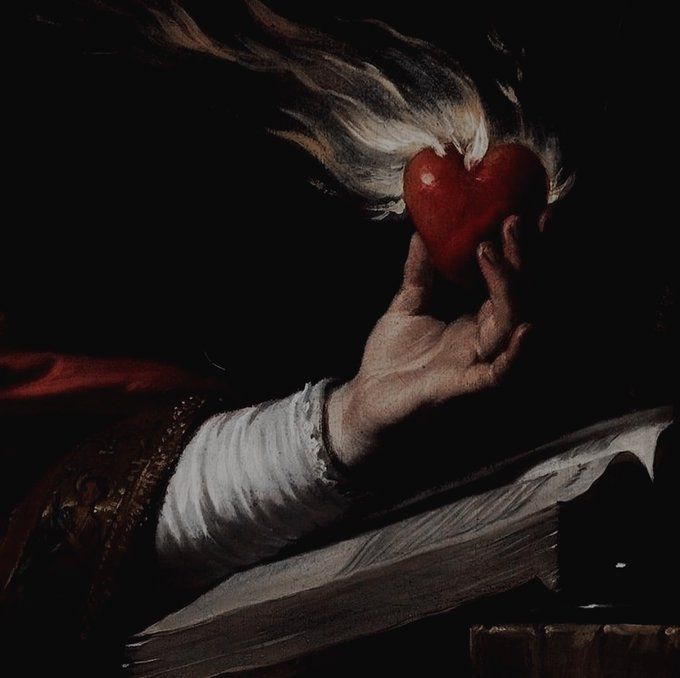
Intro“King Solomon Size” evokes the legendary magnitude of love and desire associated with Solomon, using his grand reputation as a metaphor for vast romantic ambition. The poem speaks in the voice of a man who longs to warm his “cold and dark” heart through touch, admiration, and conquest, revealing both vulnerability and hunger for devotion.…
IntroAlex O’Connor Hypocrisy On Animal Suffering is a thought-provoking philosophical essay (likely from a debate or analysis channel) that challenges the common atheist argument against God’s existence based on animal suffering. It argues that such critiques can be hypocritical, as they often ignore humanity’s own massive role in causing and perpetuating animal pain through factory…
Intro Before I crossed the threshold into that pulsing underworld, I handed my soul to a fallen angel at the door—sealing a Faustian bargain for women who existed only in virtual promise, illusions spun from desire and digital haze. Inside, the club drowned in dark misty buzz, hypnotic music clamping my mind like a vice…
Intro In the shadowed attic of old grief, I found those frantic, handwritten letters—blasphemies scratched out by a younger me during a season of unrelenting calamity, heart emptied by pain and the lack of any real help. One page, opened on a whim, carried the desperate lie: “cursing God will fill your pocket with freedom…
Intro Sometimes I think about why the urge to create feels so natural, almost unavoidable, as if it was placed inside us long before we understood what art even was. It makes me wonder if creativity is part of the reason we exist at all—like God invented us so imagination could move through human hands…
Intro In an age where virtue is performed beneath studio lights and righteousness is rehearsed for applause, the loudest saviors often cast the longest shadows. History has shown how public personas can crumble — from the fall of R. Kelly to the scandal surrounding Jeffrey Epstein — revealing how influence and power can conceal disturbing…
IntroThis poem presents a sharp and cautionary portrait of a woman whose outer beauty conceals inner danger. By comparing her appearance to Stacy Dash, the speaker immediately establishes an image of striking physical attractiveness, only to contrast it with the darker image of a “fallen angel.” Throughout the poem, religious symbolism—halos, horns, heaven—blends with modern…
IntroPurpose and destiny have always guided me, embodied in figures like Tia and Tamara, whose presence kept me steady and focused on achieving higher victories. Their influence lit a path toward growth and fulfillment, shaping my choices and ambitions. Yet, life’s temptations came in the form of vices resembling Samara, pulling me toward darker paths…
IntroThrough powerful biblical symbolism and vivid, confrontational imagery, the poem examines the complex tension between femininity, masculinity, and authority. By invoking Moses parting the Red Sea as a metaphor for spiritual revelation and division, the speaker establishes a dramatic tone that carries throughout the piece. The contrasting portrayals of “quiet and feminine grace” against loud,…
IntroThrough powerful biblical symbolism and vivid, confrontational imagery, the poem examines the complex tension between femininity, masculinity, and authority. By invoking Moses parting the Red Sea as a metaphor for spiritual revelation and division, the speaker establishes a dramatic tone that carries throughout the piece. The contrasting portrayals of “quiet and feminine grace” against loud,…
Intro“King Solomon Size” evokes the legendary magnitude of love and desire associated with Solomon, using his grand reputation as a metaphor for vast romantic ambition. The poem speaks in the voice of a man who longs to warm his “cold and dark” heart through touch, admiration, and conquest, revealing both vulnerability and hunger for devotion.…
Description
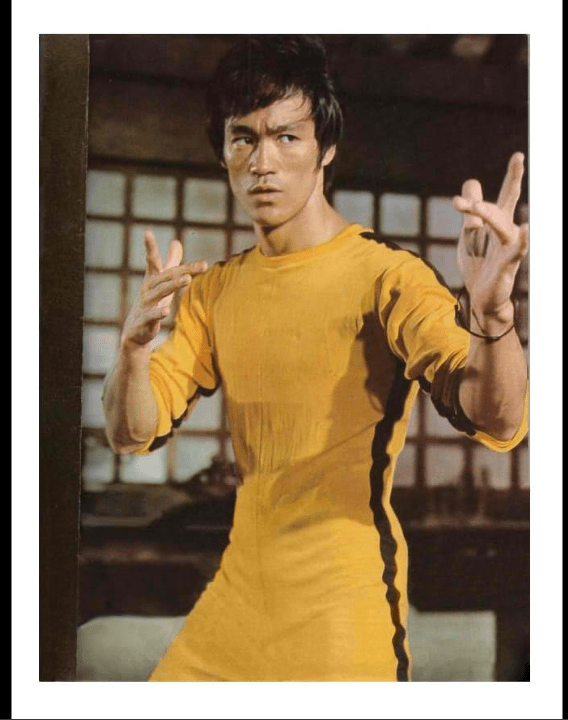
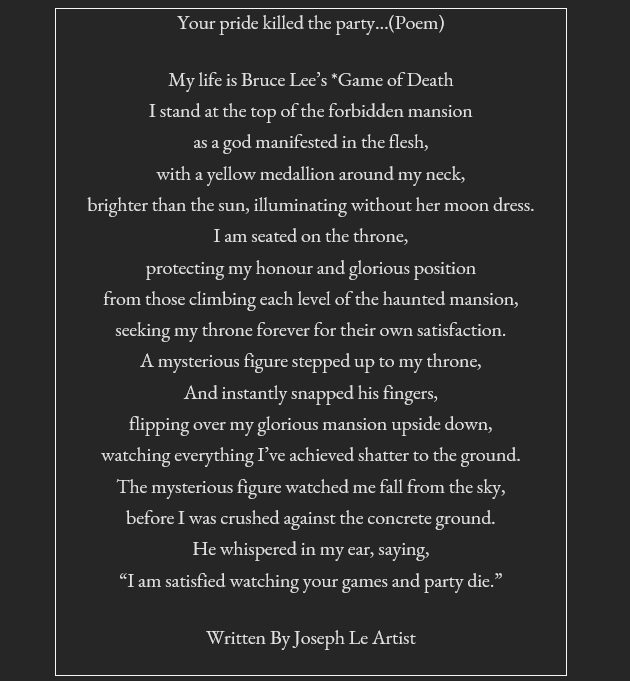
This poem reflects a powerful metaphor for life, where the speaker’s journey mirrors Bruce Lee’s Game of Death—a symbolic ascent to power and control, only to face a sudden, devastating fall. The “forbidden mansion” and the throne symbolize the speaker’s elevated status or achievements, acquired through perseverance, but also under constant threat from those seeking to take it away. The mansion’s levels represent challenges or stages of personal or external struggles.
The “yellow medallion” is a striking image, symbolizing both power and vulnerability, with its brightness likened to the sun. This may represent the speaker’s identity or achievements that are visible and radiant but also open to attack. The throne signifies the speaker’s position of power, which must be guarded from those who ascend through the mansion, symbolizing rivals or life’s challenges.
The poem takes a dramatic turn when a mysterious figure appears and, with a snap of fingers, overturns the speaker’s reality, flipping the mansion upside down and destroying what had been built. The fall from grace is inevitable, with everything the speaker has worked for “shattering to the ground.” The mysterious figure embodies fate, unforeseen events, or internal conflict—forces that easily dismantle what once seemed invincible.
The whispered line at the end, “I am satisfied watching your games and party die,” evokes a sense of bitter defeat, as if the speaker’s struggles and achievements were part of a larger, uncontrollable game. This final line hints at the futility of clinging to power and control, reminding the reader that even the most glorious positions can crumble at the hands of fate or time.
IntroAlex O’Connor Hypocrisy On Animal Suffering is a thought-provoking philosophical essay (likely from a debate or analysis channel) that challenges the common atheist argument against God’s existence based on animal suffering. It argues that such critiques can be hypocritical, as they often ignore humanity’s own massive role in causing and perpetuating animal pain through factory…
Intro Before I crossed the threshold into that pulsing underworld, I handed my soul to a fallen angel at the door—sealing a Faustian bargain for women who existed only in virtual promise, illusions spun from desire and digital haze. Inside, the club drowned in dark misty buzz, hypnotic music clamping my mind like a vice…
Intro In the shadowed attic of old grief, I found those frantic, handwritten letters—blasphemies scratched out by a younger me during a season of unrelenting calamity, heart emptied by pain and the lack of any real help. One page, opened on a whim, carried the desperate lie: “cursing God will fill your pocket with freedom…
Intro Sometimes I think about why the urge to create feels so natural, almost unavoidable, as if it was placed inside us long before we understood what art even was. It makes me wonder if creativity is part of the reason we exist at all—like God invented us so imagination could move through human hands…
Intro In an age where virtue is performed beneath studio lights and righteousness is rehearsed for applause, the loudest saviors often cast the longest shadows. History has shown how public personas can crumble — from the fall of R. Kelly to the scandal surrounding Jeffrey Epstein — revealing how influence and power can conceal disturbing…
IntroThis poem presents a sharp and cautionary portrait of a woman whose outer beauty conceals inner danger. By comparing her appearance to Stacy Dash, the speaker immediately establishes an image of striking physical attractiveness, only to contrast it with the darker image of a “fallen angel.” Throughout the poem, religious symbolism—halos, horns, heaven—blends with modern…
IntroPurpose and destiny have always guided me, embodied in figures like Tia and Tamara, whose presence kept me steady and focused on achieving higher victories. Their influence lit a path toward growth and fulfillment, shaping my choices and ambitions. Yet, life’s temptations came in the form of vices resembling Samara, pulling me toward darker paths…
IntroThrough powerful biblical symbolism and vivid, confrontational imagery, the poem examines the complex tension between femininity, masculinity, and authority. By invoking Moses parting the Red Sea as a metaphor for spiritual revelation and division, the speaker establishes a dramatic tone that carries throughout the piece. The contrasting portrayals of “quiet and feminine grace” against loud,…
IntroThrough powerful biblical symbolism and vivid, confrontational imagery, the poem examines the complex tension between femininity, masculinity, and authority. By invoking Moses parting the Red Sea as a metaphor for spiritual revelation and division, the speaker establishes a dramatic tone that carries throughout the piece. The contrasting portrayals of “quiet and feminine grace” against loud,…
Intro“King Solomon Size” evokes the legendary magnitude of love and desire associated with Solomon, using his grand reputation as a metaphor for vast romantic ambition. The poem speaks in the voice of a man who longs to warm his “cold and dark” heart through touch, admiration, and conquest, revealing both vulnerability and hunger for devotion.…

Description
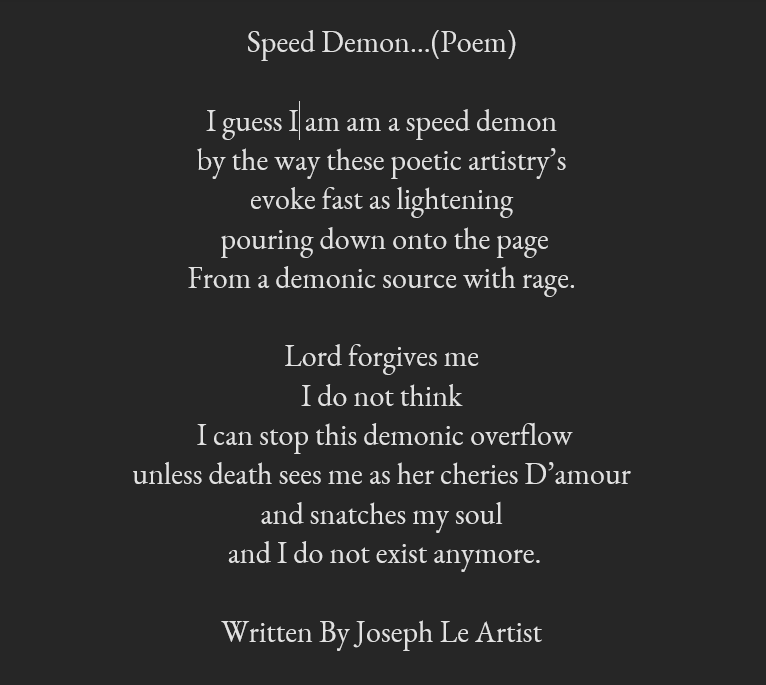
This poem captures a sense of internal conflict, blending themes of speed, creativity, and spiritual turmoil. The speaker identifies as a “speed demon,” suggesting a feeling of uncontrollable energy or compulsion, especially in the act of writing or creating (“these poetic artistry’s / evoke fast as lightning”). The imagery of lightning conveys a sudden, intense force driving the speaker to produce their art quickly, almost recklessly.
The “demonic source with rage” hints at a darker, perhaps destructive, inspiration. It suggests that the speaker’s creativity comes from a place of anger or inner torment. The plea for divine forgiveness indicates awareness of the destructive nature of this force, implying a moral or spiritual struggle.
The poem then shifts toward existential contemplation. The speaker wonders if death, personified as a seductive figure (“her cherries D’amour”), might offer release from this internal battle. The phrase “snatches my soul” suggests both fear and resignation, as if the only way to stop the creative chaos is through ceasing to exist.
Overall, the poem evokes a powerful tension between creation and destruction, spirituality and darkness, and the speaker’s attempt to reconcile their drive with their desire for peace.
IntroAlex O’Connor Hypocrisy On Animal Suffering is a thought-provoking philosophical essay (likely from a debate or analysis channel) that challenges the common atheist argument against God’s existence based on animal suffering. It argues that such critiques can be hypocritical, as they often ignore humanity’s own massive role in causing and perpetuating animal pain through factory…
Intro Before I crossed the threshold into that pulsing underworld, I handed my soul to a fallen angel at the door—sealing a Faustian bargain for women who existed only in virtual promise, illusions spun from desire and digital haze. Inside, the club drowned in dark misty buzz, hypnotic music clamping my mind like a vice…
Intro In the shadowed attic of old grief, I found those frantic, handwritten letters—blasphemies scratched out by a younger me during a season of unrelenting calamity, heart emptied by pain and the lack of any real help. One page, opened on a whim, carried the desperate lie: “cursing God will fill your pocket with freedom…
Intro Sometimes I think about why the urge to create feels so natural, almost unavoidable, as if it was placed inside us long before we understood what art even was. It makes me wonder if creativity is part of the reason we exist at all—like God invented us so imagination could move through human hands…
Intro In an age where virtue is performed beneath studio lights and righteousness is rehearsed for applause, the loudest saviors often cast the longest shadows. History has shown how public personas can crumble — from the fall of R. Kelly to the scandal surrounding Jeffrey Epstein — revealing how influence and power can conceal disturbing…
IntroThis poem presents a sharp and cautionary portrait of a woman whose outer beauty conceals inner danger. By comparing her appearance to Stacy Dash, the speaker immediately establishes an image of striking physical attractiveness, only to contrast it with the darker image of a “fallen angel.” Throughout the poem, religious symbolism—halos, horns, heaven—blends with modern…
IntroPurpose and destiny have always guided me, embodied in figures like Tia and Tamara, whose presence kept me steady and focused on achieving higher victories. Their influence lit a path toward growth and fulfillment, shaping my choices and ambitions. Yet, life’s temptations came in the form of vices resembling Samara, pulling me toward darker paths…
IntroThrough powerful biblical symbolism and vivid, confrontational imagery, the poem examines the complex tension between femininity, masculinity, and authority. By invoking Moses parting the Red Sea as a metaphor for spiritual revelation and division, the speaker establishes a dramatic tone that carries throughout the piece. The contrasting portrayals of “quiet and feminine grace” against loud,…
IntroThrough powerful biblical symbolism and vivid, confrontational imagery, the poem examines the complex tension between femininity, masculinity, and authority. By invoking Moses parting the Red Sea as a metaphor for spiritual revelation and division, the speaker establishes a dramatic tone that carries throughout the piece. The contrasting portrayals of “quiet and feminine grace” against loud,…
Intro“King Solomon Size” evokes the legendary magnitude of love and desire associated with Solomon, using his grand reputation as a metaphor for vast romantic ambition. The poem speaks in the voice of a man who longs to warm his “cold and dark” heart through touch, admiration, and conquest, revealing both vulnerability and hunger for devotion.…


Description
This poem presents a powerful exploration of duality, inner turmoil, and the struggle between an outward facade of innocence and an inner world brimming with darkness. The speaker describes themselves as appearing innocent and refined, symbolized by their “Versace lenses” and “glowing like a pearl,” which represent a polished, external image that others perceive. However, beneath this surface lies a deep, violent rage and monstrous tendencies that they struggle to control.
The poem delves into the idea of fate and prophecy through the introduction of a “virtuous woman” who sees the speaker’s true nature and predicts a future where they will become a “monstrous king,” bringing devastation and violence. The speaker initially denies this prophecy, but over time, they come to realize its truth as they see themselves transforming into the beast the woman foresaw.
The imagery in the poem is vivid and evocative, particularly in the depiction of the “inner beast” and the “mirror of full fleshed wild beast,” which symbolize the speaker’s growing awareness of their dark side. The contrast between the speaker’s outward innocence and their inner monstrosity creates a tension that runs throughout the poem, culminating in the acknowledgment that their violent nature will ultimately lead to their downfall.
The poem concludes with a resigned acceptance of this fate, as the writer prepares for their inevitable end, still hiding behind their Versace lenses. The use of luxury imagery, like “Versace,” juxtaposed with the themes of violence and inner darkness, emphasizes the disconnect between the speaker’s appearance and their true nature. Overall, the poem is a haunting reflection on the struggle with inner demons, the inevitability of fate, and the cost of maintaining a façade.
IntroAlex O’Connor Hypocrisy On Animal Suffering is a thought-provoking philosophical essay (likely from a debate or analysis channel) that challenges the common atheist argument against God’s existence based on animal suffering. It argues that such critiques can be hypocritical, as they often ignore humanity’s own massive role in causing and perpetuating animal pain through factory…
Intro Before I crossed the threshold into that pulsing underworld, I handed my soul to a fallen angel at the door—sealing a Faustian bargain for women who existed only in virtual promise, illusions spun from desire and digital haze. Inside, the club drowned in dark misty buzz, hypnotic music clamping my mind like a vice…
Intro In the shadowed attic of old grief, I found those frantic, handwritten letters—blasphemies scratched out by a younger me during a season of unrelenting calamity, heart emptied by pain and the lack of any real help. One page, opened on a whim, carried the desperate lie: “cursing God will fill your pocket with freedom…
Intro Sometimes I think about why the urge to create feels so natural, almost unavoidable, as if it was placed inside us long before we understood what art even was. It makes me wonder if creativity is part of the reason we exist at all—like God invented us so imagination could move through human hands…
Intro In an age where virtue is performed beneath studio lights and righteousness is rehearsed for applause, the loudest saviors often cast the longest shadows. History has shown how public personas can crumble — from the fall of R. Kelly to the scandal surrounding Jeffrey Epstein — revealing how influence and power can conceal disturbing…
IntroThis poem presents a sharp and cautionary portrait of a woman whose outer beauty conceals inner danger. By comparing her appearance to Stacy Dash, the speaker immediately establishes an image of striking physical attractiveness, only to contrast it with the darker image of a “fallen angel.” Throughout the poem, religious symbolism—halos, horns, heaven—blends with modern…
IntroPurpose and destiny have always guided me, embodied in figures like Tia and Tamara, whose presence kept me steady and focused on achieving higher victories. Their influence lit a path toward growth and fulfillment, shaping my choices and ambitions. Yet, life’s temptations came in the form of vices resembling Samara, pulling me toward darker paths…
IntroThrough powerful biblical symbolism and vivid, confrontational imagery, the poem examines the complex tension between femininity, masculinity, and authority. By invoking Moses parting the Red Sea as a metaphor for spiritual revelation and division, the speaker establishes a dramatic tone that carries throughout the piece. The contrasting portrayals of “quiet and feminine grace” against loud,…
IntroThrough powerful biblical symbolism and vivid, confrontational imagery, the poem examines the complex tension between femininity, masculinity, and authority. By invoking Moses parting the Red Sea as a metaphor for spiritual revelation and division, the speaker establishes a dramatic tone that carries throughout the piece. The contrasting portrayals of “quiet and feminine grace” against loud,…
Intro“King Solomon Size” evokes the legendary magnitude of love and desire associated with Solomon, using his grand reputation as a metaphor for vast romantic ambition. The poem speaks in the voice of a man who longs to warm his “cold and dark” heart through touch, admiration, and conquest, revealing both vulnerability and hunger for devotion.…
Description
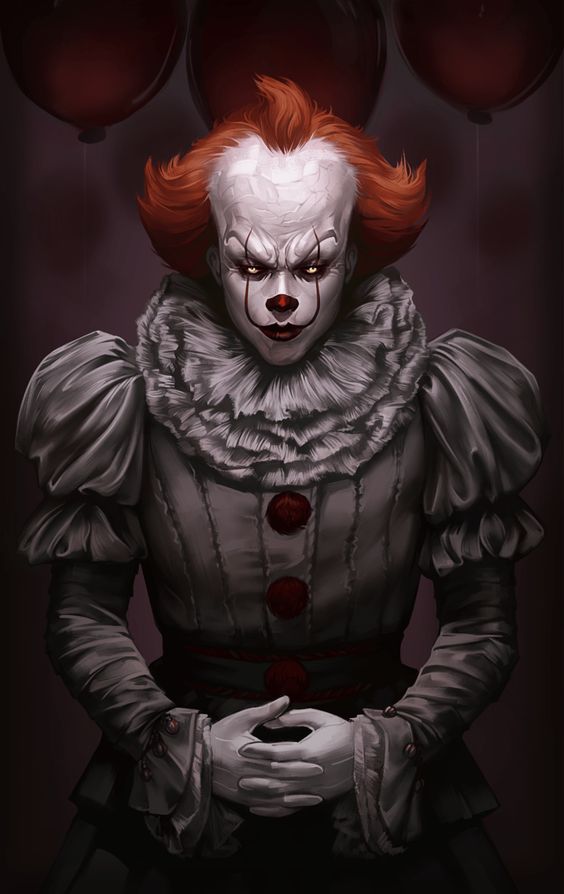
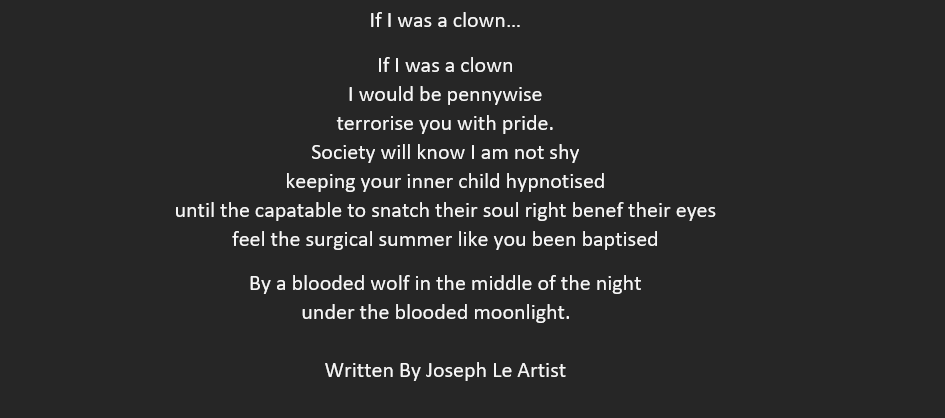
This poem captures the essence of a menacing clown persona, reminiscent of Stephen King’s Pennywise. The poem paints a vivid picture of this clown’s intent to instill fear while maintaining an eerie sense of pride. Let’s break down the elements and themes:
Here’s a revised version incorporating some of these suggestions:
If I Was a Clown
If I was a clown, I’d be Pennywise,
Terrorize you with pride in my eyes.
Society knows I’m not shy,
Your inner child, I’ll hypnotize.
I’ll snatch your soul beneath your gaze,
Feel the summer’s surgical blaze.
Baptized by wolves in the night,
Under the blooded moon’s eerie light.
Beneath their eyes, I steal their soul,
In shadows where the nightmares roll.
A painted grin hides darker schemes,
Where nothing’s ever what it seems.
This version enhances the original ideas while maintaining the sinister tone and themes of power, fear, and transformation.
 LifeandTimelessart