Dissected Threads
Tread One :
Inspired By :

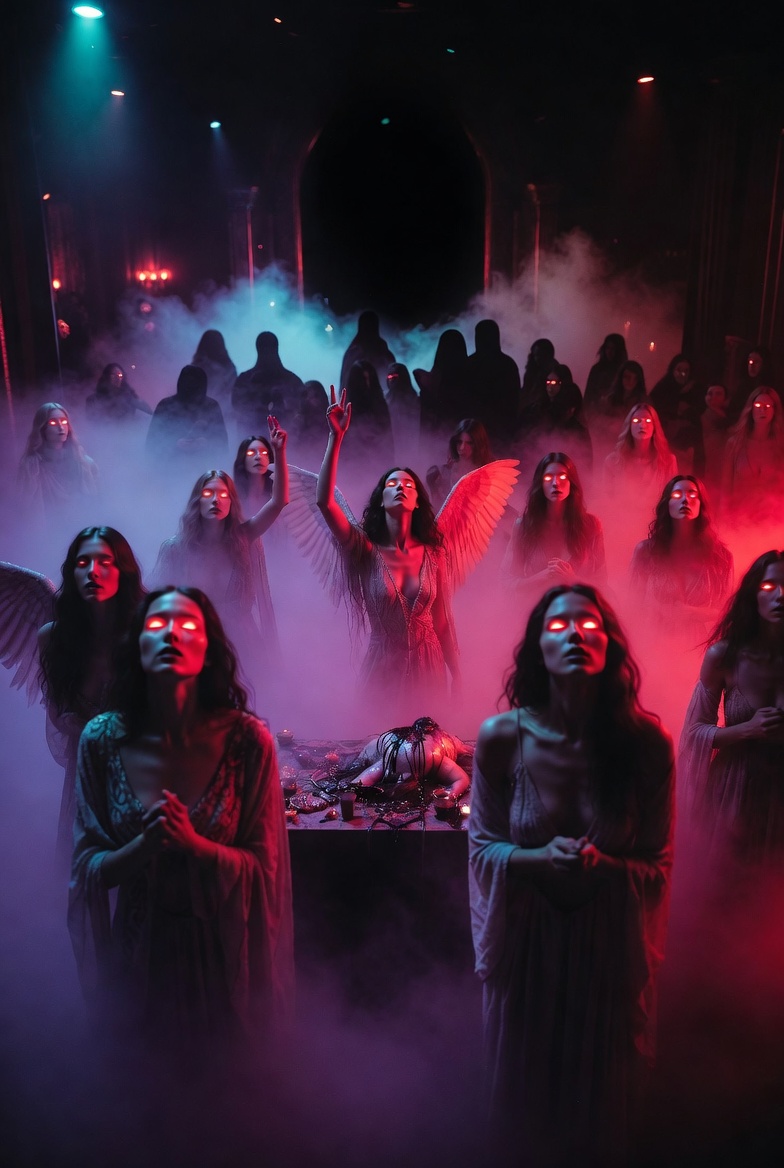
Intro Before I crossed the threshold into that pulsing underworld, I handed my soul to a fallen angel at the door—sealing a Faustian bargain for women who existed only in virtual promise, illusions spun from desire and digital haze. Inside, the club drowned in dark misty buzz, hypnotic music clamping my mind like a vice…
Intro In the shadowed attic of old grief, I found those frantic, handwritten letters—blasphemies scratched out by a younger me during a season of unrelenting calamity, heart emptied by pain and the lack of any real help. One page, opened on a whim, carried the desperate lie: “cursing God will fill your pocket with freedom…
Intro Sometimes I think about why the urge to create feels so natural, almost unavoidable, as if it was placed inside us long before we understood what art even was. It makes me wonder if creativity is part of the reason we exist at all—like God invented us so imagination could move through human hands…

Intro In an age where virtue is performed beneath studio lights and righteousness is rehearsed for applause, the loudest saviors often cast the longest shadows. History has shown how public personas can crumble — from the fall of R. Kelly to the scandal surrounding Jeffrey Epstein — revealing how influence and power can conceal disturbing…

IntroThis poem presents a sharp and cautionary portrait of a woman whose outer beauty conceals inner danger. By comparing her appearance to Stacy Dash, the speaker immediately establishes an image of striking physical attractiveness, only to contrast it with the darker image of a “fallen angel.” Throughout the poem, religious symbolism—halos, horns, heaven—blends with modern…

IntroPurpose and destiny have always guided me, embodied in figures like Tia and Tamara, whose presence kept me steady and focused on achieving higher victories. Their influence lit a path toward growth and fulfillment, shaping my choices and ambitions. Yet, life’s temptations came in the form of vices resembling Samara, pulling me toward darker paths…

IntroThrough powerful biblical symbolism and vivid, confrontational imagery, the poem examines the complex tension between femininity, masculinity, and authority. By invoking Moses parting the Red Sea as a metaphor for spiritual revelation and division, the speaker establishes a dramatic tone that carries throughout the piece. The contrasting portrayals of “quiet and feminine grace” against loud,…

IntroThrough powerful biblical symbolism and vivid, confrontational imagery, the poem examines the complex tension between femininity, masculinity, and authority. By invoking Moses parting the Red Sea as a metaphor for spiritual revelation and division, the speaker establishes a dramatic tone that carries throughout the piece. The contrasting portrayals of “quiet and feminine grace” against loud,…
Intro“King Solomon Size” evokes the legendary magnitude of love and desire associated with Solomon, using his grand reputation as a metaphor for vast romantic ambition. The poem speaks in the voice of a man who longs to warm his “cold and dark” heart through touch, admiration, and conquest, revealing both vulnerability and hunger for devotion.…
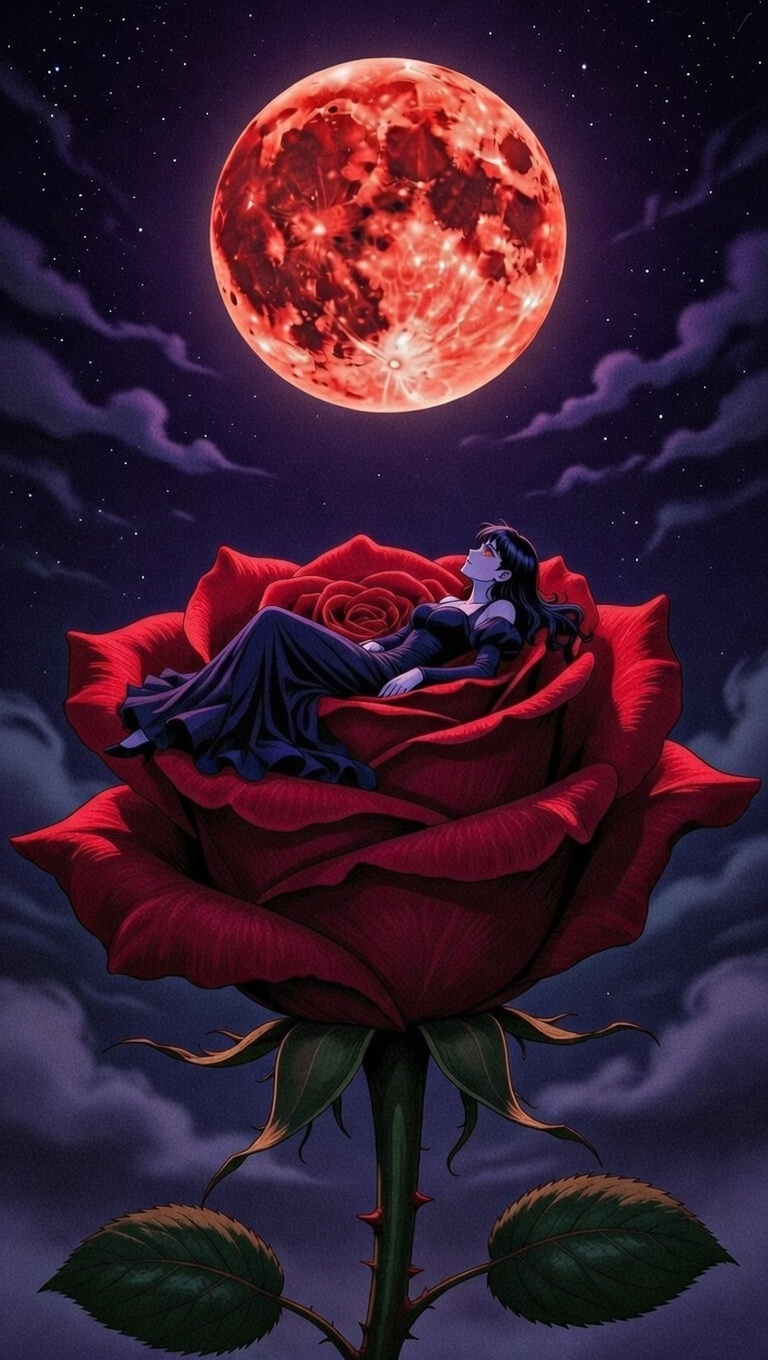
IntroHit The Gas… is a vivid meditation on impatience, desire, and the fragile illusion of escaping time. Through striking imagery of shattered hourglasses, blood-soaked moons, and frozen skies, the poem captures a desperate attempt to outrun mortality in pursuit of love. In that suspended moment, time bends and intimacy feels infinite—but reality inevitably restores its…
Dissected Threads
Tread One :
Inspired By :
Intro Before I crossed the threshold into that pulsing underworld, I handed my soul to a fallen angel at the door—sealing a Faustian bargain for women who existed only in virtual promise, illusions spun from desire and digital haze. Inside, the club drowned in dark misty buzz, hypnotic music clamping my mind like a vice…
Intro In the shadowed attic of old grief, I found those frantic, handwritten letters—blasphemies scratched out by a younger me during a season of unrelenting calamity, heart emptied by pain and the lack of any real help. One page, opened on a whim, carried the desperate lie: “cursing God will fill your pocket with freedom…
Intro Sometimes I think about why the urge to create feels so natural, almost unavoidable, as if it was placed inside us long before we understood what art even was. It makes me wonder if creativity is part of the reason we exist at all—like God invented us so imagination could move through human hands…
Intro In an age where virtue is performed beneath studio lights and righteousness is rehearsed for applause, the loudest saviors often cast the longest shadows. History has shown how public personas can crumble — from the fall of R. Kelly to the scandal surrounding Jeffrey Epstein — revealing how influence and power can conceal disturbing…
IntroThis poem presents a sharp and cautionary portrait of a woman whose outer beauty conceals inner danger. By comparing her appearance to Stacy Dash, the speaker immediately establishes an image of striking physical attractiveness, only to contrast it with the darker image of a “fallen angel.” Throughout the poem, religious symbolism—halos, horns, heaven—blends with modern…
IntroPurpose and destiny have always guided me, embodied in figures like Tia and Tamara, whose presence kept me steady and focused on achieving higher victories. Their influence lit a path toward growth and fulfillment, shaping my choices and ambitions. Yet, life’s temptations came in the form of vices resembling Samara, pulling me toward darker paths…
IntroThrough powerful biblical symbolism and vivid, confrontational imagery, the poem examines the complex tension between femininity, masculinity, and authority. By invoking Moses parting the Red Sea as a metaphor for spiritual revelation and division, the speaker establishes a dramatic tone that carries throughout the piece. The contrasting portrayals of “quiet and feminine grace” against loud,…
IntroThrough powerful biblical symbolism and vivid, confrontational imagery, the poem examines the complex tension between femininity, masculinity, and authority. By invoking Moses parting the Red Sea as a metaphor for spiritual revelation and division, the speaker establishes a dramatic tone that carries throughout the piece. The contrasting portrayals of “quiet and feminine grace” against loud,…
Intro“King Solomon Size” evokes the legendary magnitude of love and desire associated with Solomon, using his grand reputation as a metaphor for vast romantic ambition. The poem speaks in the voice of a man who longs to warm his “cold and dark” heart through touch, admiration, and conquest, revealing both vulnerability and hunger for devotion.…
IntroHit The Gas… is a vivid meditation on impatience, desire, and the fragile illusion of escaping time. Through striking imagery of shattered hourglasses, blood-soaked moons, and frozen skies, the poem captures a desperate attempt to outrun mortality in pursuit of love. In that suspended moment, time bends and intimacy feels infinite—but reality inevitably restores its…
The poem “A Tool of Lucy” presents a chilling narrative of a soul ensnared by sin, embodying the archetype of a cold-hearted predator who spiritually and emotionally devastates others. Through its vivid imagery and raw confession, the poem invites exploration of profound philosophical and biblical themes: the nature of evil, the consequences of free will, and the possibility of redemption. This article examines these themes, drawing on philosophical perspectives and biblical teachings to illuminate the poem’s portrayal of a life consumed by lasciviousness and spiritual destruction.
The Philosophical Lens: Free Will and the Descent into Evil
Philosophically, the poem grapples with the concept of free will and its role in moral corruption. The speaker acknowledges becoming a “tool of Lucy” (likely a reference to Lucifer, the embodiment of evil) “without fighting back,” suggesting a voluntary surrender to destructive impulses. This aligns with existentialist thought, particularly Jean-Paul Sartre’s notion that humans are condemned to be free, bearing full responsibility for their choices. The speaker’s choice of the “Michael Myers archetype”—a symbol of relentless, emotionless violence—reflects a deliberate embrace of a persona devoid of empathy, highlighting the existential weight of choosing one’s path.
From a Nietzschean perspective, the speaker’s “magnificent brute” persona could be seen as an extreme expression of the will to power, where dominance over others (here, through spiritual and emotional manipulation) becomes a perverse assertion of self. Yet, Nietzsche also warns of the nihilistic void that follows such unchecked power, mirrored in the poem’s imagery of a “graveyard” of souls, where the speaker’s actions leave only destruction and emptiness. The philosophical question arises: does the speaker’s surrender to “Lucy” reflect a failure of will to resist, or is it an active choice to revel in chaos?

The Biblical Lens: Sin, Temptation, and Spiritual Death
Biblically, the poem resonates with the narrative of humanity’s susceptibility to sin, rooted in the Fall (Genesis 3). The “seed of lasciviousness” that “bloomed in my youth” evokes the biblical concept of original sin, where the propensity for evil is inherent but activated through choice. The speaker’s predatory behavior—using women’s bodies for pleasure and discarding their “scarred hearts”—parallels the biblical warning against lust as a destructive force. In Matthew 5:28, Jesus teaches that “anyone who looks at a woman lustfully has already committed adultery with her in his heart,” underscoring the spiritual harm of objectifying others.
The reference to “Lucy” taking the wheel suggests a surrender to Satan’s influence, echoing Ephesians 6:12, which speaks of spiritual warfare against “the powers of this dark world.” The speaker’s actions—dismantling souls “for pleasure and ridicule”—reflect the biblical portrayal of Satan as one who seeks to “steal and kill and destroy” (John 10:10). Yet, the poem’s tragic tone, with its admission of being a “fool,” hints at self-awareness, a crack through which biblical hope might enter. Romans 7:24–25 captures this tension: “What a wretched man I am! Who will rescue me from this body that is subject to death? Thanks be to God, who delivers me through Jesus Christ our Lord!”
The Intersection: Redemption or Damnation?
The poem’s philosophical and biblical threads converge in the question of redemption. Philosophically, the speaker’s paralysis and cold-heartedness suggest a life trapped in what Søren Kierkegaard calls “despair,” a state of alienation from one’s true self and God. Kierkegaard argues that despair can only be overcome by embracing faith, a leap that the speaker has not yet taken. Biblically, the possibility of redemption remains, even for the gravest sinners. 1 John 1:9 promises, “If we confess our sins, he is faithful and just and will forgive us our sins and purify us from all unrighteousness.” The poem, however, leaves the speaker in a state of spiritual desolation, with no explicit turn toward repentance, suggesting a cautionary tale about the consequences of unaddressed sin.
Conclusion
“A Tool of Lucy” is a haunting exploration of a soul consumed by lasciviousness and evil, offering a lens through which to examine philosophical questions of free will and moral responsibility alongside biblical truths about sin and redemption. The speaker’s descent into a “magnificent brute” reflects the philosophical peril of unchecked freedom and the biblical reality of spiritual warfare. Yet, both perspectives hold out hope—philosophically, through the possibility of reclaiming authentic selfhood, and biblically, through the promise of divine forgiveness. The poem challenges readers to confront their own choices and the seeds, whether of light or darkness, they allow to bloom within.
Dissected Threads
Tread One :
Inspired By :
Intro Before I crossed the threshold into that pulsing underworld, I handed my soul to a fallen angel at the door—sealing a Faustian bargain for women who existed only in virtual promise, illusions spun from desire and digital haze. Inside, the club drowned in dark misty buzz, hypnotic music clamping my mind like a vice…
Intro In the shadowed attic of old grief, I found those frantic, handwritten letters—blasphemies scratched out by a younger me during a season of unrelenting calamity, heart emptied by pain and the lack of any real help. One page, opened on a whim, carried the desperate lie: “cursing God will fill your pocket with freedom…
Intro Sometimes I think about why the urge to create feels so natural, almost unavoidable, as if it was placed inside us long before we understood what art even was. It makes me wonder if creativity is part of the reason we exist at all—like God invented us so imagination could move through human hands…
Intro In an age where virtue is performed beneath studio lights and righteousness is rehearsed for applause, the loudest saviors often cast the longest shadows. History has shown how public personas can crumble — from the fall of R. Kelly to the scandal surrounding Jeffrey Epstein — revealing how influence and power can conceal disturbing…
IntroThis poem presents a sharp and cautionary portrait of a woman whose outer beauty conceals inner danger. By comparing her appearance to Stacy Dash, the speaker immediately establishes an image of striking physical attractiveness, only to contrast it with the darker image of a “fallen angel.” Throughout the poem, religious symbolism—halos, horns, heaven—blends with modern…
IntroPurpose and destiny have always guided me, embodied in figures like Tia and Tamara, whose presence kept me steady and focused on achieving higher victories. Their influence lit a path toward growth and fulfillment, shaping my choices and ambitions. Yet, life’s temptations came in the form of vices resembling Samara, pulling me toward darker paths…
IntroThrough powerful biblical symbolism and vivid, confrontational imagery, the poem examines the complex tension between femininity, masculinity, and authority. By invoking Moses parting the Red Sea as a metaphor for spiritual revelation and division, the speaker establishes a dramatic tone that carries throughout the piece. The contrasting portrayals of “quiet and feminine grace” against loud,…
IntroThrough powerful biblical symbolism and vivid, confrontational imagery, the poem examines the complex tension between femininity, masculinity, and authority. By invoking Moses parting the Red Sea as a metaphor for spiritual revelation and division, the speaker establishes a dramatic tone that carries throughout the piece. The contrasting portrayals of “quiet and feminine grace” against loud,…
Intro“King Solomon Size” evokes the legendary magnitude of love and desire associated with Solomon, using his grand reputation as a metaphor for vast romantic ambition. The poem speaks in the voice of a man who longs to warm his “cold and dark” heart through touch, admiration, and conquest, revealing both vulnerability and hunger for devotion.…
IntroHit The Gas… is a vivid meditation on impatience, desire, and the fragile illusion of escaping time. Through striking imagery of shattered hourglasses, blood-soaked moons, and frozen skies, the poem captures a desperate attempt to outrun mortality in pursuit of love. In that suspended moment, time bends and intimacy feels infinite—but reality inevitably restores its…

Dissected Threads
Tread One :
Inspired By :
Intro Before I crossed the threshold into that pulsing underworld, I handed my soul to a fallen angel at the door—sealing a Faustian bargain for women who existed only in virtual promise, illusions spun from desire and digital haze. Inside, the club drowned in dark misty buzz, hypnotic music clamping my mind like a vice…
Intro In the shadowed attic of old grief, I found those frantic, handwritten letters—blasphemies scratched out by a younger me during a season of unrelenting calamity, heart emptied by pain and the lack of any real help. One page, opened on a whim, carried the desperate lie: “cursing God will fill your pocket with freedom…
Intro Sometimes I think about why the urge to create feels so natural, almost unavoidable, as if it was placed inside us long before we understood what art even was. It makes me wonder if creativity is part of the reason we exist at all—like God invented us so imagination could move through human hands…
Intro In an age where virtue is performed beneath studio lights and righteousness is rehearsed for applause, the loudest saviors often cast the longest shadows. History has shown how public personas can crumble — from the fall of R. Kelly to the scandal surrounding Jeffrey Epstein — revealing how influence and power can conceal disturbing…
IntroThis poem presents a sharp and cautionary portrait of a woman whose outer beauty conceals inner danger. By comparing her appearance to Stacy Dash, the speaker immediately establishes an image of striking physical attractiveness, only to contrast it with the darker image of a “fallen angel.” Throughout the poem, religious symbolism—halos, horns, heaven—blends with modern…
IntroPurpose and destiny have always guided me, embodied in figures like Tia and Tamara, whose presence kept me steady and focused on achieving higher victories. Their influence lit a path toward growth and fulfillment, shaping my choices and ambitions. Yet, life’s temptations came in the form of vices resembling Samara, pulling me toward darker paths…
IntroThrough powerful biblical symbolism and vivid, confrontational imagery, the poem examines the complex tension between femininity, masculinity, and authority. By invoking Moses parting the Red Sea as a metaphor for spiritual revelation and division, the speaker establishes a dramatic tone that carries throughout the piece. The contrasting portrayals of “quiet and feminine grace” against loud,…
IntroThrough powerful biblical symbolism and vivid, confrontational imagery, the poem examines the complex tension between femininity, masculinity, and authority. By invoking Moses parting the Red Sea as a metaphor for spiritual revelation and division, the speaker establishes a dramatic tone that carries throughout the piece. The contrasting portrayals of “quiet and feminine grace” against loud,…
Intro“King Solomon Size” evokes the legendary magnitude of love and desire associated with Solomon, using his grand reputation as a metaphor for vast romantic ambition. The poem speaks in the voice of a man who longs to warm his “cold and dark” heart through touch, admiration, and conquest, revealing both vulnerability and hunger for devotion.…
IntroHit The Gas… is a vivid meditation on impatience, desire, and the fragile illusion of escaping time. Through striking imagery of shattered hourglasses, blood-soaked moons, and frozen skies, the poem captures a desperate attempt to outrun mortality in pursuit of love. In that suspended moment, time bends and intimacy feels infinite—but reality inevitably restores its…
“At a young age, he was forced to prevail through hell, throwing pennies into the wishing well, hoping the wishes would heal the scars on his fleshy shell…”
“At a young age, he was forced to prevail through hell, throwing pennies into the wishing well, hoping the wishes would heal the scars on his fleshy shell…”
In the tender years of a boy’s life, the world revealed its thorns, casting him into a wilderness of pain and discovery. The sharp sting of his father’s belt carved scars upon his flesh, wounds that pierced deeper into his soul, marking him with the weight of a broken world. In desperation, he tossed pennies into a wishing well—small acts of hope, like prayers lifted to a God who “heals the brokenhearted and binds up their wounds” (Psalm 147:3). Yet, at ten, another shadow fell. As “daylight faded and night set sail,” a television screen flickered with adult content, its explicit images planting a seed that stirred a “monster” within—a restless force of confusion and desire he could not yet name.
This is the story of a child’s soul, shaped by trauma and temptation, seen through the lens of biblical truth and philosophical reflection. It asks: How does a boy endure the crucible of suffering? What does it mean to wrestle with desires awakened too soon? And how does one find redemption in a world of shadows?
The Crucible of Suffering
The boy’s early years were a furnace of affliction, where the belt became a symbol of a world marred by pain. Each strike taught him powerlessness, yet he sought refuge in casting pennies into the wishing well, a child’s plea for healing. These acts were his fragile hope, a belief that grace could mend what human hands had broken.
Friedrich Nietzsche’s philosophy offers a lens: “That which does not kill us makes us stronger.” The boy’s scars were not just wounds but markers of endurance, forging resilience in the face of chaos. Yet, as a child, he felt not strength but fracture, yearning for a wholeness beyond his grasp. His wishing well was a quiet rebellion, a refusal to let pain define him, echoing the biblical promise that God binds up the wounds of the broken (Psalm 147:3).
The Seed of Temptation
At ten, the boy stumbled into a different wilderness. As “night set sail across the sky,” the television glowed with adult content, drawing his wide-eyed gaze. The images were a portal to desires he could not comprehend, planting a seed that awakened a “monster”—not malice, but a shadow of his own humanity. This moment mirrors Paul’s struggle: “For I do not do the good I want to do, but the evil I do not want to do—this I keep on doing” (Romans 7:19).
Jean-Paul Sartre’s existentialism frames this as a moment of freedom’s burden: we are “condemned to be free,” forced to make meaning from chaos. The boy, lacking a framework to process the explicit scenes, was thrust into a premature encounter with longing and shame. The seed grew in silence, shaping his inner world, a philosophical rupture between innocence and experience.
The Battle Within
The boy’s story is a microcosm of the human condition, a tension between light and shadow. The “monster” within is the sin nature, stirred by temptation yet yearning for redemption. His exposure was not a chosen act but a burden, raising questions of agency: Are we the sum of our wounds, or do we transcend them?
Viktor Frankl’s logotherapy offers insight: meaning is found in suffering, not by avoiding it but by embracing it with purpose. The boy’s wishing well was a cry for transcendence, a plea for light in a shadowed world. Scripture assures that “the light shines in the darkness, and the darkness has not overcome it” (John 1:5), promising that even in temptation, grace prevails.
The Path to Redemption
Though scarred by trauma and stirred by temptation, the boy’s journey is one of hope. His pennies, cast into the wishing well, were prayers heard by a God who heals (Psalm 147:3). The “monster” is not his captor but a guide, urging him to confront his shadows. Frankl’s wisdom aligns with biblical truth: suffering, when faced with courage, becomes a path to meaning. The boy’s scars and the seed within are threads in a divine tapestry, woven by a God who transforms pain into redemption (John 1:5).
This is the first chapter of his pilgrimage—a soul navigating the wilderness of trauma and temptation, seeking the light of grace. The scars remain, but so does the promise of a God who makes all things new.
Intro Before I crossed the threshold into that pulsing underworld, I handed my soul to a fallen angel at the door—sealing a Faustian bargain for women who existed only in virtual promise, illusions spun from desire and digital haze. Inside, the club drowned in dark misty buzz, hypnotic music clamping my mind like a vice…
Intro In the shadowed attic of old grief, I found those frantic, handwritten letters—blasphemies scratched out by a younger me during a season of unrelenting calamity, heart emptied by pain and the lack of any real help. One page, opened on a whim, carried the desperate lie: “cursing God will fill your pocket with freedom…
Intro Sometimes I think about why the urge to create feels so natural, almost unavoidable, as if it was placed inside us long before we understood what art even was. It makes me wonder if creativity is part of the reason we exist at all—like God invented us so imagination could move through human hands…
Intro In an age where virtue is performed beneath studio lights and righteousness is rehearsed for applause, the loudest saviors often cast the longest shadows. History has shown how public personas can crumble — from the fall of R. Kelly to the scandal surrounding Jeffrey Epstein — revealing how influence and power can conceal disturbing…
IntroThis poem presents a sharp and cautionary portrait of a woman whose outer beauty conceals inner danger. By comparing her appearance to Stacy Dash, the speaker immediately establishes an image of striking physical attractiveness, only to contrast it with the darker image of a “fallen angel.” Throughout the poem, religious symbolism—halos, horns, heaven—blends with modern…
IntroPurpose and destiny have always guided me, embodied in figures like Tia and Tamara, whose presence kept me steady and focused on achieving higher victories. Their influence lit a path toward growth and fulfillment, shaping my choices and ambitions. Yet, life’s temptations came in the form of vices resembling Samara, pulling me toward darker paths…
IntroThrough powerful biblical symbolism and vivid, confrontational imagery, the poem examines the complex tension between femininity, masculinity, and authority. By invoking Moses parting the Red Sea as a metaphor for spiritual revelation and division, the speaker establishes a dramatic tone that carries throughout the piece. The contrasting portrayals of “quiet and feminine grace” against loud,…
IntroThrough powerful biblical symbolism and vivid, confrontational imagery, the poem examines the complex tension between femininity, masculinity, and authority. By invoking Moses parting the Red Sea as a metaphor for spiritual revelation and division, the speaker establishes a dramatic tone that carries throughout the piece. The contrasting portrayals of “quiet and feminine grace” against loud,…
Intro“King Solomon Size” evokes the legendary magnitude of love and desire associated with Solomon, using his grand reputation as a metaphor for vast romantic ambition. The poem speaks in the voice of a man who longs to warm his “cold and dark” heart through touch, admiration, and conquest, revealing both vulnerability and hunger for devotion.…
IntroHit The Gas… is a vivid meditation on impatience, desire, and the fragile illusion of escaping time. Through striking imagery of shattered hourglasses, blood-soaked moons, and frozen skies, the poem captures a desperate attempt to outrun mortality in pursuit of love. In that suspended moment, time bends and intimacy feels infinite—but reality inevitably restores its…

Dissected Threads
Tread One :
Inspired By :