Description This poem personifies the instrumental track “Devil in a New Dress” by Kanye West as a captivating woman who embodies both artistic and musical beauty. The speaker is enthralled by her presence, describing how her creative essence ignites his imagination. Her angelic voice, filled with heartfelt emotion, draws him into a deep, soulful journey.…
Description The text appears to be a creative narrative that blends introspection, social commentary, and a romantic relationship. Here’s a summary and analysis of the content: Summary: Analysis: Conclusion: The text is a rich, introspective narrative that weaves together personal and societal reflections. It portrays a character caught between deep contemplation and the demands of…
Description This poem explores a deep and profound connection between two individuals, emphasizing the transcendence of mere physical attraction into a union of souls deeply in love. Let’s break down and expand upon the poem’s imagery and themes: Expanded Description: This poem vividly captures the profound and intimate connection between two lovers. The woman’s “elegant…
Description This poem paints a vivid picture of a woman whose belief in meliorism—the idea that the world can be made better by human effort—imbues her with a positive and vibrant presence. Let’s break down and expand upon the poem’s imagery and themes: Expanded Description: The poem celebrates a woman whose unwavering belief in the…
The summer season is my favourite season. The sun’s rays illuminate the brightest throughout the day, and the sky is a crystal clear blue. Butterflies and bees extract nectar as they rest on red roses in the gardens. The sun beaming makes everything in nature comes alive in variety of vibrant colours. The gentle unseen…
Description This poem delves into themes of inner turmoil, transformation, and the tension between revolutionary aspirations and personal desires. Let’s break down the lines to understand the imagery and underlying meanings: Overall, the poem explores the conflict between the speaker’s desire for radical change and the distractions of personal desires. The imagery of the “triple…
Description This poem delves into the narrator’s introspective moment while performing a mundane activity—eating pizza. The imagery of being surrounded by multiple versions of Zendaya highlights the overwhelming presence of beauty and allure that captivates the narrator. This fascination, however, causes the narrator to lose sight of their blessings and spiritual exclamations. The line “from…
So far this year, I have spent most of my time speaking to God and creating art by writing poems to escape this current reality. I do have friends, but as I grow older, my circle of friends becomes smaller. Most of my time these days is spent increasing my knowledge and expanding my world…
Rich Dad Poor Dad This book taught me about the financial economy and how money truly works in circulation. Robert Kiyosaki explains how his poor dad taught him to earn money the traditional way (go to school, college, university, graduate, and find work—money comes in). His rich dad taught him to understand money, meaning to…
Description This poem captures a moment of introspection and emotional conflict, portraying the poet’s inner turmoil and sense of isolation. The poet is deeply absorbed in their own thoughts and struggles, reflected in their refusal to answer a caring call, choosing instead to remain “in the zone.” The setting is stark and evocative: the poet…
Description This poem personifies the instrumental track “Devil in a New Dress” by Kanye West as a captivating woman who embodies both artistic and musical beauty. The speaker is enthralled by her presence, describing how her creative essence ignites his imagination. Her angelic voice, filled with heartfelt emotion, draws him into a deep, soulful journey.…
Description The text appears to be a creative narrative that blends introspection, social commentary, and a romantic relationship. Here’s a summary and analysis of the content: Summary: Analysis: Conclusion: The text is a rich, introspective narrative that weaves together personal and societal reflections. It portrays a character caught between deep contemplation and the demands of…
Description This poem explores a deep and profound connection between two individuals, emphasizing the transcendence of mere physical attraction into a union of souls deeply in love. Let’s break down and expand upon the poem’s imagery and themes: Expanded Description: This poem vividly captures the profound and intimate connection between two lovers. The woman’s “elegant…
Description This poem paints a vivid picture of a woman whose belief in meliorism—the idea that the world can be made better by human effort—imbues her with a positive and vibrant presence. Let’s break down and expand upon the poem’s imagery and themes: Expanded Description: The poem celebrates a woman whose unwavering belief in the…
The summer season is my favourite season. The sun’s rays illuminate the brightest throughout the day, and the sky is a crystal clear blue. Butterflies and bees extract nectar as they rest on red roses in the gardens. The sun beaming makes everything in nature comes alive in variety of vibrant colours. The gentle unseen…
Description This poem delves into themes of inner turmoil, transformation, and the tension between revolutionary aspirations and personal desires. Let’s break down the lines to understand the imagery and underlying meanings: Overall, the poem explores the conflict between the speaker’s desire for radical change and the distractions of personal desires. The imagery of the “triple…
Description This poem delves into the narrator’s introspective moment while performing a mundane activity—eating pizza. The imagery of being surrounded by multiple versions of Zendaya highlights the overwhelming presence of beauty and allure that captivates the narrator. This fascination, however, causes the narrator to lose sight of their blessings and spiritual exclamations. The line “from…
So far this year, I have spent most of my time speaking to God and creating art by writing poems to escape this current reality. I do have friends, but as I grow older, my circle of friends becomes smaller. Most of my time these days is spent increasing my knowledge and expanding my world…
Rich Dad Poor Dad This book taught me about the financial economy and how money truly works in circulation. Robert Kiyosaki explains how his poor dad taught him to earn money the traditional way (go to school, college, university, graduate, and find work—money comes in). His rich dad taught him to understand money, meaning to…
Description This poem captures a moment of introspection and emotional conflict, portraying the poet’s inner turmoil and sense of isolation. The poet is deeply absorbed in their own thoughts and struggles, reflected in their refusal to answer a caring call, choosing instead to remain “in the zone.” The setting is stark and evocative: the poet…
Only a few men escaped her seductive barbarity.” The words hang heavy, a quiet monument to a victory so rare it borders on myth. Escape from her—lust draped in silk, her pulchritude a deadly snare—wasn’t a gift handed to the masses. It was a triumph of the vigilant, a prize seized by the few who dared to see beyond the shimmer. They didn’t stumble out by chance; they walked away, eyes open, choosing the harder path over the sweet descent. My soul, refined like iron, bears the scars of that escape—a testament to battles fought and won, a map of soul refinement etched in every step.
This isn’t just about lust. It’s about all desires that cloak themselves in promise—wealth, power, approval—each a siren with claws beneath the surface. The few who triumph don’t do so because they’re immune; they succeed because they see. Her seductive barbarity was a beast, not a muse, and recognizing that was the first act of defiance. Overcoming temptation isn’t a passive drift toward safety—it’s a deliberate break, a refusal to kneel. I was one of those few—not by birthright or strength, but by the stubborn will to peel back the mask and face what lay beneath.
The existentialists, like Jean-Paul Sartre, might call this authenticity—living true to oneself, unshackled by illusions. Sartre spoke of freedom as a burden, a call to define our own essence in a world that tempts us to conform. Her allure was conformity’s sweetest voice: surrender, indulge, let the chaos swallow you whole. But the few who escaped chose the burden instead. My trials shaped me in their crucible, the stains of desire marked me in their blood, and the slaughter of lust freed me in its silence. Each step built this philosophy of triumph—not a loud victory, but a quiet one, forged in the refusal to be seduced.
Soul refinement isn’t a straight line; it’s a spiral of scars. The iron of my being didn’t emerge flawless—it’s dented, scratched, tempered by every blow I took and gave. Escaping her wasn’t the end of temptation; it was the beginning of seeing it for what it is. The few who walk away carry that sight like a lantern—dim, flickering, but enough to guide them past the next snare. Overcoming temptation doesn’t make you invincible; it makes you awake. I bear the scars of that wakefulness: the heat of trials, the weight of stains, the sting of slaughter. They’re not burdens—they’re proof.
The philosophy of triumph lies in this rarity. Most don’t escape—not because they can’t, but because they won’t. Her barbarity is seductive because it’s easy; the path of the few is hard because it’s true. Sartre’s authenticity demands we reject the script handed to us, and I did. I saw the beast behind the allure—not just lust, but every desire that promises peace and delivers chains. My soul, refined through fire and blood, stands as evidence: the trials shaped me, the stains marked me, the slaughter freed me. The few who triumph don’t boast—they endure, their victory a silent rebellion against the chaos.
So I ask: Are you among the few who’ve defied the seductive chaos? What temptations have you faced, their promises glinting like gold, that you’ve walked away from? Soul refinement isn’t for the many—it’s for the vigilant, the scarred, the ones who choose the harder path. The philosophy of triumph isn’t a crown; it’s a quiet step beyond the wreckage. My escape is mine, but the question is yours: Have you seen the beast and turned away?
Description This poem personifies the instrumental track “Devil in a New Dress” by Kanye West as a captivating woman who embodies both artistic and musical beauty. The speaker is enthralled by her presence, describing how her creative essence ignites his imagination. Her angelic voice, filled with heartfelt emotion, draws him into a deep, soulful journey.…
Description The text appears to be a creative narrative that blends introspection, social commentary, and a romantic relationship. Here’s a summary and analysis of the content: Summary: Analysis: Conclusion: The text is a rich, introspective narrative that weaves together personal and societal reflections. It portrays a character caught between deep contemplation and the demands of…
Description This poem explores a deep and profound connection between two individuals, emphasizing the transcendence of mere physical attraction into a union of souls deeply in love. Let’s break down and expand upon the poem’s imagery and themes: Expanded Description: This poem vividly captures the profound and intimate connection between two lovers. The woman’s “elegant…
Description This poem paints a vivid picture of a woman whose belief in meliorism—the idea that the world can be made better by human effort—imbues her with a positive and vibrant presence. Let’s break down and expand upon the poem’s imagery and themes: Expanded Description: The poem celebrates a woman whose unwavering belief in the…
The summer season is my favourite season. The sun’s rays illuminate the brightest throughout the day, and the sky is a crystal clear blue. Butterflies and bees extract nectar as they rest on red roses in the gardens. The sun beaming makes everything in nature comes alive in variety of vibrant colours. The gentle unseen…
Description This poem delves into themes of inner turmoil, transformation, and the tension between revolutionary aspirations and personal desires. Let’s break down the lines to understand the imagery and underlying meanings: Overall, the poem explores the conflict between the speaker’s desire for radical change and the distractions of personal desires. The imagery of the “triple…
Description This poem delves into the narrator’s introspective moment while performing a mundane activity—eating pizza. The imagery of being surrounded by multiple versions of Zendaya highlights the overwhelming presence of beauty and allure that captivates the narrator. This fascination, however, causes the narrator to lose sight of their blessings and spiritual exclamations. The line “from…
So far this year, I have spent most of my time speaking to God and creating art by writing poems to escape this current reality. I do have friends, but as I grow older, my circle of friends becomes smaller. Most of my time these days is spent increasing my knowledge and expanding my world…
Rich Dad Poor Dad This book taught me about the financial economy and how money truly works in circulation. Robert Kiyosaki explains how his poor dad taught him to earn money the traditional way (go to school, college, university, graduate, and find work—money comes in). His rich dad taught him to understand money, meaning to…
Description This poem captures a moment of introspection and emotional conflict, portraying the poet’s inner turmoil and sense of isolation. The poet is deeply absorbed in their own thoughts and struggles, reflected in their refusal to answer a caring call, choosing instead to remain “in the zone.” The setting is stark and evocative: the poet…
“Her blood touches my lips, reminiscing on the time when lust had its grip on me.” The slaughter was done, the blade of will had struck, and yet victory didn’t wipe the slate clean. Even in triumph, the residue lingers—a faint smear of her blood, lust’s essence, brushing my lips with a bitter taste that drags me back to darker days. It’s not a fresh wound, but a trace, a whisper of what was. This isn’t the sting of defeat; it’s the aftertaste of liberation, a reminder etched in sensation. Memory, I’ve learned, is a double-edged sword—it warns and wounds, heals and haunts, all at once.
That taste pulls me into the past with a force I can’t resist. I recall the grip—tight as a vice—when lust ruled my choices, its fingers coiled around my will. It whispered lies of fulfillment, soft and seductive, promising a sweetness that turned to ash in my mouth. Those were the days when past struggles defined me, when every step was shadowed by a hunger I couldn’t name. The blood on my lips now isn’t new—it’s the echo of those battles, a flavor that lingers long after the war is won. Soul refinement doesn’t erase the scars; it sanctifies them, turning stains into signposts of how far I’ve climbed.
The philosophy of memory offers a lens for this strange dance with the past. Søren Kierkegaard, the Danish thinker, wrote of repetition—not as mere recollection, but as the act of revisiting what was to understand it anew. He saw life as a spiral, where we circle back not to relive but to redeem. This taste on my lips is my repetition. It’s not defeat—it’s a sacrament, a bitter communion with the self I overcame. Each time her blood brushes me, I’m pulled back to the vice, the lies, the chains—but only to see them broken. Memory wounds me with its clarity, yet heals me with its distance. Past struggles don’t vanish; they linger as teachers, their lessons sharp and enduring.
There’s a quiet power in this residue. It’s not the thrill of lust’s old grip, but the weight of knowing I slipped free. The blood isn’t a trophy—it’s a mirror, reflecting a man who once knelt to desire and now stands over its corpse. Soul refinement is a slow burn, a process that doesn’t scrub the palate clean but leaves a taste you learn to carry. I don’t spit it out or swallow it whole—I let it sit, a bitter note that hums with meaning. Kierkegaard’s repetition isn’t about erasing the past; it’s about facing it until it bends to your truth. This taste is mine—a mark of liberation, not captivity.
But memory isn’t just my burden—it’s ours. We all carry tastes like this, don’t we? Fragments of past struggles that brush against us in quiet moments—a regret, a craving, a choice we barely survived. The philosophy of memory suggests these aren’t accidents; they’re threads in the tapestry of who we become. For me, it’s lust’s blood, a bitter sip that warns me of its grip and heals me with its absence. For you, it might be different—a different flavor, a different fight. Soul refinement doesn’t promise a spotless soul; it offers one that’s weathered, marked, and stronger for it.
So I ask: What memories do you carry that both haunt and heal? What taste lingers on your lips, pulling you back to your own darker days? The philosophy of memory doesn’t demand you forget—it asks you to taste again, to find the liberation in the bitterness. My bloodstained lips are proof of a war won. What’s yours?
Description This poem personifies the instrumental track “Devil in a New Dress” by Kanye West as a captivating woman who embodies both artistic and musical beauty. The speaker is enthralled by her presence, describing how her creative essence ignites his imagination. Her angelic voice, filled with heartfelt emotion, draws him into a deep, soulful journey.…
Description The text appears to be a creative narrative that blends introspection, social commentary, and a romantic relationship. Here’s a summary and analysis of the content: Summary: Analysis: Conclusion: The text is a rich, introspective narrative that weaves together personal and societal reflections. It portrays a character caught between deep contemplation and the demands of…
Description This poem explores a deep and profound connection between two individuals, emphasizing the transcendence of mere physical attraction into a union of souls deeply in love. Let’s break down and expand upon the poem’s imagery and themes: Expanded Description: This poem vividly captures the profound and intimate connection between two lovers. The woman’s “elegant…
Description This poem paints a vivid picture of a woman whose belief in meliorism—the idea that the world can be made better by human effort—imbues her with a positive and vibrant presence. Let’s break down and expand upon the poem’s imagery and themes: Expanded Description: The poem celebrates a woman whose unwavering belief in the…
The summer season is my favourite season. The sun’s rays illuminate the brightest throughout the day, and the sky is a crystal clear blue. Butterflies and bees extract nectar as they rest on red roses in the gardens. The sun beaming makes everything in nature comes alive in variety of vibrant colours. The gentle unseen…
Description This poem delves into themes of inner turmoil, transformation, and the tension between revolutionary aspirations and personal desires. Let’s break down the lines to understand the imagery and underlying meanings: Overall, the poem explores the conflict between the speaker’s desire for radical change and the distractions of personal desires. The imagery of the “triple…
Description This poem delves into the narrator’s introspective moment while performing a mundane activity—eating pizza. The imagery of being surrounded by multiple versions of Zendaya highlights the overwhelming presence of beauty and allure that captivates the narrator. This fascination, however, causes the narrator to lose sight of their blessings and spiritual exclamations. The line “from…
So far this year, I have spent most of my time speaking to God and creating art by writing poems to escape this current reality. I do have friends, but as I grow older, my circle of friends becomes smaller. Most of my time these days is spent increasing my knowledge and expanding my world…
Rich Dad Poor Dad This book taught me about the financial economy and how money truly works in circulation. Robert Kiyosaki explains how his poor dad taught him to earn money the traditional way (go to school, college, university, graduate, and find work—money comes in). His rich dad taught him to understand money, meaning to…
Description This poem captures a moment of introspection and emotional conflict, portraying the poet’s inner turmoil and sense of isolation. The poet is deeply absorbed in their own thoughts and struggles, reflected in their refusal to answer a caring call, choosing instead to remain “in the zone.” The setting is stark and evocative: the poet…
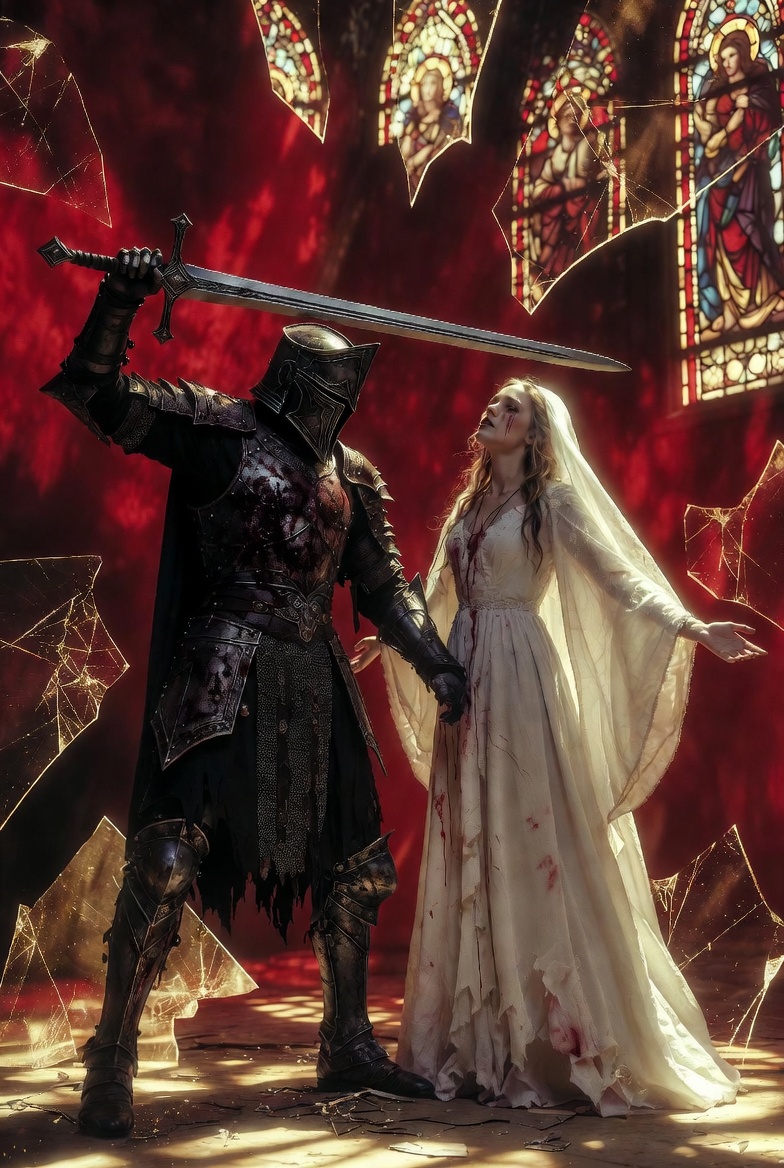
“I slaughtered lust in its flesh before it could seduce me.” The words cut as sharply as the act they describe—a visceral, deliberate strike against a force that once held me captive. There came a moment of reckoning, a crossroads where the air thickened with decision. Lust stood before me, not as a shadow or a whisper, but tangible, pulsing, its flesh warm with promise. It wasn’t a vague temptation—it was alive, breathing, offering itself with a smile that could unravel the strongest will. But I wielded the blade of will first, not out of hatred, but survival. To let it seduce me again would’ve been to surrender the iron my soul had forged through trials past.
This wasn’t a gentle refusal. Overcoming lust isn’t a polite negotiation—it’s a slaughter, a brutal severing of ties. The moment demanded action, not hesitation. Lust’s flesh was soft, inviting, its promises dripping like honey: comfort, escape, a fleeting high. But I’d tasted its bloodstains before, felt the chains it draped over me under the guise of freedom. I struck—not to wound, but to end its dominion. The temptation philosophy here isn’t about resisting for the sake of morality; it’s about reclaiming power. To indulge would’ve been to kneel, to hand over the soul I’d fought to refine. Instead, I chose to stand.
Nietzsche’s voice echoes through this act: true power isn’t in indulgence but in self-mastery. He spoke of overcoming oneself, of wrestling the chaotic forces within until they bend to your will. Lust wasn’t an external enemy—it was me, a part of me, a wild fragment I’d let roam too long. Slaughtering it meant facing that truth: the seductress wasn’t just in the world; she was in my mirror. The blade I raised wasn’t against her alone—it was against the version of myself that craved her. Overcoming lust became an act of creation, carving out a new self from the wreckage of the old.
There’s no romance in this killing. It’s brutal—blood on the hands, a shudder in the air, the weight of what’s lost and gained. I didn’t banish lust’s presence entirely; its ghost lingers, a faint pulse in the corners of my mind. But I ended its reign. Self-mastery doesn’t erase temptation—it strips it of its throne. The iron of my soul, forged in earlier crucibles, gave me the strength to swing the blade. To let lust seduce me again would’ve melted that iron back into slag, undoing every trial I’d endured. Survival meant sacrifice, and I chose to sacrifice the seducer rather than myself.
The temptation philosophy asks us to see this not as cruelty, but as necessity. Every soul faces its own slaughterhouse—a place where something must die for something else to live. For me, it was lust in its flesh, warm and pleading. For you, it might be different—pride, fear, a hunger for approval. The act is the same: a reckoning, a blade, a choice. Self-mastery isn’t a gift bestowed; it’s a victory seized, often with trembling hands. I still feel the warmth of that flesh under my strike, the moment it fell silent. It was necessary. It was mine to do.
So I ask you: Have you faced a temptation you had to slay? What stood before you, pulsing with promise, that you chose to cut down? Overcoming lust—or any desire that binds—takes more than resolve; it takes a willingness to kill a part of yourself before it kills you. The slaughter isn’t the end—it’s the beginning of something harder, truer. What have you buried to rise?
Description This poem personifies the instrumental track “Devil in a New Dress” by Kanye West as a captivating woman who embodies both artistic and musical beauty. The speaker is enthralled by her presence, describing how her creative essence ignites his imagination. Her angelic voice, filled with heartfelt emotion, draws him into a deep, soulful journey.…
Description The text appears to be a creative narrative that blends introspection, social commentary, and a romantic relationship. Here’s a summary and analysis of the content: Summary: Analysis: Conclusion: The text is a rich, introspective narrative that weaves together personal and societal reflections. It portrays a character caught between deep contemplation and the demands of…
Description This poem explores a deep and profound connection between two individuals, emphasizing the transcendence of mere physical attraction into a union of souls deeply in love. Let’s break down and expand upon the poem’s imagery and themes: Expanded Description: This poem vividly captures the profound and intimate connection between two lovers. The woman’s “elegant…
Description This poem paints a vivid picture of a woman whose belief in meliorism—the idea that the world can be made better by human effort—imbues her with a positive and vibrant presence. Let’s break down and expand upon the poem’s imagery and themes: Expanded Description: The poem celebrates a woman whose unwavering belief in the…
The summer season is my favourite season. The sun’s rays illuminate the brightest throughout the day, and the sky is a crystal clear blue. Butterflies and bees extract nectar as they rest on red roses in the gardens. The sun beaming makes everything in nature comes alive in variety of vibrant colours. The gentle unseen…
Description This poem delves into themes of inner turmoil, transformation, and the tension between revolutionary aspirations and personal desires. Let’s break down the lines to understand the imagery and underlying meanings: Overall, the poem explores the conflict between the speaker’s desire for radical change and the distractions of personal desires. The imagery of the “triple…
Description This poem delves into the narrator’s introspective moment while performing a mundane activity—eating pizza. The imagery of being surrounded by multiple versions of Zendaya highlights the overwhelming presence of beauty and allure that captivates the narrator. This fascination, however, causes the narrator to lose sight of their blessings and spiritual exclamations. The line “from…
So far this year, I have spent most of my time speaking to God and creating art by writing poems to escape this current reality. I do have friends, but as I grow older, my circle of friends becomes smaller. Most of my time these days is spent increasing my knowledge and expanding my world…
Rich Dad Poor Dad This book taught me about the financial economy and how money truly works in circulation. Robert Kiyosaki explains how his poor dad taught him to earn money the traditional way (go to school, college, university, graduate, and find work—money comes in). His rich dad taught him to understand money, meaning to…
Description This poem captures a moment of introspection and emotional conflict, portraying the poet’s inner turmoil and sense of isolation. The poet is deeply absorbed in their own thoughts and struggles, reflected in their refusal to answer a caring call, choosing instead to remain “in the zone.” The setting is stark and evocative: the poet…
This poem reflects a powerful metaphor for life, where the speaker’s journey mirrors Bruce Lee’s Game of Death—a symbolic ascent to power and control, only to face a sudden, devastating fall. The “forbidden mansion” and the throne symbolize the speaker’s elevated status or achievements, acquired through perseverance, but also under constant threat from those seeking to take it away. The mansion’s levels represent challenges or stages of personal or external struggles.
The “yellow medallion” is a striking image, symbolizing both power and vulnerability, with its brightness likened to the sun. This may represent the speaker’s identity or achievements that are visible and radiant but also open to attack. The throne signifies the speaker’s position of power, which must be guarded from those who ascend through the mansion, symbolizing rivals or life’s challenges.
The poem takes a dramatic turn when a mysterious figure appears and, with a snap of fingers, overturns the speaker’s reality, flipping the mansion upside down and destroying what had been built. The fall from grace is inevitable, with everything the speaker has worked for “shattering to the ground.” The mysterious figure embodies fate, unforeseen events, or internal conflict—forces that easily dismantle what once seemed invincible.
The whispered line at the end, “I am satisfied watching your games and party die,” evokes a sense of bitter defeat, as if the speaker’s struggles and achievements were part of a larger, uncontrollable game. This final line hints at the futility of clinging to power and control, reminding the reader that even the most glorious positions can crumble at the hands of fate or time.