
Intro:This poem descends into the moment betrayal is no longer hidden and rage learns to speak. What begins as loyalty rots into illusion, and from that fracture, wrath is born—not as chaos, but as intention. Read with caution: this is the anatomy of a soul pushed past forgiveness. Outro:And when the echoes fade, what remains
In the relentless tick of the wristwatch, time reveals its cruel indifference—Father Time eroding youth, flesh, and fragile hopes into dust, while death lingers like an inevitable embrace. This piece confronts the quiet terror of running out of moments for authentic love, crushed instead by the heavy, hollow weight of lust and repeated defeats. What
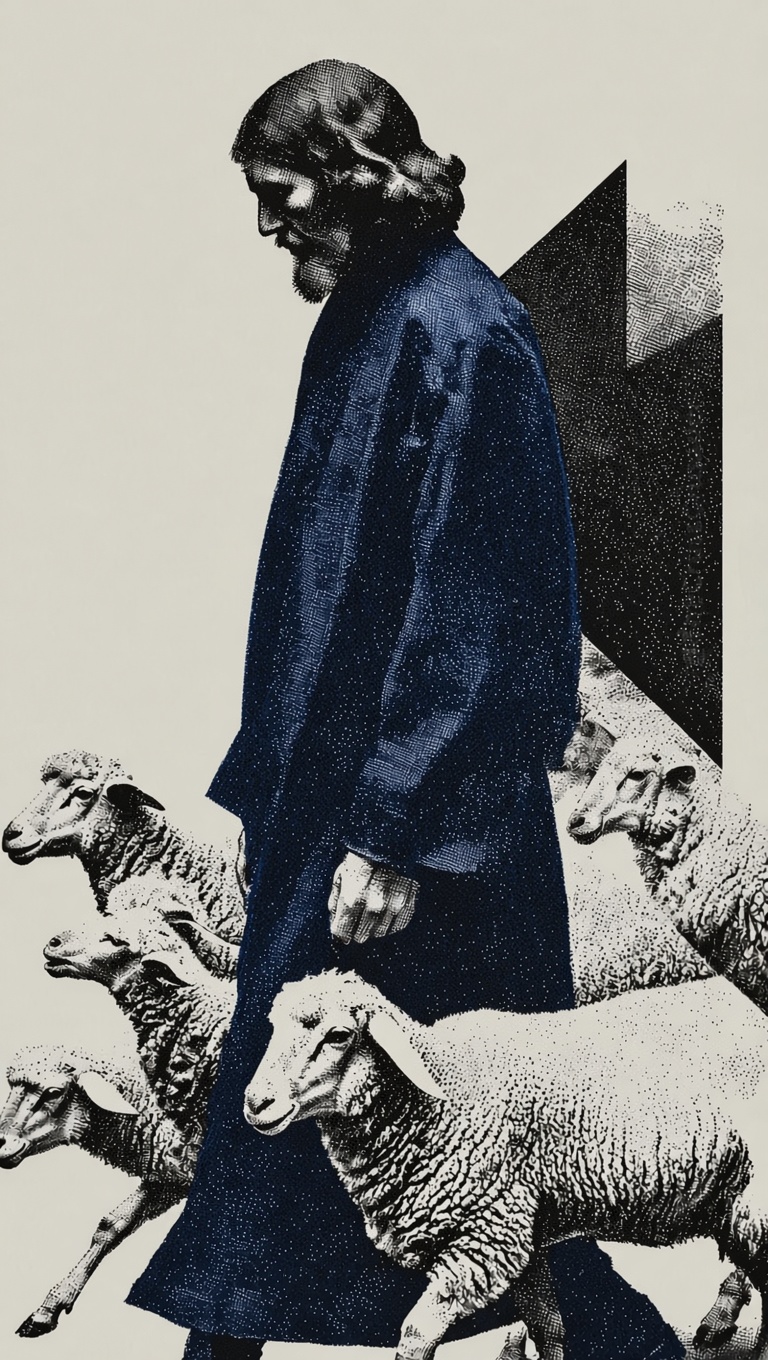
Even though the image of Jesus commonly portrayed in the Western world is historically inaccurate, mockery only carries power when it is directed at the true God—the One who holds authority over the world and the universe. Wearing that specific figure around the neck is not random; it targets the real authority behind the symbol,
This poem is for people haunted by eyes that once sparkled with wonder, now overflowing with ruin. She chose and obsessed—to go to the soul cage.I wrote this once I saw: love without real caution is just code waiting to flood.Faith sank deeper when pretence ended and her obsession met my disarray.No sermon here just
Description This poem offers a contemplative glimpse into the poet’s mind as they engage in everyday activities. The poem begins with the poet reflecting deeply while eating a slice of pizza, contemplating their spiritual fate. They reject the idea of going to hell and express a preference for going to heaven, demonstrating reverence and seeking
The poem “Eminently…” by Joseph Le Artist captures the double-edged nature of ecstasy: an overwhelming force that initially electrifies the soul and psychology but ultimately acts as a curse, pinning the speaker down like a fallen angel chained to earth. This intoxicating high feeds vices, nightmares, and a once-heartless existence, revealing itself as bondage rather
The strangest thing about human desire is its capacity to clothe illusion in the radiance of truth. We behold the caramel glow of skin, the flowing mane of hair, the whispered “Papi” that promises to uproot mountains, and we name it beauty—perhaps even salvation. Yet beneath the sunlit surface lies an upside-down dimension, a realm
This poem captures an intense, almost obsessive affection from a woman towards the speaker. She explains her obsession by revealing that she perceives him as wearing a “violet mask,” likening him to Prince, whose iconic presence is both captivating and enigmatic. In her world, his “purple presence” reigns supreme, making him irresistible to her. She views him as a “drug” that alleviates her pain, offering solace. Her desire to be his “vanity” and for him to be her “prince” underscores her longing for a deep, reciprocal connection. She covets the “key to his violet soul,” which she considers a “precious jewel,” emphasizing her yearning to understand and possess his innermost being.
The poem is rich in imagery and metaphor, illustrating the profound impact the speaker has on the woman and her yearning for a closer bond with him.
Intro:This poem descends into the moment betrayal is no longer hidden and rage learns to speak. What begins as loyalty rots into illusion, and from that fracture, wrath is born—not as chaos, but as intention. Read with caution: this is the anatomy of a soul pushed past forgiveness. Outro:And when the echoes fade, what remains
In the relentless tick of the wristwatch, time reveals its cruel indifference—Father Time eroding youth, flesh, and fragile hopes into dust, while death lingers like an inevitable embrace. This piece confronts the quiet terror of running out of moments for authentic love, crushed instead by the heavy, hollow weight of lust and repeated defeats. What
Even though the image of Jesus commonly portrayed in the Western world is historically inaccurate, mockery only carries power when it is directed at the true God—the One who holds authority over the world and the universe. Wearing that specific figure around the neck is not random; it targets the real authority behind the symbol,
This poem is for people haunted by eyes that once sparkled with wonder, now overflowing with ruin. She chose and obsessed—to go to the soul cage.I wrote this once I saw: love without real caution is just code waiting to flood.Faith sank deeper when pretence ended and her obsession met my disarray.No sermon here just
Description This poem offers a contemplative glimpse into the poet’s mind as they engage in everyday activities. The poem begins with the poet reflecting deeply while eating a slice of pizza, contemplating their spiritual fate. They reject the idea of going to hell and express a preference for going to heaven, demonstrating reverence and seeking
The poem “Eminently…” by Joseph Le Artist captures the double-edged nature of ecstasy: an overwhelming force that initially electrifies the soul and psychology but ultimately acts as a curse, pinning the speaker down like a fallen angel chained to earth. This intoxicating high feeds vices, nightmares, and a once-heartless existence, revealing itself as bondage rather
The strangest thing about human desire is its capacity to clothe illusion in the radiance of truth. We behold the caramel glow of skin, the flowing mane of hair, the whispered “Papi” that promises to uproot mountains, and we name it beauty—perhaps even salvation. Yet beneath the sunlit surface lies an upside-down dimension, a realm
This poem delves into the speaker’s admiration and reverence for a woman whose beauty and spirit are depicted through rich, evocative imagery. The speaker views the woman through “spiritual lenses,” suggesting a deep, soulful connection and perception that goes beyond the physical.
The woman’s heart is described as “violet” and “resembles a diamond,” combining the rarity and preciousness of a diamond with the mystical, regal qualities of the color violet. This duality highlights her unique and invaluable nature. Her spirit, compared to a “chandelier illuminating in a mansion,” suggests a bright, radiant presence that lights up her surroundings with elegance and grace.
The comparison of her soul to the “Salvator Mundi piece of art” further emphasizes her rarity and exceptional value, likening her to one of the most famous and expensive artworks in the world. This metaphor underscores the idea that her essence is one-of-a-kind and highly treasured.
The speaker refers to her as the “seductive violet,” capturing the allure and magnetic charm she possesses, which causes men to “riot” over her beauty. This vivid imagery portrays her as a figure of great desire and admiration, whose presence on canvas (possibly metaphorical for her impact on the world) leaves a powerful impression.
Despite the attention she garners, she is described as “grippy towards my kingship,” indicating her loyalty and attachment to the speaker. The term “kingship” conveys a sense of protection and authority, suggesting that the speaker feels a duty to safeguard her from “thirsty vultures”—a metaphor for those who seek to exploit or harm her.
In summary, the poem paints a portrait of a woman whose beauty, spirit, and soul are portrayed with luxurious and rare imagery. It emphasizes her profound impact on those around her and her special connection with the speaker, who is devoted to protecting her from those who might not appreciate her true worth.
Intro:This poem descends into the moment betrayal is no longer hidden and rage learns to speak. What begins as loyalty rots into illusion, and from that fracture, wrath is born—not as chaos, but as intention. Read with caution: this is the anatomy of a soul pushed past forgiveness. Outro:And when the echoes fade, what remains
In the relentless tick of the wristwatch, time reveals its cruel indifference—Father Time eroding youth, flesh, and fragile hopes into dust, while death lingers like an inevitable embrace. This piece confronts the quiet terror of running out of moments for authentic love, crushed instead by the heavy, hollow weight of lust and repeated defeats. What
Even though the image of Jesus commonly portrayed in the Western world is historically inaccurate, mockery only carries power when it is directed at the true God—the One who holds authority over the world and the universe. Wearing that specific figure around the neck is not random; it targets the real authority behind the symbol,
This poem is for people haunted by eyes that once sparkled with wonder, now overflowing with ruin. She chose and obsessed—to go to the soul cage.I wrote this once I saw: love without real caution is just code waiting to flood.Faith sank deeper when pretence ended and her obsession met my disarray.No sermon here just
Description This poem offers a contemplative glimpse into the poet’s mind as they engage in everyday activities. The poem begins with the poet reflecting deeply while eating a slice of pizza, contemplating their spiritual fate. They reject the idea of going to hell and express a preference for going to heaven, demonstrating reverence and seeking
The poem “Eminently…” by Joseph Le Artist captures the double-edged nature of ecstasy: an overwhelming force that initially electrifies the soul and psychology but ultimately acts as a curse, pinning the speaker down like a fallen angel chained to earth. This intoxicating high feeds vices, nightmares, and a once-heartless existence, revealing itself as bondage rather
The strangest thing about human desire is its capacity to clothe illusion in the radiance of truth. We behold the caramel glow of skin, the flowing mane of hair, the whispered “Papi” that promises to uproot mountains, and we name it beauty—perhaps even salvation. Yet beneath the sunlit surface lies an upside-down dimension, a realm
This poem explores the relationship between talent and the pursuit of artistic excellence, emphasizing that talent alone is insufficient for achieving greatness. The narrator begins by recognizing that merely possessing talent does not guarantee the ability to create enduring, impactful art (“Talent isn’t never enough when you trying to make the artistry infinitely blush with my paint brush”). The metaphor of making artistry “blush” suggests a desire to evoke deep emotion and beauty through one’s work.
The “artistry in human form” serves as a personified muse, offering wisdom to the artist. It acknowledges the artist’s ambition but reminds them of the limitations imposed by time (“you can’t infinitely make me blush your limited within time”). The muse asserts its own infinite nature, contrasting the temporal constraints of human life with the boundless essence of true art (“I am infinite and beyond this life”).
The imagery of a “golden brush in the hand of the divine” elevates the concept of art to a sacred level, suggesting that the ultimate form of artistry is a divine act, beyond human reach. This underscores the notion that human efforts, while valuable, are inherently limited.
The poem concludes with the muse advising the artist that talent must be complemented by other qualities: “time, perseverance, and consistency.” These elements are essential to maintain and refine even a small part of true artistry (“Will help you keep a small fragment of me sharp and refined”). The message is clear: artistic mastery requires ongoing dedication and hard work, not just innate ability.
In summary, the poem beautifully conveys the idea that while talent is a crucial starting point, it is the combination of persistent effort and commitment over time that allows an artist to truly capture and sustain the essence of their craft.