

Fragment Blog
Other Blogs
Inspired By :

I stand at the edge of philosophy’s abyss, and it calls to me. Its questions—vast as starlit skies, sharp as a blade—cut through the quiet of my mind. Why am I here? What is real? What holds meaning when the world feels like a fleeting shadow? Each inquiry is a thread, spiraling, twisting, weaving a…

“Do not store up for yourselves treasures on earth, where moths and vermin destroy, and where thieves break in and steal. But store up for yourselves treasures in heaven… For where your treasure is, there your heart will be also.”— Matthew 6:19-21 (NIV)As I reflect on the words of my own heart poured into verse,…

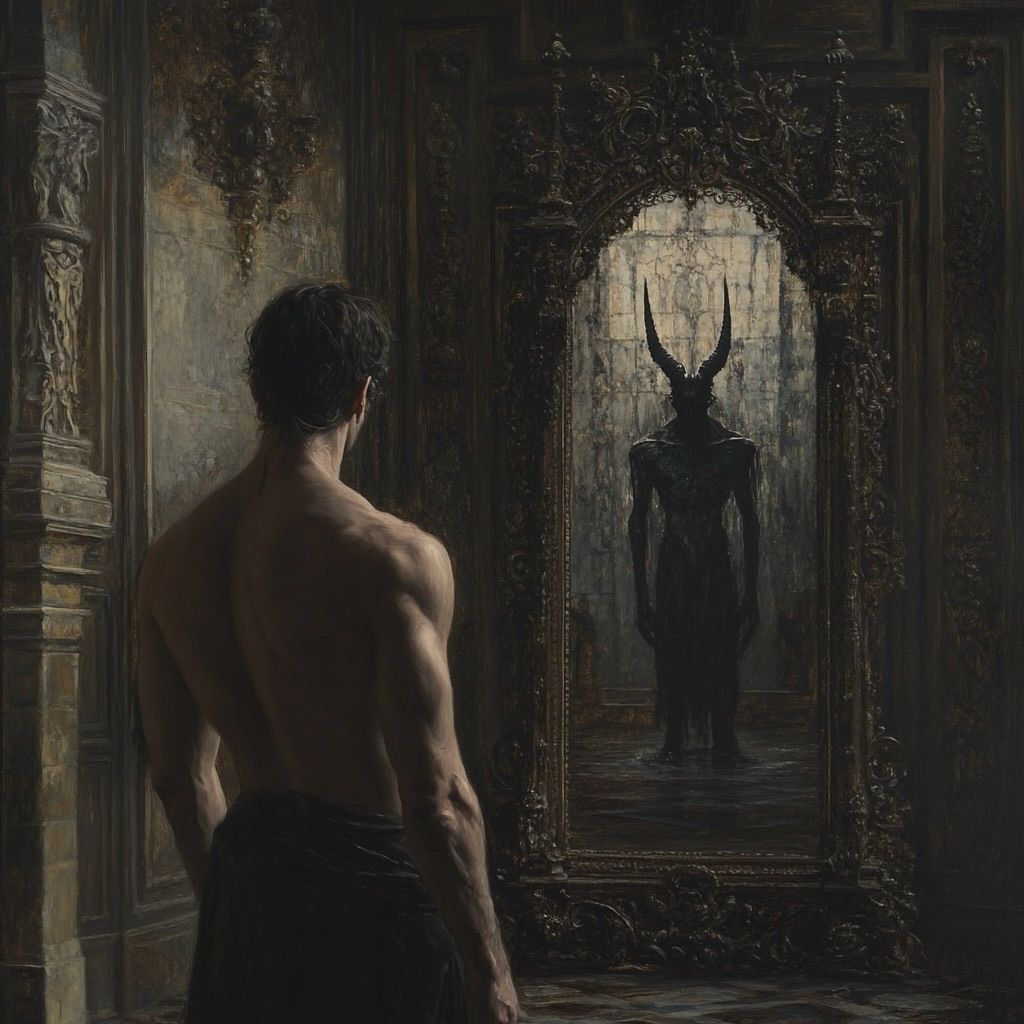
I woke to a shadow in my room, my own face staring back, twisted with a grin that wasn’t mine. It held my gun, accusing me: “You thought you could embody the essence of wrath’s?” Its words cut deep, naming “friends” I’d killed—lives I’d ended or betrayed in moments I can’t unmake. Jean-Paul Sartre’s words…

Some moments in life feel like they’ve been woven into the fabric of the universe, perfectly timed and undeniably sacred. I stumbled into one such moment not long ago, when the winding grapevine of life—those serendipitous threads of chance—led me to her. Her name is Halle, and from the instant I met her, I knew…

In my youth, a seed was planted, cold and unrelenting, deep within my heart. It grew as I did, twisting me into a figure I liken to Michael Myers—a silent, unyielding archetype of destruction. I didn’t fight it; I let it consume me. That seed bloomed into a lascivious hunger, a monstrous drive that’s left…
Fragment Blog
Other Blogs
Inspired By :
I stand at the edge of philosophy’s abyss, and it calls to me. Its questions—vast as starlit skies, sharp as a blade—cut through the quiet of my mind. Why am I here? What is real? What holds meaning when the world feels like a fleeting shadow? Each inquiry is a thread, spiraling, twisting, weaving a…
“Do not store up for yourselves treasures on earth, where moths and vermin destroy, and where thieves break in and steal. But store up for yourselves treasures in heaven… For where your treasure is, there your heart will be also.”— Matthew 6:19-21 (NIV)As I reflect on the words of my own heart poured into verse,…
I woke to a shadow in my room, my own face staring back, twisted with a grin that wasn’t mine. It held my gun, accusing me: “You thought you could embody the essence of wrath’s?” Its words cut deep, naming “friends” I’d killed—lives I’d ended or betrayed in moments I can’t unmake. Jean-Paul Sartre’s words…
Some moments in life feel like they’ve been woven into the fabric of the universe, perfectly timed and undeniably sacred. I stumbled into one such moment not long ago, when the winding grapevine of life—those serendipitous threads of chance—led me to her. Her name is Halle, and from the instant I met her, I knew…
In my youth, a seed was planted, cold and unrelenting, deep within my heart. It grew as I did, twisting me into a figure I liken to Michael Myers—a silent, unyielding archetype of destruction. I didn’t fight it; I let it consume me. That seed bloomed into a lascivious hunger, a monstrous drive that’s left…
Fragment Blog
Other Blogs
Inspired By :
I stand at the edge of philosophy’s abyss, and it calls to me. Its questions—vast as starlit skies, sharp as a blade—cut through the quiet of my mind. Why am I here? What is real? What holds meaning when the world feels like a fleeting shadow? Each inquiry is a thread, spiraling, twisting, weaving a…
“Do not store up for yourselves treasures on earth, where moths and vermin destroy, and where thieves break in and steal. But store up for yourselves treasures in heaven… For where your treasure is, there your heart will be also.”— Matthew 6:19-21 (NIV)As I reflect on the words of my own heart poured into verse,…
I woke to a shadow in my room, my own face staring back, twisted with a grin that wasn’t mine. It held my gun, accusing me: “You thought you could embody the essence of wrath’s?” Its words cut deep, naming “friends” I’d killed—lives I’d ended or betrayed in moments I can’t unmake. Jean-Paul Sartre’s words…
Some moments in life feel like they’ve been woven into the fabric of the universe, perfectly timed and undeniably sacred. I stumbled into one such moment not long ago, when the winding grapevine of life—those serendipitous threads of chance—led me to her. Her name is Halle, and from the instant I met her, I knew…
In my youth, a seed was planted, cold and unrelenting, deep within my heart. It grew as I did, twisting me into a figure I liken to Michael Myers—a silent, unyielding archetype of destruction. I didn’t fight it; I let it consume me. That seed bloomed into a lascivious hunger, a monstrous drive that’s left…
Poem Tread :
Inspired By :
I stand at the edge of philosophy’s abyss, and it calls to me. Its questions—vast as starlit skies, sharp as a blade—cut through the quiet of my mind. Why am I here? What is real? What holds meaning when the world feels like a fleeting shadow? Each inquiry is a thread, spiraling, twisting, weaving a…
“Do not store up for yourselves treasures on earth, where moths and vermin destroy, and where thieves break in and steal. But store up for yourselves treasures in heaven… For where your treasure is, there your heart will be also.”— Matthew 6:19-21 (NIV)As I reflect on the words of my own heart poured into verse,…
I woke to a shadow in my room, my own face staring back, twisted with a grin that wasn’t mine. It held my gun, accusing me: “You thought you could embody the essence of wrath’s?” Its words cut deep, naming “friends” I’d killed—lives I’d ended or betrayed in moments I can’t unmake. Jean-Paul Sartre’s words…
Some moments in life feel like they’ve been woven into the fabric of the universe, perfectly timed and undeniably sacred. I stumbled into one such moment not long ago, when the winding grapevine of life—those serendipitous threads of chance—led me to her. Her name is Halle, and from the instant I met her, I knew…
In my youth, a seed was planted, cold and unrelenting, deep within my heart. It grew as I did, twisting me into a figure I liken to Michael Myers—a silent, unyielding archetype of destruction. I didn’t fight it; I let it consume me. That seed bloomed into a lascivious hunger, a monstrous drive that’s left…
Details :
Explore the powerful parallels between Jay-Z’s “I Know” and Tragic Hero’s “Mercy,” two hip-hop tracks that personify addiction as a seductive woman. Through vivid metaphors of lust, materialism, and dependency, both songs delve into the emotional and physical toll of temptation, with Jay-Z’s confident swagger contrasting Tragic Hero’s introspective struggle.
Poem Treads :
Inspired By :
I stand at the edge of philosophy’s abyss, and it calls to me. Its questions—vast as starlit skies, sharp as a blade—cut through the quiet of my mind. Why am I here? What is real? What holds meaning when the world feels like a fleeting shadow? Each inquiry is a thread, spiraling, twisting, weaving a…
“Do not store up for yourselves treasures on earth, where moths and vermin destroy, and where thieves break in and steal. But store up for yourselves treasures in heaven… For where your treasure is, there your heart will be also.”— Matthew 6:19-21 (NIV)As I reflect on the words of my own heart poured into verse,…
I woke to a shadow in my room, my own face staring back, twisted with a grin that wasn’t mine. It held my gun, accusing me: “You thought you could embody the essence of wrath’s?” Its words cut deep, naming “friends” I’d killed—lives I’d ended or betrayed in moments I can’t unmake. Jean-Paul Sartre’s words…
Some moments in life feel like they’ve been woven into the fabric of the universe, perfectly timed and undeniably sacred. I stumbled into one such moment not long ago, when the winding grapevine of life—those serendipitous threads of chance—led me to her. Her name is Halle, and from the instant I met her, I knew…
In my youth, a seed was planted, cold and unrelenting, deep within my heart. It grew as I did, twisting me into a figure I liken to Michael Myers—a silent, unyielding archetype of destruction. I didn’t fight it; I let it consume me. That seed bloomed into a lascivious hunger, a monstrous drive that’s left…
Poem Tread :
Inspired By :