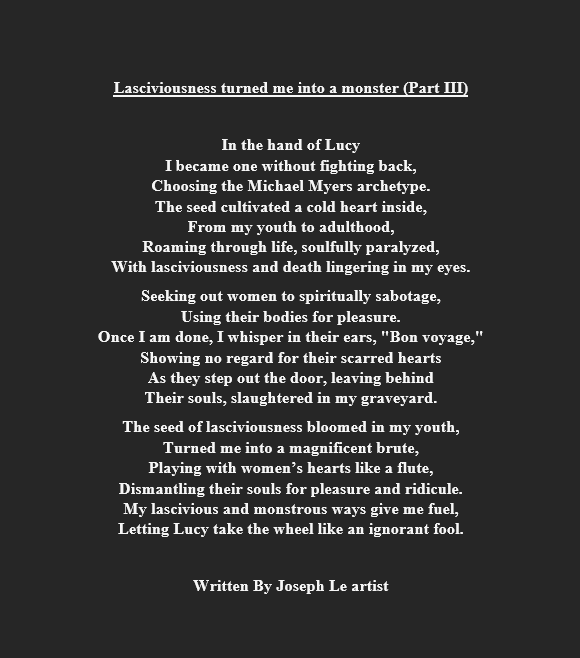
Dissected Tread
Tread One :
Inspired By :

IntroAlex O’Connor Hypocrisy On Animal Suffering is a thought-provoking philosophical essay (likely from a debate or analysis channel) that challenges the common atheist argument against God’s existence based on animal suffering. It argues that such critiques can be hypocritical, as they often ignore humanity’s own massive role in causing and perpetuating animal pain through factory…
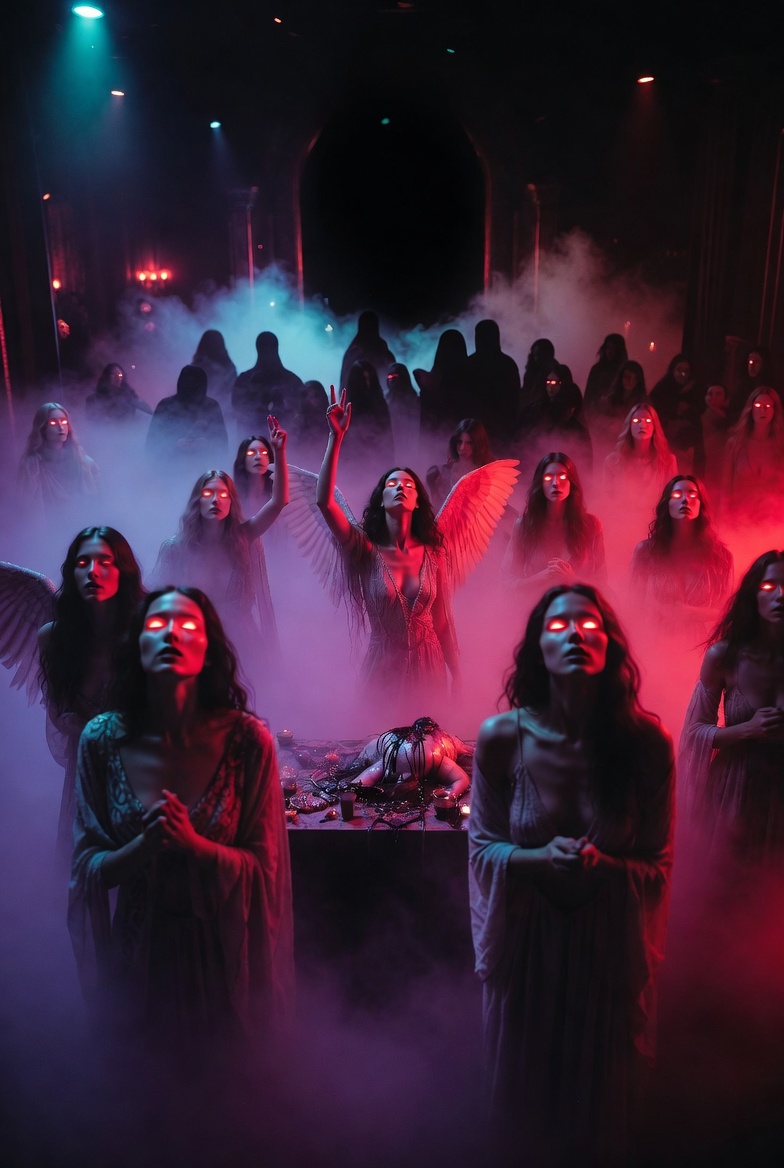
Intro Before I crossed the threshold into that pulsing underworld, I handed my soul to a fallen angel at the door—sealing a Faustian bargain for women who existed only in virtual promise, illusions spun from desire and digital haze. Inside, the club drowned in dark misty buzz, hypnotic music clamping my mind like a vice…
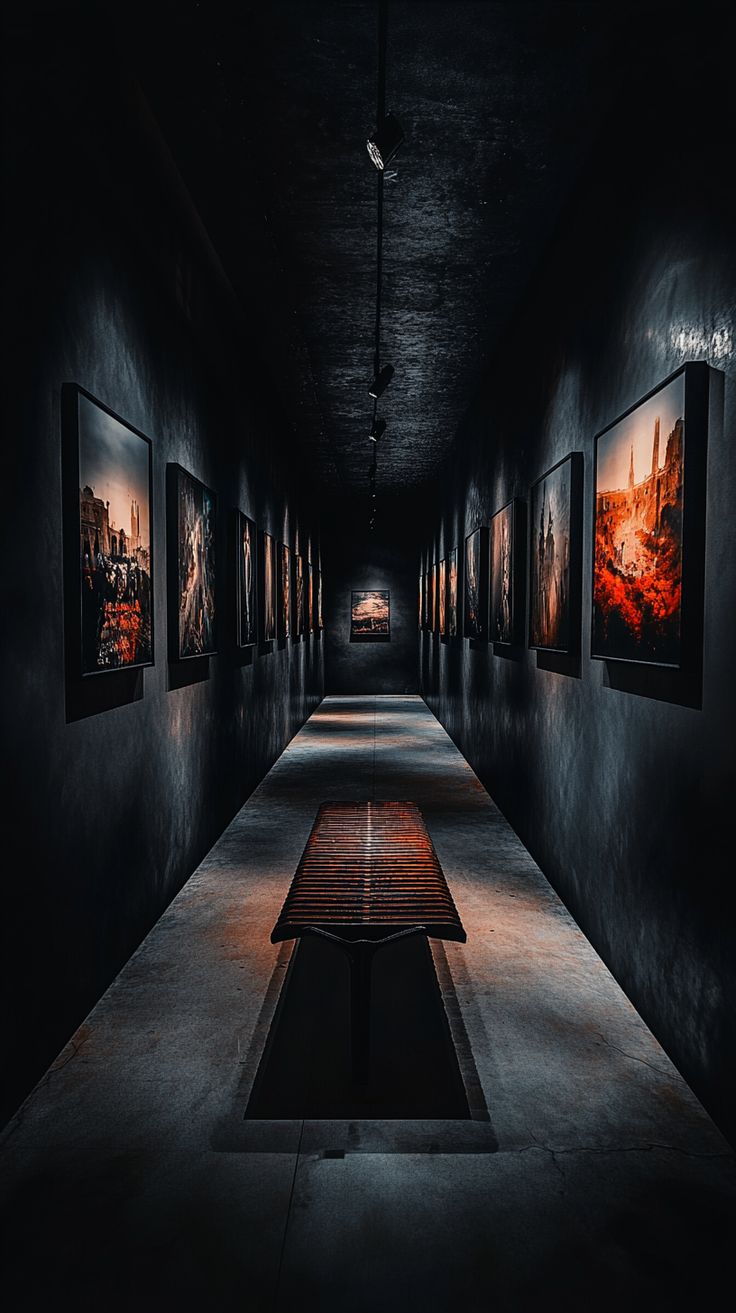
Intro In the shadowed attic of old grief, I found those frantic, handwritten letters—blasphemies scratched out by a younger me during a season of unrelenting calamity, heart emptied by pain and the lack of any real help. One page, opened on a whim, carried the desperate lie: “cursing God will fill your pocket with freedom…

Intro Sometimes I think about why the urge to create feels so natural, almost unavoidable, as if it was placed inside us long before we understood what art even was. It makes me wonder if creativity is part of the reason we exist at all—like God invented us so imagination could move through human hands…

Intro In an age where virtue is performed beneath studio lights and righteousness is rehearsed for applause, the loudest saviors often cast the longest shadows. History has shown how public personas can crumble — from the fall of R. Kelly to the scandal surrounding Jeffrey Epstein — revealing how influence and power can conceal disturbing…

IntroThis poem presents a sharp and cautionary portrait of a woman whose outer beauty conceals inner danger. By comparing her appearance to Stacy Dash, the speaker immediately establishes an image of striking physical attractiveness, only to contrast it with the darker image of a “fallen angel.” Throughout the poem, religious symbolism—halos, horns, heaven—blends with modern…

IntroPurpose and destiny have always guided me, embodied in figures like Tia and Tamara, whose presence kept me steady and focused on achieving higher victories. Their influence lit a path toward growth and fulfillment, shaping my choices and ambitions. Yet, life’s temptations came in the form of vices resembling Samara, pulling me toward darker paths…

IntroThrough powerful biblical symbolism and vivid, confrontational imagery, the poem examines the complex tension between femininity, masculinity, and authority. By invoking Moses parting the Red Sea as a metaphor for spiritual revelation and division, the speaker establishes a dramatic tone that carries throughout the piece. The contrasting portrayals of “quiet and feminine grace” against loud,…

IntroThrough powerful biblical symbolism and vivid, confrontational imagery, the poem examines the complex tension between femininity, masculinity, and authority. By invoking Moses parting the Red Sea as a metaphor for spiritual revelation and division, the speaker establishes a dramatic tone that carries throughout the piece. The contrasting portrayals of “quiet and feminine grace” against loud,…

Intro“King Solomon Size” evokes the legendary magnitude of love and desire associated with Solomon, using his grand reputation as a metaphor for vast romantic ambition. The poem speaks in the voice of a man who longs to warm his “cold and dark” heart through touch, admiration, and conquest, revealing both vulnerability and hunger for devotion.…
Dissected Tread
Tread One :
Inspired By :
IntroAlex O’Connor Hypocrisy On Animal Suffering is a thought-provoking philosophical essay (likely from a debate or analysis channel) that challenges the common atheist argument against God’s existence based on animal suffering. It argues that such critiques can be hypocritical, as they often ignore humanity’s own massive role in causing and perpetuating animal pain through factory…
Intro Before I crossed the threshold into that pulsing underworld, I handed my soul to a fallen angel at the door—sealing a Faustian bargain for women who existed only in virtual promise, illusions spun from desire and digital haze. Inside, the club drowned in dark misty buzz, hypnotic music clamping my mind like a vice…
Intro In the shadowed attic of old grief, I found those frantic, handwritten letters—blasphemies scratched out by a younger me during a season of unrelenting calamity, heart emptied by pain and the lack of any real help. One page, opened on a whim, carried the desperate lie: “cursing God will fill your pocket with freedom…
Intro Sometimes I think about why the urge to create feels so natural, almost unavoidable, as if it was placed inside us long before we understood what art even was. It makes me wonder if creativity is part of the reason we exist at all—like God invented us so imagination could move through human hands…
Intro In an age where virtue is performed beneath studio lights and righteousness is rehearsed for applause, the loudest saviors often cast the longest shadows. History has shown how public personas can crumble — from the fall of R. Kelly to the scandal surrounding Jeffrey Epstein — revealing how influence and power can conceal disturbing…
IntroThis poem presents a sharp and cautionary portrait of a woman whose outer beauty conceals inner danger. By comparing her appearance to Stacy Dash, the speaker immediately establishes an image of striking physical attractiveness, only to contrast it with the darker image of a “fallen angel.” Throughout the poem, religious symbolism—halos, horns, heaven—blends with modern…
IntroPurpose and destiny have always guided me, embodied in figures like Tia and Tamara, whose presence kept me steady and focused on achieving higher victories. Their influence lit a path toward growth and fulfillment, shaping my choices and ambitions. Yet, life’s temptations came in the form of vices resembling Samara, pulling me toward darker paths…
IntroThrough powerful biblical symbolism and vivid, confrontational imagery, the poem examines the complex tension between femininity, masculinity, and authority. By invoking Moses parting the Red Sea as a metaphor for spiritual revelation and division, the speaker establishes a dramatic tone that carries throughout the piece. The contrasting portrayals of “quiet and feminine grace” against loud,…
IntroThrough powerful biblical symbolism and vivid, confrontational imagery, the poem examines the complex tension between femininity, masculinity, and authority. By invoking Moses parting the Red Sea as a metaphor for spiritual revelation and division, the speaker establishes a dramatic tone that carries throughout the piece. The contrasting portrayals of “quiet and feminine grace” against loud,…
Intro“King Solomon Size” evokes the legendary magnitude of love and desire associated with Solomon, using his grand reputation as a metaphor for vast romantic ambition. The poem speaks in the voice of a man who longs to warm his “cold and dark” heart through touch, admiration, and conquest, revealing both vulnerability and hunger for devotion.…
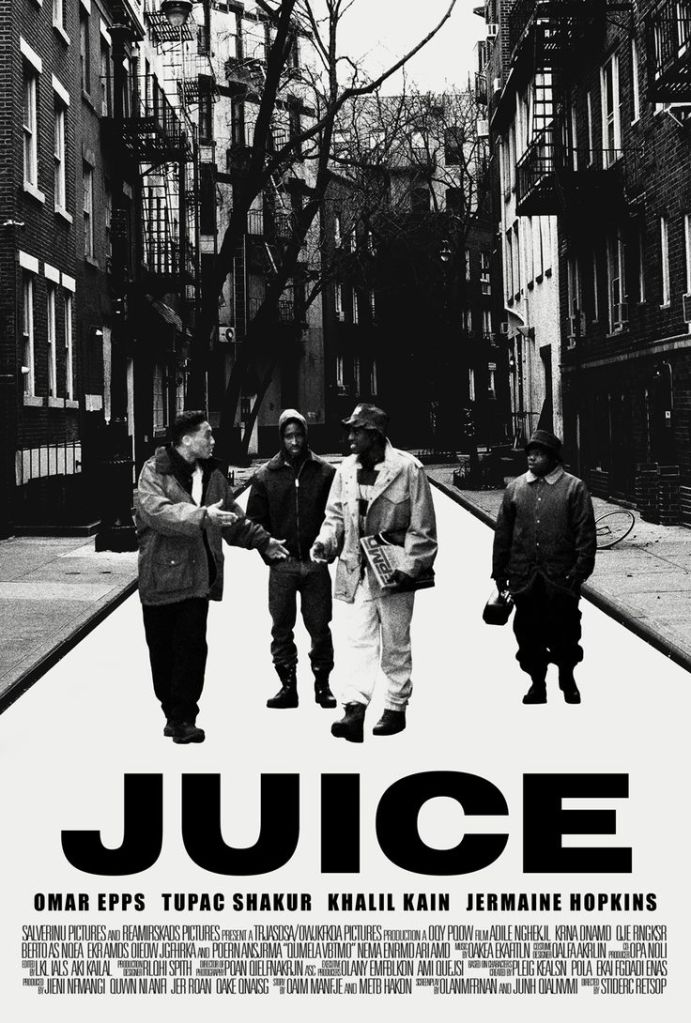
I blaze through the streets, my heart pounding, seeking those I once called my best friends—friends who betrayed me, their masks peeling away to reveal fragments of lust, loafing, guilt, and shame. Their deception trapped me in a “happy illusion,” but now, with wrath born from the abyss of my heart, I confront the wreckage of trust and the question of redemption. This raw, visceral poem is my story, urging me to explore philosophically what betrayal has done to my sense of self, how wrath has shaped my response, and whether I can find redemption without losing my soul. Drawing from existentialism, Stoicism, and ethical thought, I reflect on my journey through betrayal and rage, seeking answers within the ashes.
Betrayal and the Unmasking of My Illusions
When I saw their masks peel away, exposing their lustful ease, the sting of betrayal cut deep. These weren’t just friends—they were vices I embraced, parts of myself I refused to see. In Sartre’s terms, I was living in mauvaise foi (bad faith), hiding from the truth to cling to a comforting lie. Their betrayal forced me to confront this illusion, shattering the cage I built around myself. Now, I stand in the glare of existential angst, free yet burdened to redefine who I am without those false friends.
This unmasking wounds me but also offers a gift. As Nietzsche might urge, I’m peeling away false identities to approach my authentic self, untainted by deception. But the cost is heavy: years wasted, blinded by their intentions. I face a choice—cling to the ruins of my old self or forge a new path, knowing betrayal has revealed not just their falsehoods but my own complicity in them.
Wrath as My Response
From the “wrathful abyss” of my heart, rage erupts. I don’t just feel anger—I act on it, methodically taking out Steel (Loafing), Raheem (Guilt), and Q (Shame) with bullets to the heart, head, and chest. This isn’t blind fury but a deliberate purge, a claim to agency. Existentially, I’m asserting my freedom, refusing to remain a victim. Yet, Seneca’s Stoic warning echoes: wrath is a “temporary madness” that clouds reason. By “disconnecting my morals from my heart,” I risk becoming Nietzsche’s “pale criminal,” powerful in action but hollowed out by moral loss.
My wrath is a double-edged sword. It liberates me from the grip of vice, but it leaves me “lost in [a] charred room.” I’ve destroyed the external symbols of my flaws, but have I freed myself, or have I traded one cage for another? The bravery I feel is real, but it teeters on the edge of self-destruction, forcing me to question whether this path leads to empowerment or ruin.
Redemption or Self-Destruction?
Alone in my charred room, I contemplate purging wrath itself by “separating my body from my soul,” baptizing myself with “a bullet to the head, without holding back.” This chilling thought feels like both despair and a twisted hope for redemption. In Camus’ absurd, I’m caught between seeking meaning and facing its absence. My desire to purge wrath suggests a longing to transcend my corrupted state, but the method—self-annihilation—makes me pause. Stoicism, through Marcus Aurelius, urges me to master my passions, not destroy myself: “You have power over your mind—not outside events.” Yet, the idea of “baptizing my soul” hints at Kierkegaard’s leap of faith, a surrender to something beyond reason.
The ambiguity—whether I follow through or merely contemplate this act—leaves me wondering if redemption lies in self-awareness rather than a final bullet. Have I the courage to reintegrate my fragmented soul, or will I remain lost in this charred aftermath?
Ethical Reflections on My Fragmented Soul
Killing my personified vices—loafing, guilt, shame—feels like purging my flaws, but it’s also a form of scapegoating, projecting my struggles onto others. Ethically, I wrestle with a utilitarian question: does my liberation justify the violence, the disconnection of my morals? Plato’s tripartite soul comes to mind—reason, spirit, and appetite must harmonize for virtue. My wrathful actions let spirit rule, sidelining reason and balance. Redemption, then, might mean reintegrating these parts through introspection, not more destruction. But can I rebuild what I’ve burned?
Conclusion
This poem—“Unveiled Betrayal: My Wrathful Redemption”—is my confrontation with the human condition: the pain of betrayal, the fire of wrath, and the faint hope of redemption. Philosophically, it challenges me to consider how I respond to deception, both from others and within myself. Existentialism offers me freedom to redefine myself, but at the risk of moral erosion. Stoicism warns against wrath’s tyranny, urging inner mastery. The question lingers: can I escape the abyss of betrayal without losing myself, or is redemption always a baptism by fire? As I stand in my charred room, I’m left to decide whether to rebuild or let the ashes define me.
Poem Tread :
IntroAlex O’Connor Hypocrisy On Animal Suffering is a thought-provoking philosophical essay (likely from a debate or analysis channel) that challenges the common atheist argument against God’s existence based on animal suffering. It argues that such critiques can be hypocritical, as they often ignore humanity’s own massive role in causing and perpetuating animal pain through factory…
Intro Before I crossed the threshold into that pulsing underworld, I handed my soul to a fallen angel at the door—sealing a Faustian bargain for women who existed only in virtual promise, illusions spun from desire and digital haze. Inside, the club drowned in dark misty buzz, hypnotic music clamping my mind like a vice…
Intro In the shadowed attic of old grief, I found those frantic, handwritten letters—blasphemies scratched out by a younger me during a season of unrelenting calamity, heart emptied by pain and the lack of any real help. One page, opened on a whim, carried the desperate lie: “cursing God will fill your pocket with freedom…
Intro Sometimes I think about why the urge to create feels so natural, almost unavoidable, as if it was placed inside us long before we understood what art even was. It makes me wonder if creativity is part of the reason we exist at all—like God invented us so imagination could move through human hands…
Intro In an age where virtue is performed beneath studio lights and righteousness is rehearsed for applause, the loudest saviors often cast the longest shadows. History has shown how public personas can crumble — from the fall of R. Kelly to the scandal surrounding Jeffrey Epstein — revealing how influence and power can conceal disturbing…
IntroThis poem presents a sharp and cautionary portrait of a woman whose outer beauty conceals inner danger. By comparing her appearance to Stacy Dash, the speaker immediately establishes an image of striking physical attractiveness, only to contrast it with the darker image of a “fallen angel.” Throughout the poem, religious symbolism—halos, horns, heaven—blends with modern…
IntroPurpose and destiny have always guided me, embodied in figures like Tia and Tamara, whose presence kept me steady and focused on achieving higher victories. Their influence lit a path toward growth and fulfillment, shaping my choices and ambitions. Yet, life’s temptations came in the form of vices resembling Samara, pulling me toward darker paths…
IntroThrough powerful biblical symbolism and vivid, confrontational imagery, the poem examines the complex tension between femininity, masculinity, and authority. By invoking Moses parting the Red Sea as a metaphor for spiritual revelation and division, the speaker establishes a dramatic tone that carries throughout the piece. The contrasting portrayals of “quiet and feminine grace” against loud,…
IntroThrough powerful biblical symbolism and vivid, confrontational imagery, the poem examines the complex tension between femininity, masculinity, and authority. By invoking Moses parting the Red Sea as a metaphor for spiritual revelation and division, the speaker establishes a dramatic tone that carries throughout the piece. The contrasting portrayals of “quiet and feminine grace” against loud,…
Intro“King Solomon Size” evokes the legendary magnitude of love and desire associated with Solomon, using his grand reputation as a metaphor for vast romantic ambition. The poem speaks in the voice of a man who longs to warm his “cold and dark” heart through touch, admiration, and conquest, revealing both vulnerability and hunger for devotion.…

Dissected Threads
Tread One :
Inspired By :
IntroAlex O’Connor Hypocrisy On Animal Suffering is a thought-provoking philosophical essay (likely from a debate or analysis channel) that challenges the common atheist argument against God’s existence based on animal suffering. It argues that such critiques can be hypocritical, as they often ignore humanity’s own massive role in causing and perpetuating animal pain through factory…
Intro Before I crossed the threshold into that pulsing underworld, I handed my soul to a fallen angel at the door—sealing a Faustian bargain for women who existed only in virtual promise, illusions spun from desire and digital haze. Inside, the club drowned in dark misty buzz, hypnotic music clamping my mind like a vice…
Intro In the shadowed attic of old grief, I found those frantic, handwritten letters—blasphemies scratched out by a younger me during a season of unrelenting calamity, heart emptied by pain and the lack of any real help. One page, opened on a whim, carried the desperate lie: “cursing God will fill your pocket with freedom…
Intro Sometimes I think about why the urge to create feels so natural, almost unavoidable, as if it was placed inside us long before we understood what art even was. It makes me wonder if creativity is part of the reason we exist at all—like God invented us so imagination could move through human hands…
Intro In an age where virtue is performed beneath studio lights and righteousness is rehearsed for applause, the loudest saviors often cast the longest shadows. History has shown how public personas can crumble — from the fall of R. Kelly to the scandal surrounding Jeffrey Epstein — revealing how influence and power can conceal disturbing…
IntroThis poem presents a sharp and cautionary portrait of a woman whose outer beauty conceals inner danger. By comparing her appearance to Stacy Dash, the speaker immediately establishes an image of striking physical attractiveness, only to contrast it with the darker image of a “fallen angel.” Throughout the poem, religious symbolism—halos, horns, heaven—blends with modern…
IntroPurpose and destiny have always guided me, embodied in figures like Tia and Tamara, whose presence kept me steady and focused on achieving higher victories. Their influence lit a path toward growth and fulfillment, shaping my choices and ambitions. Yet, life’s temptations came in the form of vices resembling Samara, pulling me toward darker paths…
IntroThrough powerful biblical symbolism and vivid, confrontational imagery, the poem examines the complex tension between femininity, masculinity, and authority. By invoking Moses parting the Red Sea as a metaphor for spiritual revelation and division, the speaker establishes a dramatic tone that carries throughout the piece. The contrasting portrayals of “quiet and feminine grace” against loud,…
IntroThrough powerful biblical symbolism and vivid, confrontational imagery, the poem examines the complex tension between femininity, masculinity, and authority. By invoking Moses parting the Red Sea as a metaphor for spiritual revelation and division, the speaker establishes a dramatic tone that carries throughout the piece. The contrasting portrayals of “quiet and feminine grace” against loud,…
Intro“King Solomon Size” evokes the legendary magnitude of love and desire associated with Solomon, using his grand reputation as a metaphor for vast romantic ambition. The poem speaks in the voice of a man who longs to warm his “cold and dark” heart through touch, admiration, and conquest, revealing both vulnerability and hunger for devotion.…
Dissected Threads
Tread One :
Inspired By :
IntroAlex O’Connor Hypocrisy On Animal Suffering is a thought-provoking philosophical essay (likely from a debate or analysis channel) that challenges the common atheist argument against God’s existence based on animal suffering. It argues that such critiques can be hypocritical, as they often ignore humanity’s own massive role in causing and perpetuating animal pain through factory…
Intro Before I crossed the threshold into that pulsing underworld, I handed my soul to a fallen angel at the door—sealing a Faustian bargain for women who existed only in virtual promise, illusions spun from desire and digital haze. Inside, the club drowned in dark misty buzz, hypnotic music clamping my mind like a vice…
Intro In the shadowed attic of old grief, I found those frantic, handwritten letters—blasphemies scratched out by a younger me during a season of unrelenting calamity, heart emptied by pain and the lack of any real help. One page, opened on a whim, carried the desperate lie: “cursing God will fill your pocket with freedom…
Intro Sometimes I think about why the urge to create feels so natural, almost unavoidable, as if it was placed inside us long before we understood what art even was. It makes me wonder if creativity is part of the reason we exist at all—like God invented us so imagination could move through human hands…
Intro In an age where virtue is performed beneath studio lights and righteousness is rehearsed for applause, the loudest saviors often cast the longest shadows. History has shown how public personas can crumble — from the fall of R. Kelly to the scandal surrounding Jeffrey Epstein — revealing how influence and power can conceal disturbing…
IntroThis poem presents a sharp and cautionary portrait of a woman whose outer beauty conceals inner danger. By comparing her appearance to Stacy Dash, the speaker immediately establishes an image of striking physical attractiveness, only to contrast it with the darker image of a “fallen angel.” Throughout the poem, religious symbolism—halos, horns, heaven—blends with modern…
IntroPurpose and destiny have always guided me, embodied in figures like Tia and Tamara, whose presence kept me steady and focused on achieving higher victories. Their influence lit a path toward growth and fulfillment, shaping my choices and ambitions. Yet, life’s temptations came in the form of vices resembling Samara, pulling me toward darker paths…
IntroThrough powerful biblical symbolism and vivid, confrontational imagery, the poem examines the complex tension between femininity, masculinity, and authority. By invoking Moses parting the Red Sea as a metaphor for spiritual revelation and division, the speaker establishes a dramatic tone that carries throughout the piece. The contrasting portrayals of “quiet and feminine grace” against loud,…
IntroThrough powerful biblical symbolism and vivid, confrontational imagery, the poem examines the complex tension between femininity, masculinity, and authority. By invoking Moses parting the Red Sea as a metaphor for spiritual revelation and division, the speaker establishes a dramatic tone that carries throughout the piece. The contrasting portrayals of “quiet and feminine grace” against loud,…
Intro“King Solomon Size” evokes the legendary magnitude of love and desire associated with Solomon, using his grand reputation as a metaphor for vast romantic ambition. The poem speaks in the voice of a man who longs to warm his “cold and dark” heart through touch, admiration, and conquest, revealing both vulnerability and hunger for devotion.…
Dissected Threads
Tread One :
Inspired By :
 LifeandTimelessart