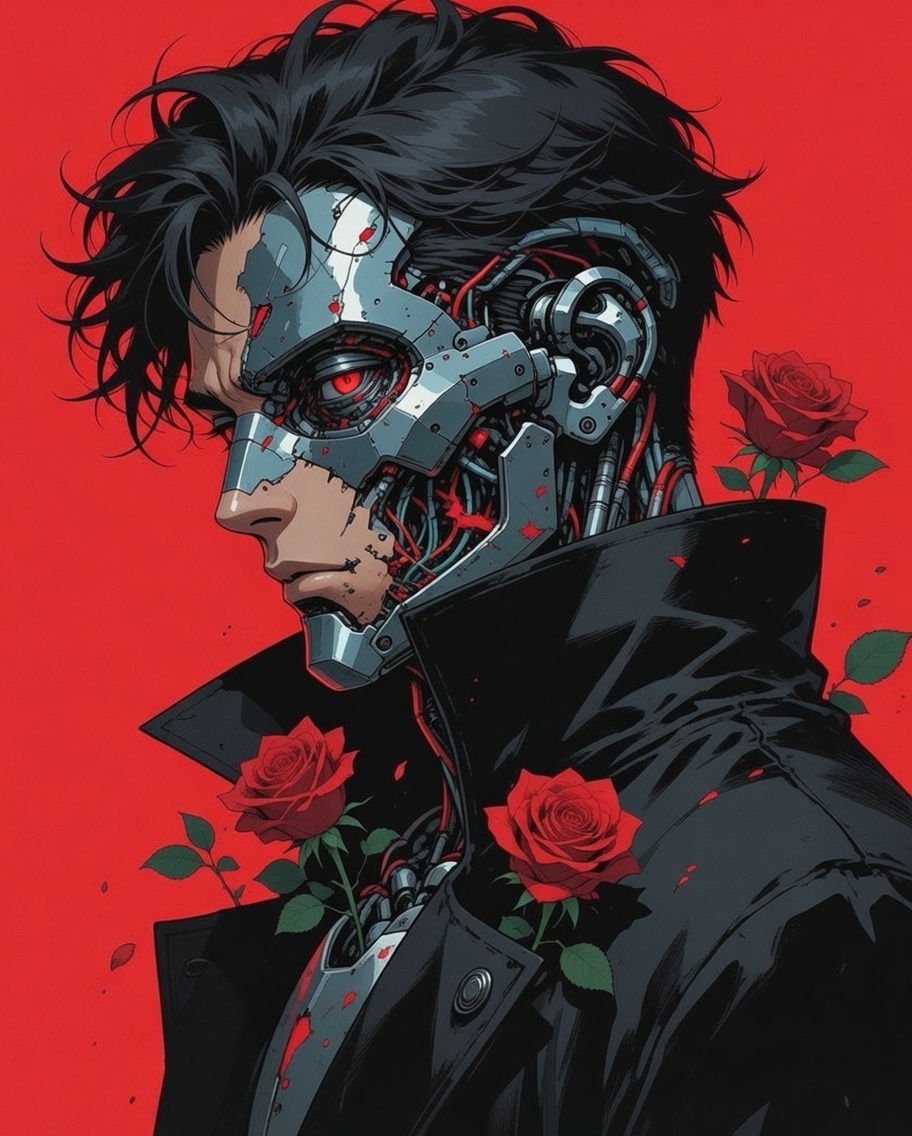
Mechanical Love explores the haunting idea of love stripped of free will. The poem imagines a world where human agency is buried “six feet deep,” replaced by chemical impulses and mechanical repetition. Joseph Le Artist presents love not as a conscious choice, but as a programmed reaction—driven by dopamine rather than desire. The transformation into a “robot tied to a string” symbolizes the loss of autonomy, identity, and emotional authenticity. Ultimately, the poem questions whether love without choice is truly love at all, or merely biological machinery performing devotion without meaning.
In the end, Mechanical Love leaves us with an unsettling realization: without free will, love loses its soul. What remains is not passion, not intention, but programmed response. By portraying devotion as mechanical and chemically driven, Joseph Le Artist challenges the reader to reflect on the essence of human emotion. The poem suggests that true love requires choice—without it, we are not lovers, but machines performing affection in a world devoid of meaning.
Fragment Blog
Other Blogs
Inspired By :
 LifeandTimelessart