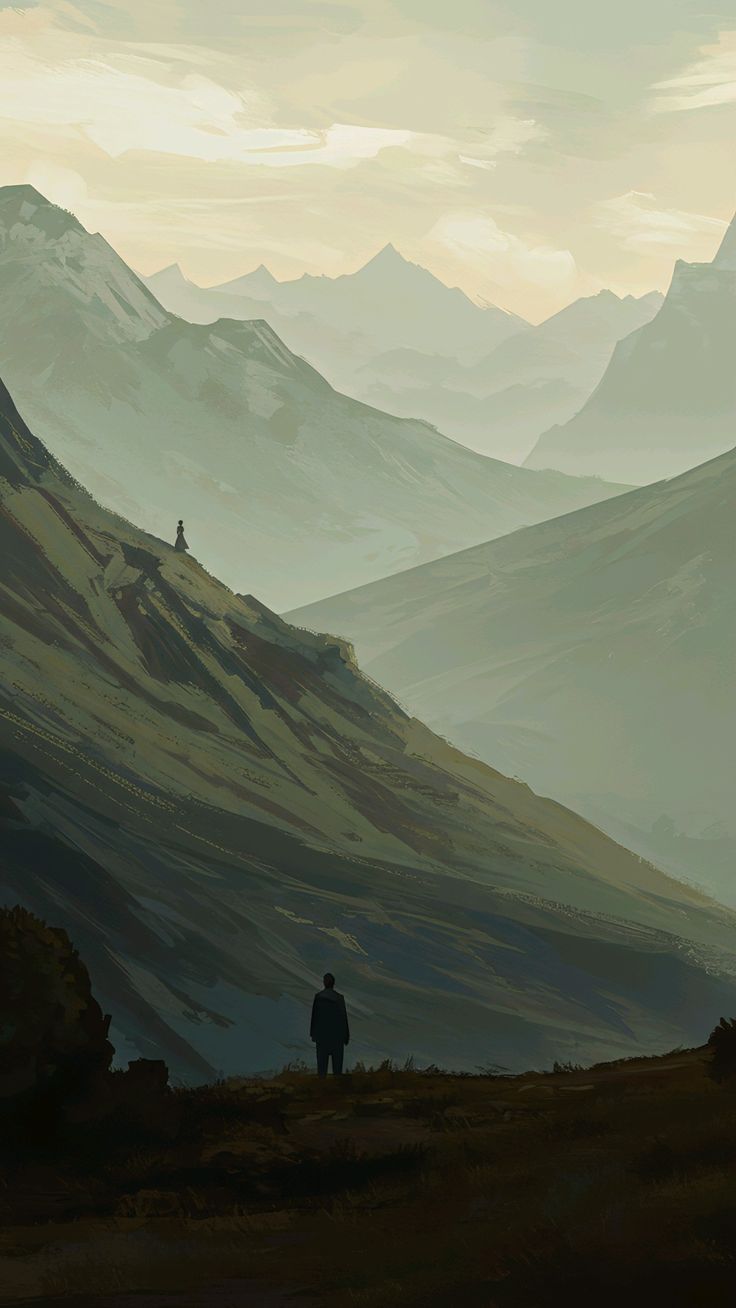
I stand at the edge of philosophy’s abyss, and it calls to me. Its questions—vast as starlit skies, sharp as a blade—cut through the quiet of my mind. Why am I here? What is real? What holds meaning when the world feels like a fleeting shadow? Each inquiry is a thread, spiraling, twisting, weaving a labyrinth where I wander, heart pounding, thoughts tangling. Socrates’ gaze pierces me, relentless, demanding I question every certainty I’ve clung to. His method is a mirror, forcing me to see the cracks in my beliefs, and I tremble as they shatter. Plato’s forms flicker just beyond my reach—perfect, eternal, yet maddeningly intangible, taunting my mortal limits. Nietzsche’s void yawns wider still, whispering that meaning is a construct I must forge alone. In these moments, I feel my reason bend, my sense unravel. The weight of “why” presses on my chest, heavy as time itself, and I wonder: can this ceaseless quest unhinge me? Can it stir madness, wake dreams too deep to bear?I’ve felt the edges of that darkness. Late nights, alone with my thoughts, I’ve chased ideas down spiraling paths—through Descartes’ doubt, where even my own existence feels uncertain; through Kant’s categories, where reality bends under the mind’s own frame; through Sartre’s freedom, where the burden of choice feels like a sentence. The labyrinth is vast, and I’ve stumbled in its shadows, my mind whirling until it teeters on collapse. I think of Nietzsche, whose brilliance burned so fiercely it may have consumed him—though syphilis, not just philosophy, likely broke his mind. I’ve felt that pull, the temptation to let the questions swallow me, to lose myself in the chaos of endless “whys.” There are moments when I fear philosophy’s fire might not warm but destroy, leaving me adrift in a sea of doubt, my sanity fraying like a worn thread.Yet, as I linger in this storm, I sense something else—a spark within the shadows. This same fire that threatens to unravel me also illuminates. When I wrestle with Kierkegaard’s absurd faith, I feel the tremor of possibility, a leap that doesn’t break me but builds me anew. When I face Camus’ absurd, his call to rebel against meaninglessness steadies my footing, turning despair into defiance. Even Nietzsche, for all his darkness, hands me a hammer to forge my own meaning. I see now that philosophy’s chaos isn’t just a trap—it’s a crucible. Each question, each doubt, burns away illusion, refining my vision. I think of Spinoza, who wove his contemplations into a tapestry of calm, his rational lens bringing order to the cosmos. I’ve felt that, too—moments when the tumult of thought resolves into clarity, when the world, once fractured, feels whole.
The labyrinth, though daunting, has exits that lead to light. I’ve learned this through my own journey. There was a time when I read Heidegger’s Being and Time and felt crushed by the weight of “being-toward-death,” my own mortality staring back like a specter. Sleep eluded me for days, my mind caught in a loop of existential dread. But as I sat with it, I found not despair but urgency—a call to live more fully, to carve purpose from the fleeting. Another time, grappling with Wittgenstein’s language games, I felt my grip on truth slip, as if words themselves betrayed me. Yet, from that confusion came a humbling clarity: meaning isn’t fixed but fluid, a dance I can join. These moments didn’t break me; they reshaped me, sharpening the lens through which I see the world.So, I ask myself, as your poem asks: does philosophy lead my mind astray? It can. When I linger too long in the labyrinth’s darkest corners, when I let questions spiral without pause, I feel the ground slip beneath me.
The mind, unmoored, can drift toward madness—not the raving kind, but a quiet unraveling, a loss of tether to the everyday. History whispers warnings: Nietzsche’s collapse, perhaps hastened by his own abyss; or even Socrates, whose relentless questioning led to a death he chose over silence. But I see, too, that this peril is not the whole story. Philosophy’s fire, though it singes, forges something stronger. It’s a tool, not a tyrant. When I balance its questions with life’s anchors—love, action, connection—I don’t just survive the labyrinth; I emerge with a clearer gaze, a soul tempered by wonder.Your poem, to me, dances on this knife’s edge—philosophy as both a perilous maze and a clarifying flame. It captures the fear of losing oneself in thought’s depths but also the yearning for the truths it reveals. I lean toward the latter: the chaos is worth it, for it carves a sharper lens to navigate life’s strife. But I’m curious—when you wrote this, did you feel the weight of the maze more, or the pull of the flame? Where does your own heart lie in this dance with philosophy’s shadows?
Inspired By :
 LifeandTimelessart