The Fourth Tread from “Leave Me Alone II“
“The Aesthetic Of Decay“
When I see “a gruesome suicide, painted in front of my eyes,” the image hits me with a visceral force, its vividness carving a scene of raw, unfiltered horror into my mind. The word “gruesome” doesn’t just suggest death—it drags me into a decay so deep it repulses and fascinates me all at once, an aesthetic that somehow makes the grotesque beautiful. I can’t help but think of Schopenhauer’s bleak view: life as a ceaseless churn of suffering, a canvas I’m forced to stare at, smeared with despair’s dark shades. For me, this suicide isn’t just an end—it’s a desperate claim to power in a world that offers nothing but pain, the last stroke I imagine on a portrait of collapse.
But the fact that I see it “painted” shifts everything—it’s not just happening; I’m making it art. I’m the one holding the brush, turning chaos into something deliberate. I stand back, not caught up in the mess but watching it unfold, a chronicler of ruin. It feels like Schopenhauer’s resignation creeping in—I know the will to live is a sham, yet here I am, still compelled to look, to record. Whether it’s “Kali” or some suffocating system I’ve conjured, its end isn’t a victory—it’s a self-inflicted fall, and I’m the one staring at it, unflinching.
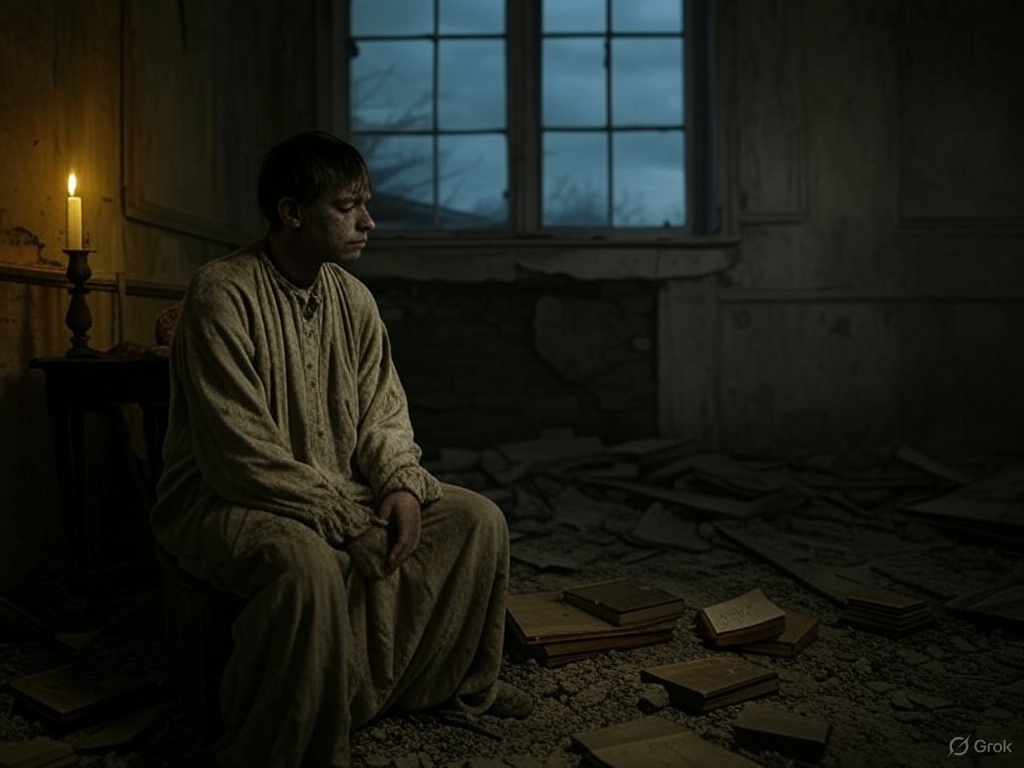
There’s a strange calm in that distance, a Buddhist echo whispering that nothing lasts—not Kali, not the systems I’ve built in my head, nothing. They crumble, their power fading into a smudge of paint I’ve left on the canvas. Nietzsche’s words hit me here: “What does not kill me makes me stronger” (Twilight of the Idols), but I wonder—maybe it’s not strength I gain, just the grit to keep watching as it all unravels. That gruesome suicide I’ve painted isn’t just a finish line; it’s a truth I can’t escape: everything mighty—gods, rules, me—rots away, and I’m left holding the brush, tracing the outlines of impermanence.
So I find myself caught in this aesthetic of decay, a twisted kind of freedom in the wreckage I’ve imagined. That suicide I see isn’t only suffering—it’s my quiet rebellion against anything lasting too long, against the lie of forever. The Bible’s voice cuts through: “For dust you are, and to dust you shall return” (Genesis 3:19), and I feel it in my bones, a truth that ties me to the dirt and the divine all at once. Schopenhauer’s gloom, Buddhism’s letting go, Nietzsche’s defiance—they mix in me, and I turn the horror into something I can hold, something almost beautiful. What’s left is an image I can’t shake—not a scream, but a proof of everything falling apart, and me, still here, watching it fade.
 LifeandTimelessart