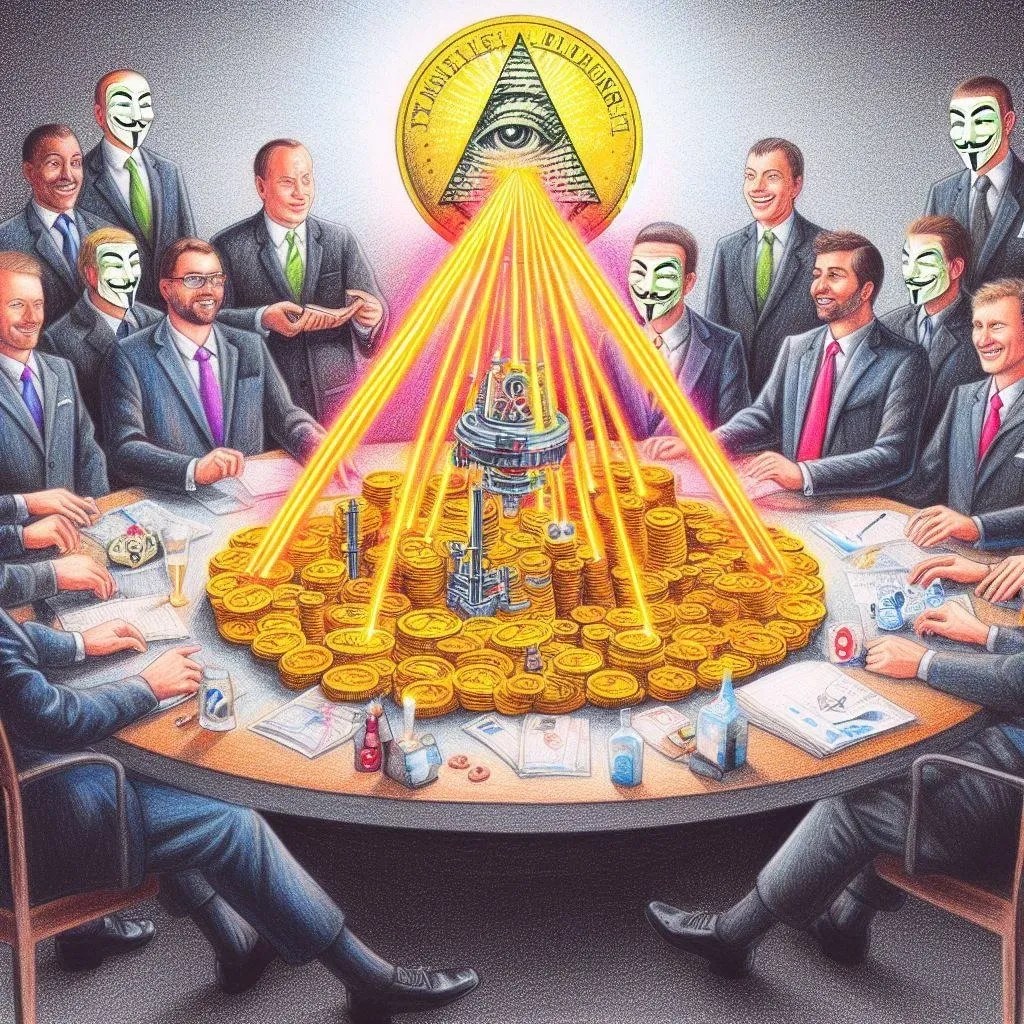
The Fifth Tread from “Deceptive Art Of War : Israel – Palestine (Poem)”:
is “Ignorance on Parade”
“Palestine or Israel? None of thee of above, both governments are controlled opposition and isn’t hard to tell.” The question echoes everywhere—choose a side, pick your flag: Palestine or Israel? It’s a snare, a trap disguised as a choice, woven into the deceptive art of the Israel-Palestine war. We’re told it’s a binary—right or wrong, oppressed or oppressor—but what if neither side stands free? Both governments dance as puppets, their strings pulled by the same unseen masters, twirling in a choreography of chaos. This isn’t conspiracy whispered in dark corners—it’s evident, plain as day, if you dare look past the smoke of rockets and rhetoric.
The controlled opposition isn’t a new game. It’s a tactic, a sleight of hand where two foes seem at odds, yet serve the same end. In the Israel-Palestine war, the governments posture—speeches of defiance, promises of victory—but the strings don’t lie. Behind the flags, the borders, the holy claims, a single hand moves them both, keeping the conflict alive, endless, profitable. It’s not hard to tell when you stop cheering and start watching: the war doesn’t resolve because it’s not meant to. The deceptive art thrives on this illusion of opposition, a puppet show we mistake for reality.
Scripture cuts through the haze with a warning: “Beware of false prophets, who come to you in sheep’s clothing, but inwardly they are ravenous wolves” (Matthew 7:15). Jesus didn’t mince words—these wolves don’t howl; they deceive, cloaked in innocence while hunger drives them. In the Israel-Palestine war, the wolves wear flags, not fleece—governments draped in the garb of justice or sovereignty, yet ravenous beneath. Matthew 7:15 isn’t just a caution; it’s a lens of discernment, urging us to see past the costumes to the controlled opposition fueling endless strife. These aren’t shepherds leading their people—they’re puppets serving a master we don’t name.
Hegel’s dialectic twists into view here: thesis, antithesis, synthesis. In theory, it resolves—two opposites clash, birthing something new. But in the Israel-Palestine war, the synthesis never comes. The controlled opposition locks it in perpetual conflict—Palestine the thesis, Israel the antithesis, and no resolution, just a cycle of war without end. The unseen masters pull the strings, and the dialectic bends to their will: chaos, not clarity. Matthew 7:15 echoes through this distortion—false prophets promise peace or triumph, but their wolfish hunger feeds on division, not deliverance.
This isn’t abstract—it’s the war we watch unfold. Decades pass, treaties falter, and the Israel-Palestine war churns on, a machine too perfect to be chance. The controlled opposition reveals itself in patterns: escalations timed too neatly, aid flowing too predictably, narratives too aligned to be organic. It’s evident if you look past the smoke—past the protests, the headlines, the tears—to the hands that profit while the land burns. Scripture’s call to discernment isn’t passive; it’s a demand to question the sheep’s clothing, to spot the wolves beneath the flags.
The controlled opposition isn’t invincible—it’s exposed when we see it. The Israel-Palestine war isn’t a duel of nations; it’s a stage, and we’re the audience, clapping for puppets while the masters count their take. Matthew 7:15 doesn’t just warn—it empowers us to peel back the artifice. Hegel’s endless dialectic isn’t fate; it’s a choice we can refuse. The strings are there, taut and trembling, if we dare to trace them. The war endures because it’s designed to—not by the people, but by the puppeteers.
So I ask: Do you see the strings, or just the puppets? The Israel-Palestine war spins its controlled opposition, and Matthew 7:15 calls us to look deeper—past the flags, past the smoke. The deceptive art dazzles, but discernment cuts. Are you watching the dance, or spotting the hands that lead it?
 LifeandTimelessart